Queen Charlotte Nursing Home

At a Glance
The information you need to decide whether this home warrants a closer look.
Nursing homes
Staff warmth score
of reviewers answered yes
Good to know
- Registered beds51
- SpecialismsCaring for adults over 65 yrs, Caring for adults under 65 yrs, Dementia, Mental health conditions
- Last inspected2020-01-22
Save Queen Charlotte Nursing Home to your shortlist
Keep a running list, add visit notes, and compare homes side-by-side. Free account — it takes a minute.
STAGE 4 — RESEARCHING CARE HOMES
Visit homes. Compare them side by side. Choose with confidence.
Most of us will view care homes the way we view houses, impression, atmosphere, the feeling in the corridor. We go home, try to remember what we saw, and make a permanent decision from a blurred memory.

The DCC shortlist gives every home you visit a structured record: the same twelve questions, answered the same way, every time. When you’re ready to choose, pull any two homes side by side and compare them directly. Same criteria, same evidence, your notes and your scores.
The Evidence
What the review data, the inspection reports, and the dementia-care evidence base tell us about this home.
What families say
Visitors often mention how quickly they feel comfortable here. The staff have a natural warmth that helps new residents settle in, and there's a friendly atmosphere throughout the home that families notice straight away.
The eight family priority themes
- Staff warmth55
- Compassion & dignity58
- Cleanliness55
- Activities & engagement50
- Food quality50
- Healthcare58
- Management & leadership35
- Resident happiness55
What inspectors found
Inspected 2020-01-22
Is this home safe?
Is the care effective?
The Effective domain was rated Good at the November 2019 inspection. This domain covers how well the home uses assessments, care plans, healthcare access, staff training, and nutrition to meet people's needs. No specific findings are recorded in the published summary: no detail on how care plans are written or reviewed, no information on GP access, and no mention of dementia-specific training content. The home's specialism includes dementia and mental health conditions, which places significant demands on staff knowledge and care planning quality.Is this home caring?
The Caring domain was rated Good at the November 2019 inspection. This is the domain most directly linked to how staff treat the people who live here day to day, covering warmth, dignity, respect, and support for independence. The published summary contains no specific inspector observations, no resident or relative quotes, and no examples of how staff demonstrated kindness or responded to distress. A Good rating in this domain is the most meaningful single indicator for most families, but without supporting detail it is difficult to assess how consistent or genuine the care culture is.Is the home responsive?
The Responsive domain was rated Good at the November 2019 inspection. This domain looks at whether the home responds to individual needs, provides meaningful activities, supports people's independence, and plans appropriately for end of life. No specific activities are mentioned in the published summary, no individual examples are given, and there is no detail on how the home supports people who can no longer participate in group activities. The home cares for people with dementia across a range of needs, which makes individual responsiveness particularly important.Is the home well-led?
The Well-led domain was rated Requires Improvement at the November 2019 inspection. This is the only domain that did not reach Good, and it is the most significant concern about this home. The registered manager is named in the published record, and the home is operated by Althea Healthcare Properties Limited. The published summary does not explain what specific governance or leadership failures inspectors identified. A review conducted in July 2023 found no evidence requiring a reassessment of the rating, but the home has not been re-inspected since 2019. The overall rating of Good was awarded despite the Requires Improvement in this domain, which means the other four domains were strong enough to outweigh it.
Source: CQC inspection report →
What the evidence base says
The home provides care for adults of all ages, including those living with dementia and mental health conditions. For residents with dementia, the team's naturally caring approach helps create a reassuring environment where people feel understood and supported. All areas worth probing directly during a visit.
The DCC Verdict
Our editorial view, built from the three lenses: what families tell us, what inspectors record, and how the home sits against good dementia-care practice.
DCC Family Score
The Queen Charlotte scores in the mid-range, reflecting a home that has improved from Requires Improvement to Good in four of five inspection domains, but where the published report contains very little specific detail to support confident family judgements. The Well-led domain remains Requires Improvement, which is the main reason the overall score does not reach the upper band.
Homes in South West typically score 68–82.The three-lens summary
What families tell us
Visitors often mention how quickly they feel comfortable here. The staff have a natural warmth that helps new residents settle in, and there's a friendly atmosphere throughout the home that families notice straight away.
What inspectors have recorded
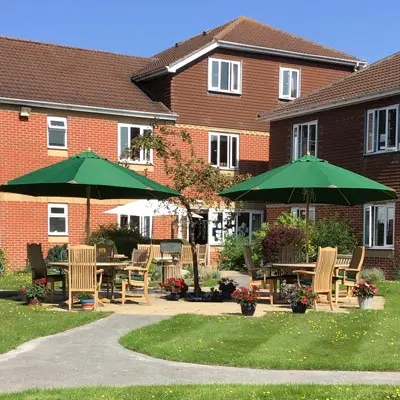
The new leadership team has been busy making improvements while keeping what already works well. They're modernising the building and making practical changes like better parking, but it's their focus on maintaining that caring culture that really stands out.
How it sits against good practice
It's worth popping in to get a feel for the place yourself — sometimes the right home is the one that just feels right.
Worth a visit
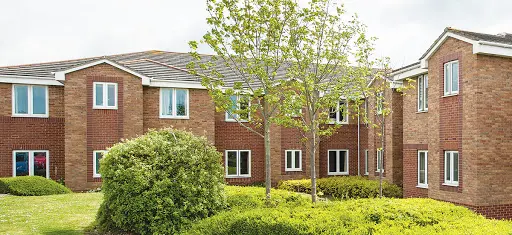
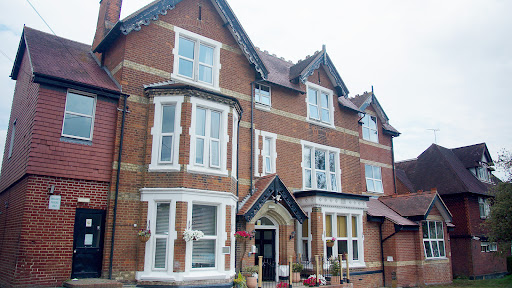
The Queen Charlotte, at 432 Chickerell Road, Weymouth, was inspected in November 2019 and rated Good overall, an improvement from its previous rating of Requires Improvement. Four of the five inspection domains, Safe, Effective, Caring, and Responsive, were rated Good. This is a meaningful improvement and suggests the home addressed the concerns identified at its previous inspection. The one significant concern is that Well-led was rated Requires Improvement, meaning inspectors found something in the management or governance of the home that still needed addressing. The published summary does not explain what that was, which makes it difficult to judge how serious the issue is or whether it has since been resolved. The inspection took place over four years ago (as of early 2026), and the last review in July 2023 found no evidence requiring a reassessment. That does not mean everything is fine; it means the regulator has not inspected again. Before choosing this home, ask the manager directly what the Well-led concerns were, what was done to address them, and whether the home has had any significant staffing or management changes since 2019.
The three questions to ask when you visitSave this home. Compare it against your shortlist.
Let our analysis show you how Queen Charlotte Nursing Home measures up against the other homes you’re considering. Free account.
In Their Own Words
How Queen Charlotte Nursing Home describes itself — collected from its own website. DCC has not edited or independently verified the content in this tab.
Where caring staff make all the difference in Weymouth
The Queen Charlotte – Your Trusted nursing home
When you're looking for the right care home, sometimes you just know within minutes of walking through the door. The Queen Charlotte in Weymouth seems to have that special quality that puts families at ease — staff who genuinely care and a management team working hard to create something better.
Who they care for
The home provides care for adults of all ages, including those living with dementia and mental health conditions.
For residents with dementia, the team's naturally caring approach helps create a reassuring environment where people feel understood and supported.
“It's worth popping in to get a feel for the place yourself — sometimes the right home is the one that just feels right.”
DCC does not edit or curate content in this tab. For independently curated information, see The Evidence and DCC Verdict.
The DCC Verdict
Our editorial view, built from the three lenses: what families tell us, what inspectors record, and how the home sits against good dementia-care practice.
DCC Family Score
The Queen Charlotte scores in the mid-range, reflecting a home that has improved from Requires Improvement to Good in four of five inspection domains, but where the published report contains very little specific detail to support confident family judgements. The Well-led domain remains Requires Improvement, which is the main reason the overall score does not reach the upper band.
Homes in South West typically score 68–82.The three-lens summary
What families tell us
Visitors often mention how quickly they feel comfortable here. The staff have a natural warmth that helps new residents settle in, and there's a friendly atmosphere throughout the home that families notice straight away.
What inspectors have recorded
The new leadership team has been busy making improvements while keeping what already works well. They're modernising the building and making practical changes like better parking, but it's their focus on maintaining that caring culture that really stands out.
How it sits against good practice
It's worth popping in to get a feel for the place yourself — sometimes the right home is the one that just feels right.
Worth a visit
The Queen Charlotte, at 432 Chickerell Road, Weymouth, was inspected in November 2019 and rated Good overall, an improvement from its previous rating of Requires Improvement. Four of the five inspection domains, Safe, Effective, Caring, and Responsive, were rated Good. This is a meaningful improvement and suggests the home addressed the concerns identified at its previous inspection. The one significant concern is that Well-led was rated Requires Improvement, meaning inspectors found something in the management or governance of the home that still needed addressing. The published summary does not explain what that was, which makes it difficult to judge how serious the issue is or whether it has since been resolved. The inspection took place over four years ago (as of early 2026), and the last review in July 2023 found no evidence requiring a reassessment. That does not mean everything is fine; it means the regulator has not inspected again. Before choosing this home, ask the manager directly what the Well-led concerns were, what was done to address them, and whether the home has had any significant staffing or management changes since 2019.
The three questions to ask when you visitSave this home. Compare it against your shortlist.
Let our analysis show you how Queen Charlotte Nursing Home measures up against the other homes you’re considering. Free account.
In Their Own Words
How Queen Charlotte Nursing Home describes itself — collected from its own website. DCC has not edited or independently verified the content in this tab.
Where caring staff make all the difference in Weymouth
The Queen Charlotte – Your Trusted nursing home
When you're looking for the right care home, sometimes you just know within minutes of walking through the door. The Queen Charlotte in Weymouth seems to have that special quality that puts families at ease — staff who genuinely care and a management team working hard to create something better.
Who they care for
The home provides care for adults of all ages, including those living with dementia and mental health conditions.
For residents with dementia, the team's naturally caring approach helps create a reassuring environment where people feel understood and supported.
Management & ethos
The new leadership team has been busy making improvements while keeping what already works well. They're modernising the building and making practical changes like better parking, but it's their focus on maintaining that caring culture that really stands out.
“It's worth popping in to get a feel for the place yourself — sometimes the right home is the one that just feels right.”
DCC does not edit or curate content in this tab. For independently curated information, see The Evidence and DCC Verdict.