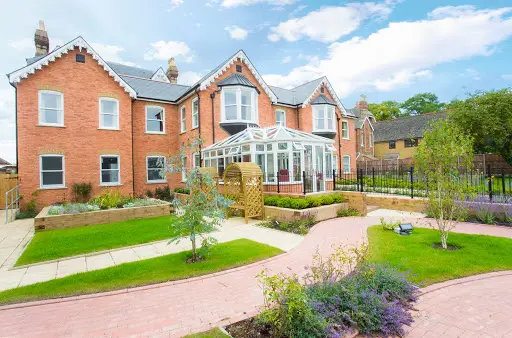
The Old School House
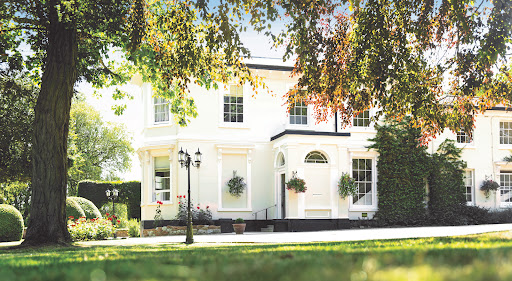
At a Glance
The information you need to decide whether this home warrants a closer look.
Residential homes
Staff warmth score
of reviewers answered yes
Good to know
- Registered beds12
- SpecialismsCaring for adults over 65 yrs, Dementia
- Last inspected2019-08-22
Save The Old School House to your shortlist
Keep a running list, add visit notes, and compare homes side-by-side. Free account — it takes a minute.
STAGE 4 — RESEARCHING CARE HOMES
Visit homes. Compare them side by side. Choose with confidence.
Most of us will view care homes the way we view houses, impression, atmosphere, the feeling in the corridor. We go home, try to remember what we saw, and make a permanent decision from a blurred memory.

The DCC shortlist gives every home you visit a structured record: the same twelve questions, answered the same way, every time. When you’re ready to choose, pull any two homes side by side and compare them directly. Same criteria, same evidence, your notes and your scores.
The Evidence
What the review data, the inspection reports, and the dementia-care evidence base tell us about this home.
What families say
People visiting Old School House mention the warm atmosphere they feel from the moment they arrive. Families describe staff who are genuinely friendly and take time to know each resident as an individual.
The eight family priority themes
- Staff warmth35
- Compassion & dignity35
- Cleanliness40
- Activities & engagement35
- Food quality35
- Healthcare35
- Management & leadership30
- Resident happiness35
What inspectors found
Inspected 2019-08-22
Is this home safe?
Is the care effective?
No domain-level rating for Effective was published for this inspection, and no inspection text was available to draw on. It is therefore not possible to confirm whether care plans were person-centred and up to date, whether staff had received appropriate dementia training, whether GP access was timely, or whether the home's approach to food reflected genuine understanding of individual needs and dementia-related eating difficulties. This is a significant gap for a home specialising in dementia care.Is this home caring?
No individual domain rating for Caring was published, and the absence of inspection text means no direct observations of staff interactions, no resident or relative quotes, and no specific examples of dignified or compassionate care can be confirmed from the official record. In a 12-bed home specialising in dementia, the quality of moment-to-moment interactions between staff and residents is everything — and this inspection provides no evidence either way. The Requires Improvement overall rating means you cannot assume this domain was found to be satisfactory.Is the home responsive?
No individual domain rating for Responsive was published and no inspection text was available. This means there is no confirmed evidence about the activity programme, whether one-to-one engagement is offered to residents who cannot join groups, how individual preferences are recorded and acted upon, or whether end-of-life planning is in place. For a small 12-bed dementia home, the risk is that activities are limited to group sessions that not all residents can access meaningfully, and that individual engagement is inconsistent.Is the home well-led?
No individual domain rating for Well-Led was published and no inspection text was available. The overall decline from Good to Requires Improvement strongly suggests that leadership and governance were a factor in the inspection outcome, but the specific nature of any concerns cannot be confirmed. In a 12-bed home, the manager is often the single most important variable in quality — their tenure, their visibility on the floor, and their ability to build and retain a stable staff team directly shape everything else your parent experiences. An inspection over five years old also means the leadership team in place today may be entirely different from the one assessed in 2019.
Source: CQC inspection report →
What the evidence base says
Old School House provides residential care for people over 65, with particular expertise in dementia care. The home welcomes people living with dementia, with staff who understand the importance of individual attention and maintaining a warm, consistent environment. All areas worth probing directly during a visit.
The DCC Verdict
Our editorial view, built from the three lenses: what families tell us, what inspectors record, and how the home sits against good dementia-care practice.
DCC Family Score
This home received a Requires Improvement rating at its last inspection in August 2019, having declined from a previous Good rating, and no domain-level detail was available to verify specific strengths — meaning almost nothing about day-to-day life here can be confirmed from the inspection record alone.
Homes in South East typically score 68–82.The three-lens summary
What families tell us
People visiting Old School House mention the warm atmosphere they feel from the moment they arrive. Families describe staff who are genuinely friendly and take time to know each resident as an individual.
What inspectors have recorded
What stands out is how staff maintain their compassionate approach even during difficult times. Families have noticed the one-to-one attention their loved ones receive and the sustained effort staff put into daily care.
How it sits against good practice
If you're considering Old School House for someone you love, arranging a visit could help you get a feel for the caring atmosphere families describe.
Worth a visit
This home, a small 12-bed residential service in Princes Risborough specialising in care for older people including those living with dementia, was rated Requires Improvement at its last official inspection in August 2019 — a decline from its previous rating of Good. No individual domain ratings were published, and the full inspection report text was not available for this analysis, which means it has not been possible to verify any specific strengths or concerns from the inspection record itself. The combination of a declined rating, an inspection now over five years old, and the absence of any verifiable evidence about daily life at this home means you should treat every aspect of care here as an open question until you have visited in person and spoken directly with the manager. The checklist above gives you a complete set of specific questions to take with you. Pay particular attention to night staffing levels, how agency staff are used, how the home has responded to whatever prompted the Requires Improvement rating, and whether the manager can show you evidence that things have improved since 2019. A home this size can be warm and attentive — but it can also be very vulnerable to staffing gaps, so those questions matter most.
The three questions to ask when you visitSave this home. Compare it against your shortlist.
Let our analysis show you how The Old School House measures up against the other homes you’re considering. Free account.
In Their Own Words
How The Old School House describes itself — collected from its own website. DCC has not edited or independently verified the content in this tab.
Where individual care meets genuine warmth in Princes Risborough
Residential home in Princes Risborough: True Peace of Mind
When families describe the care at Old School House in Princes Risborough, they talk about staff who really see each person. This care home specialises in supporting people over 65, including those living with dementia. Families have shared how staff maintained their caring approach even through the challenging pandemic period.
Who they care for
Old School House provides residential care for people over 65, with particular expertise in dementia care.
The home welcomes people living with dementia, with staff who understand the importance of individual attention and maintaining a warm, consistent environment.
“If you're considering Old School House for someone you love, arranging a visit could help you get a feel for the caring atmosphere families describe.”
DCC does not edit or curate content in this tab. For independently curated information, see The Evidence and DCC Verdict.
The DCC Verdict
Our editorial view, built from the three lenses: what families tell us, what inspectors record, and how the home sits against good dementia-care practice.
DCC Family Score
This home received a Requires Improvement rating at its last inspection in August 2019, having declined from a previous Good rating, and no domain-level detail was available to verify specific strengths — meaning almost nothing about day-to-day life here can be confirmed from the inspection record alone.
Homes in South East typically score 68–82.The three-lens summary
What families tell us
People visiting Old School House mention the warm atmosphere they feel from the moment they arrive. Families describe staff who are genuinely friendly and take time to know each resident as an individual.
What inspectors have recorded
What stands out is how staff maintain their compassionate approach even during difficult times. Families have noticed the one-to-one attention their loved ones receive and the sustained effort staff put into daily care.
How it sits against good practice
If you're considering Old School House for someone you love, arranging a visit could help you get a feel for the caring atmosphere families describe.
Worth a visit
This home, a small 12-bed residential service in Princes Risborough specialising in care for older people including those living with dementia, was rated Requires Improvement at its last official inspection in August 2019 — a decline from its previous rating of Good. No individual domain ratings were published, and the full inspection report text was not available for this analysis, which means it has not been possible to verify any specific strengths or concerns from the inspection record itself. The combination of a declined rating, an inspection now over five years old, and the absence of any verifiable evidence about daily life at this home means you should treat every aspect of care here as an open question until you have visited in person and spoken directly with the manager. The checklist above gives you a complete set of specific questions to take with you. Pay particular attention to night staffing levels, how agency staff are used, how the home has responded to whatever prompted the Requires Improvement rating, and whether the manager can show you evidence that things have improved since 2019. A home this size can be warm and attentive — but it can also be very vulnerable to staffing gaps, so those questions matter most.
The three questions to ask when you visitSave this home. Compare it against your shortlist.
Let our analysis show you how The Old School House measures up against the other homes you’re considering. Free account.
In Their Own Words
How The Old School House describes itself — collected from its own website. DCC has not edited or independently verified the content in this tab.
Where individual care meets genuine warmth in Princes Risborough
Residential home in Princes Risborough: True Peace of Mind
When families describe the care at Old School House in Princes Risborough, they talk about staff who really see each person. This care home specialises in supporting people over 65, including those living with dementia. Families have shared how staff maintained their caring approach even through the challenging pandemic period.
Who they care for
Old School House provides residential care for people over 65, with particular expertise in dementia care.
The home welcomes people living with dementia, with staff who understand the importance of individual attention and maintaining a warm, consistent environment.
Management & ethos
What stands out is how staff maintain their compassionate approach even during difficult times. Families have noticed the one-to-one attention their loved ones receive and the sustained effort staff put into daily care.
“If you're considering Old School House for someone you love, arranging a visit could help you get a feel for the caring atmosphere families describe.”
DCC does not edit or curate content in this tab. For independently curated information, see The Evidence and DCC Verdict.