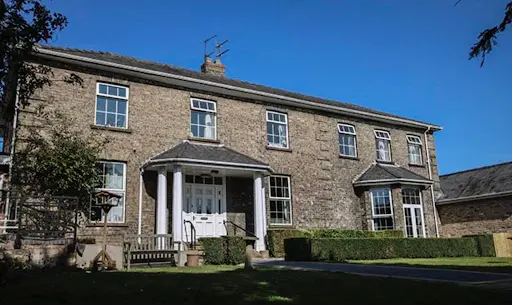
The Old Vicarage
At a Glance
The information you need to decide whether this home warrants a closer look.
Residential homes
Staff warmth score
of reviewers answered yes
Good to know
- Registered beds33
- SpecialismsCaring for adults under 65 yrs, Dementia, Physical disabilities, Sensory impairment
- Last inspected2023-01-28
Save The Old Vicarage to your shortlist
Keep a running list, add visit notes, and compare homes side-by-side. Free account — it takes a minute.
STAGE 4 — RESEARCHING CARE HOMES
Visit homes. Compare them side by side. Choose with confidence.
Most of us will view care homes the way we view houses, impression, atmosphere, the feeling in the corridor. We go home, try to remember what we saw, and make a permanent decision from a blurred memory.

The DCC shortlist gives every home you visit a structured record: the same twelve questions, answered the same way, every time. When you’re ready to choose, pull any two homes side by side and compare them directly. Same criteria, same evidence, your notes and your scores.
The Evidence
What the review data, the inspection reports, and the dementia-care evidence base tell us about this home.
What families say
Families describe finding their loved ones well-cared for at all hours, with staff who know each resident's individual needs and preferences. The home organises seasonal celebrations and regular activities that bring residents together, with families welcomed to join in whenever they can.
The eight family priority themes
- Staff warmth55
- Compassion & dignity58
- Cleanliness60
- Activities & engagement52
- Food quality52
- Healthcare58
- Management & leadership42
- Resident happiness55
What inspectors found
Inspected 2023-01-28
Is this home safe?
Is the care effective?
The Effective domain was rated Good. The home cares for people with dementia, adults under 65, those with physical disabilities, and people with sensory impairments, which requires staff to hold a range of specialist knowledge. The published report does not include detail about care plan content, GP access frequency, dementia training completion, or food quality observations. The Good rating indicates inspectors were satisfied with what they found, but the available text does not allow a more specific account of what that looked like in practice.Is this home caring?
The Caring domain was rated Good. This domain covers how staff interact with the people who live in the home, including whether dignity is respected, whether people are addressed by their preferred names, and whether care is given without rushing. The published report text does not include direct inspector observations of staff interactions or quotes from residents or relatives about the quality of daily care. The Good rating indicates inspectors were satisfied with what they observed, but the level of detail available to families is limited.Is the home responsive?
The Responsive domain was rated Good. This domain covers whether the home offers meaningful activities, whether care is tailored to the individual rather than delivered in a one-size-fits-all way, and whether end-of-life planning is in place. The home supports people with dementia and physical disabilities, which means individual activity planning and one-to-one engagement are particularly relevant. The published report does not record specific observations about the activity programme, one-to-one engagement, or end-of-life arrangements.Is the home well-led?
The Well-led domain was rated Requires Improvement at the August 2022 inspection. This is the one area where the home had not recovered fully from its previous overall Requires Improvement rating. The registered manager is listed as Mr Lewis Melvin Fenn, with Mr Bradley William Birmingham as nominated individual. The published report text does not specify what aspects of leadership or governance fell short, how significant the concerns were, or what the home was required to put in place. This Requires Improvement rating means inspectors found something that needed fixing and had not yet been resolved at the time of the visit.
Source: CQC inspection report →
What the evidence base says
The home cares for people with sensory impairments, physical disabilities, and adults under 65 who need residential support. They also provide specialist dementia care. For residents living with dementia, the staff adapt their approach as conditions change, working closely with families to maintain quality of life. The team's experience with complex needs means they can provide appropriate support through different stages of dementia. All areas worth probing directly during a visit.
The DCC Verdict
Our editorial view, built from the three lenses: what families tell us, what inspectors record, and how the home sits against good dementia-care practice.
DCC Family Score
The inspection found genuine improvement across most areas, with four domains rated Good, but the Requires Improvement rating in Well-led means questions about leadership stability and governance remain unanswered by the published evidence. The overall score reflects solid progress alongside real gaps in the detail available to families.
Homes in Yorkshire & Humberside typically score 68–82.The three-lens summary
What families tell us
Families describe finding their loved ones well-cared for at all hours, with staff who know each resident's individual needs and preferences. The home organises seasonal celebrations and regular activities that bring residents together, with families welcomed to join in whenever they can.
What inspectors have recorded
Staff here respond quickly when residents need help, with families particularly noting how well the team manages deteriorating conditions and brings in external care agencies when needed. Several families have praised the dignified, compassionate support provided during end-of-life care, with staff ensuring both comfort for residents and support for relatives during difficult times.
How it sits against good practice
Families value knowing their loved ones receive consistent, thoughtful care here — the kind that stands up to any unexpected visit.
Worth a visit
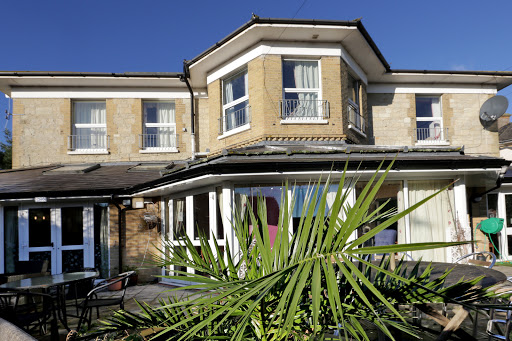
The Old Vicarage Residential Care Home, on Main Street in Cottingham, was rated Good overall at its most recent inspection (carried out in August 2022, published January 2023). This is a meaningful improvement from its previous Requires Improvement rating, and inspectors found enough to rate four of the five domains Good, covering safety, effectiveness, care, and responsiveness. That upward trend matters: homes moving in this direction are generally making real changes rather than just paper ones. The single significant concern is the Well-led domain, which was still rated Requires Improvement at the time of inspection. This means inspectors found problems with management or governance that had not yet been resolved. The published report text is limited in detail, so it is not possible to tell from these findings alone what specifically was wrong or how far it has been addressed since January 2023. On a visit, ask the registered manager directly what the Requires Improvement finding referred to, what was put in place to fix it, and whether a re-inspection has taken place or is scheduled.
The three questions to ask when you visitSave this home. Compare it against your shortlist.
Let our analysis show you how The Old Vicarage measures up against the other homes you’re considering. Free account.
In Their Own Words
How The Old Vicarage describes itself — collected from its own website. DCC has not edited or independently verified the content in this tab.
Consistent care through every unannounced visit and complex need
The Old Vicarage Residential Care Home – Expert Care in Cottingham
When families drop by The Old Vicarage Residential Care Home in Cottingham without warning, they find exactly what they hope for — residents comfortable, staff present and attentive, rooms clean and safe. This Yorkshire care home has built its reputation on delivering steady, reliable care for residents with complex needs, including those living with dementia and physical disabilities.
Who they care for
The home cares for people with sensory impairments, physical disabilities, and adults under 65 who need residential support. They also provide specialist dementia care.
For residents living with dementia, the staff adapt their approach as conditions change, working closely with families to maintain quality of life. The team's experience with complex needs means they can provide appropriate support through different stages of dementia.
“Families value knowing their loved ones receive consistent, thoughtful care here — the kind that stands up to any unexpected visit.”
DCC does not edit or curate content in this tab. For independently curated information, see The Evidence and DCC Verdict.
The DCC Verdict
Our editorial view, built from the three lenses: what families tell us, what inspectors record, and how the home sits against good dementia-care practice.
DCC Family Score
The inspection found genuine improvement across most areas, with four domains rated Good, but the Requires Improvement rating in Well-led means questions about leadership stability and governance remain unanswered by the published evidence. The overall score reflects solid progress alongside real gaps in the detail available to families.
Homes in Yorkshire & Humberside typically score 68–82.The three-lens summary
What families tell us
Families describe finding their loved ones well-cared for at all hours, with staff who know each resident's individual needs and preferences. The home organises seasonal celebrations and regular activities that bring residents together, with families welcomed to join in whenever they can.
What inspectors have recorded
Staff here respond quickly when residents need help, with families particularly noting how well the team manages deteriorating conditions and brings in external care agencies when needed. Several families have praised the dignified, compassionate support provided during end-of-life care, with staff ensuring both comfort for residents and support for relatives during difficult times.
How it sits against good practice
Families value knowing their loved ones receive consistent, thoughtful care here — the kind that stands up to any unexpected visit.
Worth a visit
The Old Vicarage Residential Care Home, on Main Street in Cottingham, was rated Good overall at its most recent inspection (carried out in August 2022, published January 2023). This is a meaningful improvement from its previous Requires Improvement rating, and inspectors found enough to rate four of the five domains Good, covering safety, effectiveness, care, and responsiveness. That upward trend matters: homes moving in this direction are generally making real changes rather than just paper ones. The single significant concern is the Well-led domain, which was still rated Requires Improvement at the time of inspection. This means inspectors found problems with management or governance that had not yet been resolved. The published report text is limited in detail, so it is not possible to tell from these findings alone what specifically was wrong or how far it has been addressed since January 2023. On a visit, ask the registered manager directly what the Requires Improvement finding referred to, what was put in place to fix it, and whether a re-inspection has taken place or is scheduled.
The three questions to ask when you visitSave this home. Compare it against your shortlist.
Let our analysis show you how The Old Vicarage measures up against the other homes you’re considering. Free account.
In Their Own Words
How The Old Vicarage describes itself — collected from its own website. DCC has not edited or independently verified the content in this tab.
Consistent care through every unannounced visit and complex need
The Old Vicarage Residential Care Home – Expert Care in Cottingham
When families drop by The Old Vicarage Residential Care Home in Cottingham without warning, they find exactly what they hope for — residents comfortable, staff present and attentive, rooms clean and safe. This Yorkshire care home has built its reputation on delivering steady, reliable care for residents with complex needs, including those living with dementia and physical disabilities.
Who they care for
The home cares for people with sensory impairments, physical disabilities, and adults under 65 who need residential support. They also provide specialist dementia care.
For residents living with dementia, the staff adapt their approach as conditions change, working closely with families to maintain quality of life. The team's experience with complex needs means they can provide appropriate support through different stages of dementia.
Management & ethos
Staff here respond quickly when residents need help, with families particularly noting how well the team manages deteriorating conditions and brings in external care agencies when needed. Several families have praised the dignified, compassionate support provided during end-of-life care, with staff ensuring both comfort for residents and support for relatives during difficult times.
The home & environment
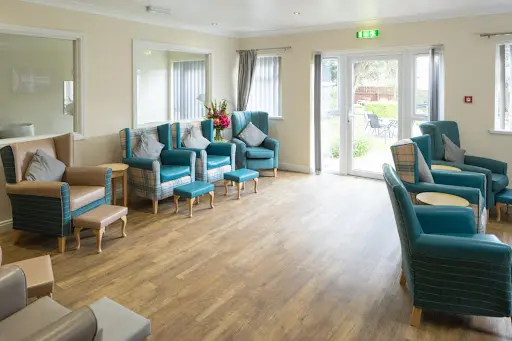
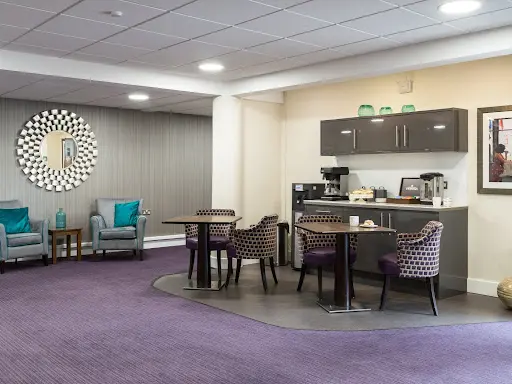
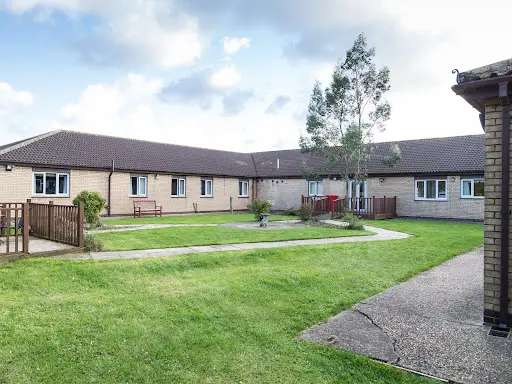
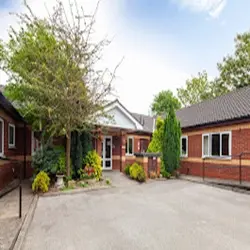
Visitors consistently mention the cleanliness throughout the home, noting that rooms are kept safe and suitable for each resident's specific requirements. During summer months, residents enjoy spending time in the outdoor spaces.
“Families value knowing their loved ones receive consistent, thoughtful care here — the kind that stands up to any unexpected visit.”
DCC does not edit or curate content in this tab. For independently curated information, see The Evidence and DCC Verdict.