Woodlands Court Care Home – Minster Care Group
At a Glance
The information you need to decide whether this home warrants a closer look.
Residential homes
Staff warmth score
of reviewers answered yes
Good to know
- Registered beds40
- SpecialismsCaring for adults over 65 yrs, Caring for adults under 65 yrs, Dementia
- Last inspected2023-05-23
Save Woodlands Court Care Home – Minster Care Group to your shortlist
Keep a running list, add visit notes, and compare homes side-by-side. Free account — it takes a minute.
STAGE 4 — RESEARCHING CARE HOMES
Visit homes. Compare them side by side. Choose with confidence.
Most of us will view care homes the way we view houses, impression, atmosphere, the feeling in the corridor. We go home, try to remember what we saw, and make a permanent decision from a blurred memory.

The DCC shortlist gives every home you visit a structured record: the same twelve questions, answered the same way, every time. When you’re ready to choose, pull any two homes side by side and compare them directly. Same criteria, same evidence, your notes and your scores.
The Evidence
What the review data, the inspection reports, and the dementia-care evidence base tell us about this home.
What families say
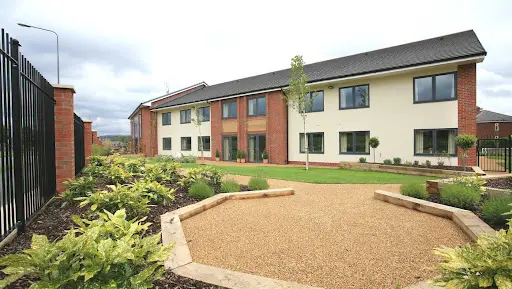
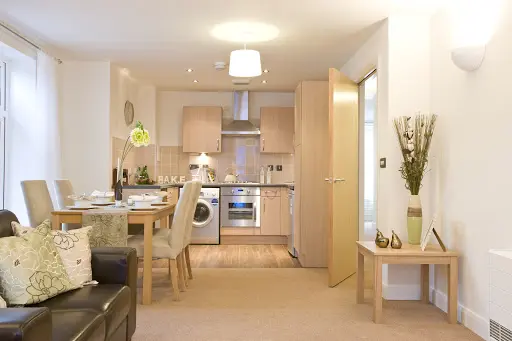
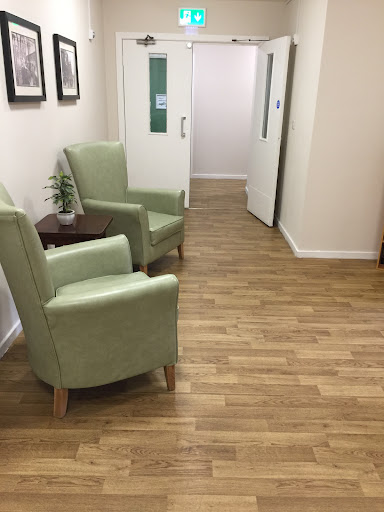
Visitors have noticed the improvements throughout the home, with refurbished areas creating brighter, more comfortable spaces. The food here gets positive mentions from both residents and their families, with meals that people actually look forward to.
The eight family priority themes
- Staff warmth70
- Compassion & dignity72
- Cleanliness65
- Activities & engagement62
- Food quality55
- Healthcare58
- Management & leadership73
- Resident happiness68
What inspectors found
Inspected 2023-05-23
Is this home safe?
Is the care effective?
The Effective domain was rated Requires Improvement at the May 2025 inspection, making it the only domain below Good. Effective covers how well the home translates its knowledge of your parent into their daily care, including training standards, care plan quality, access to GPs and other health professionals, and nutrition. This rating means inspectors identified specific areas that needed to improve. The published report summary does not detail what those areas were, so the precise nature of the shortfall is not available from the published text.Is this home caring?
The Caring domain was rated Good at the May 2025 inspection. This domain reflects whether staff treat your parent with warmth, respect and dignity, whether they are unhurried in their interactions, and whether your parent's independence is supported rather than undermined. A Good rating means inspectors observed or received evidence that these qualities were present. The published report summary does not include direct quotes from residents or relatives, or specific observations of staff interactions, so the texture of what inspectors saw is not available to families from the published text.Is the home responsive?
The Responsive domain was rated Good at the May 2025 inspection. This covers whether the home responds to your parent as an individual, including the range and quality of activities, how the home handles complaints, and whether end-of-life care wishes are recorded and respected. A Good rating means inspectors were satisfied with responsiveness at a headline level. The published report summary does not include specific detail about activity programmes, individual engagement, or complaint handling.Is the home well-led?
The Well-led domain was rated Good at the May 2025 inspection. A named Registered Manager, Mrs Aimee Elizabeth Porter, and a Nominated Individual, Mr Paul Nicholls, are confirmed as in post. This domain covers whether leadership is stable and visible, whether staff feel supported and able to raise concerns, whether governance systems catch problems early, and whether the home learns from things that go wrong. A Good rating here is particularly significant given that the home previously held an Inadequate overall rating. The published summary does not detail the specific governance improvements that underpinned this rating.
Source: CQC inspection report →
What the evidence base says
The home provides care for adults over 65, with particular experience supporting people living with dementia. They also welcome younger adults who need residential care. For residents with dementia, the team understands the importance of familiar routines and patient, responsive care. The recent refurbishments have considered the needs of people living with dementia in creating calmer, easier-to-navigate spaces. All areas worth probing directly during a visit.
The DCC Verdict
Our editorial view, built from the three lenses: what families tell us, what inspectors record, and how the home sits against good dementia-care practice.
DCC Family Score
Woodlands Court scores solidly in the areas families care about most, reflecting a genuine improvement from a previous Inadequate rating, though the inspection report provides limited specific detail across several themes, leaving meaningful gaps that families should probe directly on a visit.
Homes in North West typically score 68–82.The three-lens summary
What families tell us
Visitors have noticed the improvements throughout the home, with refurbished areas creating brighter, more comfortable spaces. The food here gets positive mentions from both residents and their families, with meals that people actually look forward to.
What inspectors have recorded
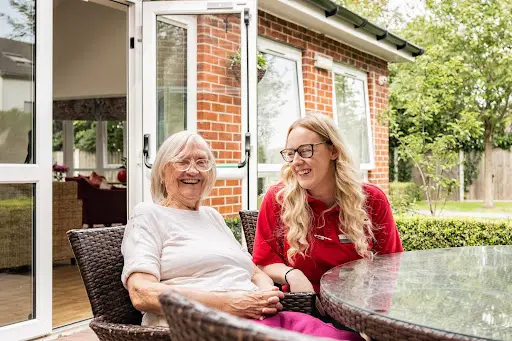
Staff at Woodlands Court work to respond quickly when residents need help, whether that's assistance with daily tasks or just someone to chat with. The team has been adapting to new management structures as part of the home's ongoing improvements.
How it sits against good practice
If you're exploring care options in Wigan, visiting Woodlands Court will give you the clearest picture of what they offer today.
Worth a visit
Woodlands Court Care Home in Wigan was assessed in May 2025 and rated Good overall, a meaningful improvement from its previous Inadequate rating. Four of the five inspection domains (Safe, Caring, Responsive, Well-led) were rated Good, indicating that the home has made substantial progress in safety, kindness, responsiveness to individuals, and leadership since its lowest point. A named, registered manager is in place and the service is actively registered with the regulator. The one area that did not reach Good is Effective, which covers training, care planning, healthcare access and nutrition. This is the domain that most directly affects how well your parent's daily needs and medical health are understood and met. Because the published report summary does not include specific observations, direct quotes or detailed evidence, many important questions remain open. On your visit, pay particular attention to how staff speak about and to your parent, ask to see the activity schedule and a sample care plan, and specifically ask what has improved in training and care planning since the Requires Improvement finding. The home's trajectory is positive, but this is the right moment to ask probing questions rather than rely on the overall Good rating alone.
The three questions to ask when you visitSave this home. Compare it against your shortlist.
Let our analysis show you how Woodlands Court Care Home – Minster Care Group measures up against the other homes you’re considering. Free account.
In Their Own Words
How Woodlands Court Care Home – Minster Care Group describes itself — collected from its own website. DCC has not edited or independently verified the content in this tab.
Fresh start bringing renewed energy to Wigan care
Residential home in Wigan: True Peace of Mind
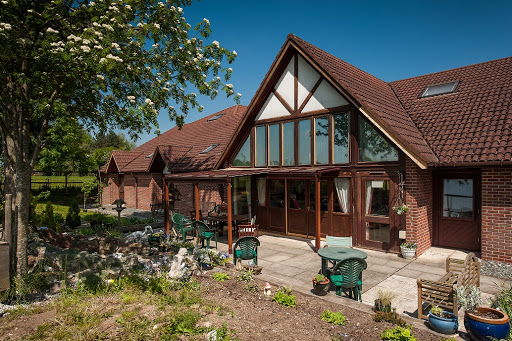
Woodlands Court Care Home in Wigan has been working hard to create a welcoming environment for residents. Recent refurbishments have refreshed the premises, and the team focuses on providing responsive care for adults over 65, including those living with dementia. Families considering care options will find a home that's actively investing in its future.
Who they care for
The home provides care for adults over 65, with particular experience supporting people living with dementia. They also welcome younger adults who need residential care.
For residents with dementia, the team understands the importance of familiar routines and patient, responsive care. The recent refurbishments have considered the needs of people living with dementia in creating calmer, easier-to-navigate spaces.
“If you're exploring care options in Wigan, visiting Woodlands Court will give you the clearest picture of what they offer today.”
DCC does not edit or curate content in this tab. For independently curated information, see The Evidence and DCC Verdict.
The DCC Verdict
Our editorial view, built from the three lenses: what families tell us, what inspectors record, and how the home sits against good dementia-care practice.
DCC Family Score
Woodlands Court scores solidly in the areas families care about most, reflecting a genuine improvement from a previous Inadequate rating, though the inspection report provides limited specific detail across several themes, leaving meaningful gaps that families should probe directly on a visit.
Homes in North West typically score 68–82.The three-lens summary
What families tell us
Visitors have noticed the improvements throughout the home, with refurbished areas creating brighter, more comfortable spaces. The food here gets positive mentions from both residents and their families, with meals that people actually look forward to.
What inspectors have recorded
Staff at Woodlands Court work to respond quickly when residents need help, whether that's assistance with daily tasks or just someone to chat with. The team has been adapting to new management structures as part of the home's ongoing improvements.
How it sits against good practice
If you're exploring care options in Wigan, visiting Woodlands Court will give you the clearest picture of what they offer today.
Worth a visit
Woodlands Court Care Home in Wigan was assessed in May 2025 and rated Good overall, a meaningful improvement from its previous Inadequate rating. Four of the five inspection domains (Safe, Caring, Responsive, Well-led) were rated Good, indicating that the home has made substantial progress in safety, kindness, responsiveness to individuals, and leadership since its lowest point. A named, registered manager is in place and the service is actively registered with the regulator. The one area that did not reach Good is Effective, which covers training, care planning, healthcare access and nutrition. This is the domain that most directly affects how well your parent's daily needs and medical health are understood and met. Because the published report summary does not include specific observations, direct quotes or detailed evidence, many important questions remain open. On your visit, pay particular attention to how staff speak about and to your parent, ask to see the activity schedule and a sample care plan, and specifically ask what has improved in training and care planning since the Requires Improvement finding. The home's trajectory is positive, but this is the right moment to ask probing questions rather than rely on the overall Good rating alone.
The three questions to ask when you visitSave this home. Compare it against your shortlist.
Let our analysis show you how Woodlands Court Care Home – Minster Care Group measures up against the other homes you’re considering. Free account.
In Their Own Words
How Woodlands Court Care Home – Minster Care Group describes itself — collected from its own website. DCC has not edited or independently verified the content in this tab.
Fresh start bringing renewed energy to Wigan care
Residential home in Wigan: True Peace of Mind
Woodlands Court Care Home in Wigan has been working hard to create a welcoming environment for residents. Recent refurbishments have refreshed the premises, and the team focuses on providing responsive care for adults over 65, including those living with dementia. Families considering care options will find a home that's actively investing in its future.
Who they care for
The home provides care for adults over 65, with particular experience supporting people living with dementia. They also welcome younger adults who need residential care.
For residents with dementia, the team understands the importance of familiar routines and patient, responsive care. The recent refurbishments have considered the needs of people living with dementia in creating calmer, easier-to-navigate spaces.
Management & ethos
Staff at Woodlands Court work to respond quickly when residents need help, whether that's assistance with daily tasks or just someone to chat with. The team has been adapting to new management structures as part of the home's ongoing improvements.
“If you're exploring care options in Wigan, visiting Woodlands Court will give you the clearest picture of what they offer today.”
DCC does not edit or curate content in this tab. For independently curated information, see The Evidence and DCC Verdict.