Queen Elizabeth Care Centre

At a Glance
The information you need to decide whether this home warrants a closer look.
Nursing homes
Staff warmth score
of reviewers answered yes
Good to know
- Registered beds74
- SpecialismsCaring for adults over 65 yrs, Caring for adults under 65 yrs, Dementia, Mental health conditions, Physical disabilities
- Last inspected2023-03-31
Save Queen Elizabeth Care Centre to your shortlist
Keep a running list, add visit notes, and compare homes side-by-side. Free account — it takes a minute.
STAGE 4 — RESEARCHING CARE HOMES
Visit homes. Compare them side by side. Choose with confidence.
Most of us will view care homes the way we view houses, impression, atmosphere, the feeling in the corridor. We go home, try to remember what we saw, and make a permanent decision from a blurred memory.

The DCC shortlist gives every home you visit a structured record: the same twelve questions, answered the same way, every time. When you’re ready to choose, pull any two homes side by side and compare them directly. Same criteria, same evidence, your notes and your scores.
The Evidence
What the review data, the inspection reports, and the dementia-care evidence base tell us about this home.
What families say
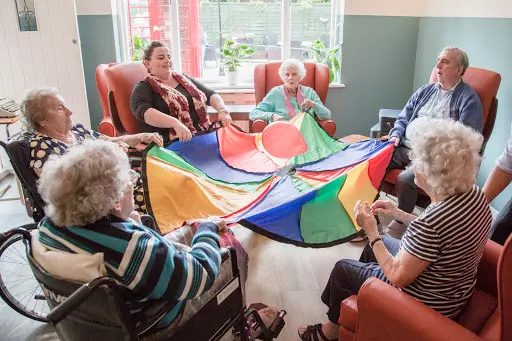
Families describe the carers here as genuinely compassionate, taking time to understand each resident's individual needs. People talk about seeing their relatives become more mobile and engaged after arriving, with mood improvements happening surprisingly quickly. The patience shown by staff, particularly with residents who need extra emotional support, stands out in family accounts.
The eight family priority themes
- Staff warmth72
- Compassion & dignity70
- Cleanliness70
- Activities & engagement60
- Food quality60
- Healthcare72
- Management & leadership72
- Resident happiness68
What inspectors found
Inspected 2023-03-31
Is this home safe?
Is the care effective?
The home was rated Good for Effective at its November 2024 inspection. This domain covers training, care planning, health monitoring, and GP access. No specific examples of care plan content, dementia training curricula, or healthcare arrangements are included in the published report summary. The home lists dementia as a specialism, which means inspectors would have considered dementia-specific practice as part of this domain.Is this home caring?
The home was rated Good for Caring at its November 2024 inspection. This domain covers staff warmth, dignity, respect, and how staff support residents' independence. No direct inspector observations of staff interactions, no resident quotes, and no relative quotes are included in the published report summary. Staff warmth is the single biggest driver of family satisfaction in our review data, mentioned in 57.3% of positive reviews, so the absence of specific evidence here is a gap worth noting.Is the home responsive?
The home was rated Good for Responsive at its November 2024 inspection. This domain covers activities, individual engagement, and how well the home responds to each resident's personal preferences and life history. No specific examples of activities, individual engagement programmes, or end-of-life planning arrangements are included in the published report summary. For a home that supports people with advanced dementia, individual one-to-one engagement is particularly important for those who cannot participate in group activities.Is the home well-led?
The home was rated Good for Well-led at its November 2024 inspection, having previously been rated Inadequate overall. The registered manager is Mrs Anna Iljina and the nominated individual is Mr Mulkraj Ram. A Good rating for Well-led indicates inspectors found effective governance, a positive staff culture, and accountability structures in place. No specific observations about management visibility, staff morale, or how the home handled complaints or incidents are included in the published summary.
Source: CQC inspection report →
What the evidence base says
The centre specialises in caring for people with dementia, mental health conditions and physical disabilities. They support both younger adults under 65 and older residents, offering specialist knowledge across different age groups and conditions. For residents living with dementia, the carers show particular patience and understanding. Families have noticed how staff adapt their approach to each person's specific needs, helping residents feel more settled and engaged. All areas worth probing directly during a visit.
The DCC Verdict
Our editorial view, built from the three lenses: what families tell us, what inspectors record, and how the home sits against good dementia-care practice.
DCC Family Score
Queen Elizabeth Care Centre has improved from Inadequate to Good across all five domains at its most recent inspection in November 2024, which is a meaningful turnaround. However, the published report contains limited specific observations, quotes, or direct evidence, so scores reflect the confirmed improvement without the detail that would push them higher.
Homes in South East typically score 68–82.The three-lens summary
What families tell us
Families describe the carers here as genuinely compassionate, taking time to understand each resident's individual needs. People talk about seeing their relatives become more mobile and engaged after arriving, with mood improvements happening surprisingly quickly. The patience shown by staff, particularly with residents who need extra emotional support, stands out in family accounts.
What inspectors have recorded
The care team here gets praise for keeping families informed when they're actively involved in their loved one's care. Some families have found the management team welcoming and engaged, while others have had different experiences. It's worth noting that families have raised concerns about clinical decisions being made without their input, particularly around medication and care planning.
How it sits against good practice
If you're considering Queen Elizabeth Care Centre, it's worth visiting to meet the team and discuss how they'd support your family member's specific needs.
Worth a visit
Queen Elizabeth Care Centre, a 74-bed nursing home in Egham specialising in dementia, mental health conditions, and physical disabilities, was rated Good across all five inspection domains at its most recent assessment in November 2024. This is a significant improvement from its previous Inadequate rating and indicates that inspectors found the home to be safe, effectively run, caring, responsive to residents, and well-led at the time of the visit. The main uncertainty here is that the published report summary contains very little specific detail: no direct quotes from your mum or dad or from relatives, no named observations of staff interactions, and no description of daily life inside the home. The Good rating tells you the direction of travel is positive, but it does not tell you what the home looks and feels like on a Tuesday afternoon. Before making a decision, visit in person, ask to see last week's actual staffing rota (not just the planned template), and ask the manager to describe what changed since the Inadequate rating and how they know the improvements have held.
The three questions to ask when you visitSave this home. Compare it against your shortlist.
Let our analysis show you how Queen Elizabeth Care Centre measures up against the other homes you’re considering. Free account.
In Their Own Words
How Queen Elizabeth Care Centre describes itself — collected from its own website. DCC has not edited or independently verified the content in this tab.
Caring frontline staff bring comfort in this Egham care centre
Queen Elizabeth Care Centre – Your Trusted nursing home
When families need specialist care for complex conditions, Queen Elizabeth Care Centre in Egham offers support across mental health, dementia and physical disabilities. The home has seen significant changes recently, with families noting real improvements in their loved ones' wellbeing. Located in the heart of Surrey, the centre provides care for adults both under and over 65.
Who they care for
The centre specialises in caring for people with dementia, mental health conditions and physical disabilities. They support both younger adults under 65 and older residents, offering specialist knowledge across different age groups and conditions.
For residents living with dementia, the carers show particular patience and understanding. Families have noticed how staff adapt their approach to each person's specific needs, helping residents feel more settled and engaged.
“If you're considering Queen Elizabeth Care Centre, it's worth visiting to meet the team and discuss how they'd support your family member's specific needs.”
DCC does not edit or curate content in this tab. For independently curated information, see The Evidence and DCC Verdict.
The DCC Verdict
Our editorial view, built from the three lenses: what families tell us, what inspectors record, and how the home sits against good dementia-care practice.
DCC Family Score
Queen Elizabeth Care Centre has improved from Inadequate to Good across all five domains at its most recent inspection in November 2024, which is a meaningful turnaround. However, the published report contains limited specific observations, quotes, or direct evidence, so scores reflect the confirmed improvement without the detail that would push them higher.
Homes in South East typically score 68–82.The three-lens summary
What families tell us
Families describe the carers here as genuinely compassionate, taking time to understand each resident's individual needs. People talk about seeing their relatives become more mobile and engaged after arriving, with mood improvements happening surprisingly quickly. The patience shown by staff, particularly with residents who need extra emotional support, stands out in family accounts.
What inspectors have recorded
The care team here gets praise for keeping families informed when they're actively involved in their loved one's care. Some families have found the management team welcoming and engaged, while others have had different experiences. It's worth noting that families have raised concerns about clinical decisions being made without their input, particularly around medication and care planning.
How it sits against good practice
If you're considering Queen Elizabeth Care Centre, it's worth visiting to meet the team and discuss how they'd support your family member's specific needs.
Worth a visit
Queen Elizabeth Care Centre, a 74-bed nursing home in Egham specialising in dementia, mental health conditions, and physical disabilities, was rated Good across all five inspection domains at its most recent assessment in November 2024. This is a significant improvement from its previous Inadequate rating and indicates that inspectors found the home to be safe, effectively run, caring, responsive to residents, and well-led at the time of the visit. The main uncertainty here is that the published report summary contains very little specific detail: no direct quotes from your mum or dad or from relatives, no named observations of staff interactions, and no description of daily life inside the home. The Good rating tells you the direction of travel is positive, but it does not tell you what the home looks and feels like on a Tuesday afternoon. Before making a decision, visit in person, ask to see last week's actual staffing rota (not just the planned template), and ask the manager to describe what changed since the Inadequate rating and how they know the improvements have held.
The three questions to ask when you visitSave this home. Compare it against your shortlist.
Let our analysis show you how Queen Elizabeth Care Centre measures up against the other homes you’re considering. Free account.
In Their Own Words
How Queen Elizabeth Care Centre describes itself — collected from its own website. DCC has not edited or independently verified the content in this tab.
Caring frontline staff bring comfort in this Egham care centre
Queen Elizabeth Care Centre – Your Trusted nursing home
When families need specialist care for complex conditions, Queen Elizabeth Care Centre in Egham offers support across mental health, dementia and physical disabilities. The home has seen significant changes recently, with families noting real improvements in their loved ones' wellbeing. Located in the heart of Surrey, the centre provides care for adults both under and over 65.
Who they care for
The centre specialises in caring for people with dementia, mental health conditions and physical disabilities. They support both younger adults under 65 and older residents, offering specialist knowledge across different age groups and conditions.
For residents living with dementia, the carers show particular patience and understanding. Families have noticed how staff adapt their approach to each person's specific needs, helping residents feel more settled and engaged.
Management & ethos
The care team here gets praise for keeping families informed when they're actively involved in their loved one's care. Some families have found the management team welcoming and engaged, while others have had different experiences. It's worth noting that families have raised concerns about clinical decisions being made without their input, particularly around medication and care planning.
“If you're considering Queen Elizabeth Care Centre, it's worth visiting to meet the team and discuss how they'd support your family member's specific needs.”
DCC does not edit or curate content in this tab. For independently curated information, see The Evidence and DCC Verdict.