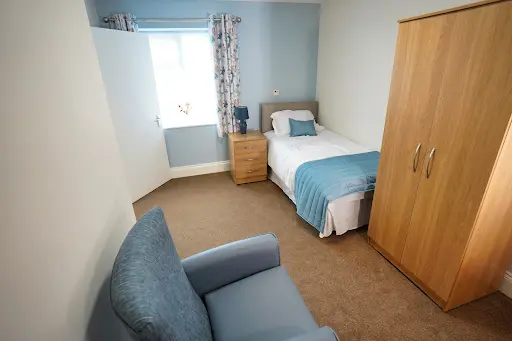
Ashridge Court Care Centre

At a Glance
The information you need to decide whether this home warrants a closer look.
Nursing homes
Staff warmth score
of reviewers answered yes
Good to know
- Registered beds69
- SpecialismsCaring for adults over 65 yrs, Caring for adults under 65 yrs, Dementia, Physical disabilities, Sensory impairment
- Last inspected2021-02-10
Save Ashridge Court Care Centre to your shortlist
Keep a running list, add visit notes, and compare homes side-by-side. Free account — it takes a minute.
STAGE 4 — RESEARCHING CARE HOMES
Visit homes. Compare them side by side. Choose with confidence.
Most of us will view care homes the way we view houses, impression, atmosphere, the feeling in the corridor. We go home, try to remember what we saw, and make a permanent decision from a blurred memory.

The DCC shortlist gives every home you visit a structured record: the same twelve questions, answered the same way, every time. When you’re ready to choose, pull any two homes side by side and compare them directly. Same criteria, same evidence, your notes and your scores.
The Evidence
What the review data, the inspection reports, and the dementia-care evidence base tell us about this home.
What families say
Families describe finding warm, approachable staff throughout the centre who respond quickly when needed. The team has shown particular skill in accommodating urgent admissions, working with families to make difficult transitions as smooth as possible.
The eight family priority themes
- Staff warmth55
- Compassion & dignity55
- Cleanliness55
- Activities & engagement50
- Food quality50
- Healthcare55
- Management & leadership65
- Resident happiness55
What inspectors found
Inspected 2021-02-10
Is this home safe?
Is the care effective?
Effectiveness was rated Good at the January 2021 inspection. The published report does not describe the content of staff training, the format of care plans, how frequently care plans are reviewed, or how GP and specialist access is arranged for residents. No specific examples of effective practice are recorded in the published text.Is this home caring?
The caring domain was rated Good at the January 2021 inspection. The published report includes no direct observations of staff interactions, no resident testimony, and no family quotes. It is not possible to assess from the published text how staff address residents, whether interactions feel warm and unhurried, or how privacy and dignity are maintained in practice.Is the home responsive?
The responsive domain was rated Good at the January 2021 inspection. The published report does not describe the activity programme, individual engagement for people who cannot join groups, how the home responds to changing needs, or how complaints are handled. No specific examples of responsive practice are included in the published text.Is the home well-led?
Well-led was rated Good at the January 2021 inspection, improving from the previous Requires Improvement rating. The home has two registered managers named in the inspection record, along with a nominated individual. The published report does not describe the management culture, how staff are supported to raise concerns, or how the home monitors and improves its own quality.
Source: CQC inspection report →
What the evidence base says
The centre cares for adults both under and over 65, including those living with dementia, physical disabilities, and sensory impairments. As part of their specialist services, the team supports residents living with dementia, though specific approaches and programmes would need to be discussed during your visit. All areas worth probing directly during a visit.
The DCC Verdict
Our editorial view, built from the three lenses: what families tell us, what inspectors record, and how the home sits against good dementia-care practice.
DCC Family Score
Ashridge Court Care Centre improved from Requires Improvement to Good across all five inspection domains, which is a meaningful positive step. However, the published inspection report contains very limited specific detail, so the score reflects confirmed improvement rather than rich, verified evidence of day-to-day quality.
Homes in South East typically score 68–82.The three-lens summary
What families tell us
Families describe finding warm, approachable staff throughout the centre who respond quickly when needed. The team has shown particular skill in accommodating urgent admissions, working with families to make difficult transitions as smooth as possible.
What inspectors have recorded
The nursing team receives particular praise for their compassionate approach during end-of-life care, with families noting how staff honour resident wishes and provide professional support. However, some families have experienced frustrations with laundry management, reporting lost clothing items, and there are concerns about whether current staffing levels fully meet resident needs.
How it sits against good practice
Understanding both the strengths and challenges helps you make the right choice for your family's unique situation.
Worth a visit
Ashridge Court Care Centre, in Bexhill-on-Sea, was rated Good across all five inspection domains at its last inspection in January 2021. That represents a genuine improvement: the home had previously been rated Requires Improvement, and returning to Good across every domain is a positive sign that issues were identified and addressed. A remote review of available data carried out in July 2023 found nothing to suggest the rating needed to change. The honest limitation here is that the published inspection report is very short and contains almost no specific observations, quotes from your parent's potential future neighbours, or detail about day-to-day life in the home. A Good rating matters, but it tells you the floor, not the ceiling. Before you make a decision, visit in person and ask the questions listed in the checklist above, particularly around night staffing ratios, dementia training content, how the home communicates with families, and what individual engagement looks like for someone who cannot join group activities.
The three questions to ask when you visitSave this home. Compare it against your shortlist.
Let our analysis show you how Ashridge Court Care Centre measures up against the other homes you’re considering. Free account.
In Their Own Words
How Ashridge Court Care Centre describes itself — collected from its own website. DCC has not edited or independently verified the content in this tab.
Where compassionate staff support families through life's most difficult moments
Ashridge Court – Expert Care in Bexhill On Sea
When you're searching for the right care in Bexhill On Sea, you need somewhere that truly understands what matters most during vulnerable times. Ashridge Court Care Centre has built a reputation for supporting families through end-of-life care with genuine compassion and professionalism. The team here focuses on honouring residents' wishes while keeping families closely involved.
Who they care for
The centre cares for adults both under and over 65, including those living with dementia, physical disabilities, and sensory impairments.
As part of their specialist services, the team supports residents living with dementia, though specific approaches and programmes would need to be discussed during your visit.
“Understanding both the strengths and challenges helps you make the right choice for your family's unique situation.”
DCC does not edit or curate content in this tab. For independently curated information, see The Evidence and DCC Verdict.
The DCC Verdict
Our editorial view, built from the three lenses: what families tell us, what inspectors record, and how the home sits against good dementia-care practice.
DCC Family Score
Ashridge Court Care Centre improved from Requires Improvement to Good across all five inspection domains, which is a meaningful positive step. However, the published inspection report contains very limited specific detail, so the score reflects confirmed improvement rather than rich, verified evidence of day-to-day quality.
Homes in South East typically score 68–82.The three-lens summary
What families tell us
Families describe finding warm, approachable staff throughout the centre who respond quickly when needed. The team has shown particular skill in accommodating urgent admissions, working with families to make difficult transitions as smooth as possible.
What inspectors have recorded
The nursing team receives particular praise for their compassionate approach during end-of-life care, with families noting how staff honour resident wishes and provide professional support. However, some families have experienced frustrations with laundry management, reporting lost clothing items, and there are concerns about whether current staffing levels fully meet resident needs.
How it sits against good practice
Understanding both the strengths and challenges helps you make the right choice for your family's unique situation.
Worth a visit
Ashridge Court Care Centre, in Bexhill-on-Sea, was rated Good across all five inspection domains at its last inspection in January 2021. That represents a genuine improvement: the home had previously been rated Requires Improvement, and returning to Good across every domain is a positive sign that issues were identified and addressed. A remote review of available data carried out in July 2023 found nothing to suggest the rating needed to change. The honest limitation here is that the published inspection report is very short and contains almost no specific observations, quotes from your parent's potential future neighbours, or detail about day-to-day life in the home. A Good rating matters, but it tells you the floor, not the ceiling. Before you make a decision, visit in person and ask the questions listed in the checklist above, particularly around night staffing ratios, dementia training content, how the home communicates with families, and what individual engagement looks like for someone who cannot join group activities.
The three questions to ask when you visitSave this home. Compare it against your shortlist.
Let our analysis show you how Ashridge Court Care Centre measures up against the other homes you’re considering. Free account.
In Their Own Words
How Ashridge Court Care Centre describes itself — collected from its own website. DCC has not edited or independently verified the content in this tab.
Where compassionate staff support families through life's most difficult moments
Ashridge Court – Expert Care in Bexhill On Sea
When you're searching for the right care in Bexhill On Sea, you need somewhere that truly understands what matters most during vulnerable times. Ashridge Court Care Centre has built a reputation for supporting families through end-of-life care with genuine compassion and professionalism. The team here focuses on honouring residents' wishes while keeping families closely involved.
Who they care for
The centre cares for adults both under and over 65, including those living with dementia, physical disabilities, and sensory impairments.
As part of their specialist services, the team supports residents living with dementia, though specific approaches and programmes would need to be discussed during your visit.
Management & ethos
The nursing team receives particular praise for their compassionate approach during end-of-life care, with families noting how staff honour resident wishes and provide professional support. However, some families have experienced frustrations with laundry management, reporting lost clothing items, and there are concerns about whether current staffing levels fully meet resident needs.
The home & environment
The centre provides garden access with equipment that helps residents enjoy outdoor time throughout the seasons. While some areas show signs of wear, the outdoor spaces offer residents opportunities to stay connected with nature.
“Understanding both the strengths and challenges helps you make the right choice for your family's unique situation.”
DCC does not edit or curate content in this tab. For independently curated information, see The Evidence and DCC Verdict.