Devonshire House care home, Sudbury
At a Glance
The information you need to decide whether this home warrants a closer look.
Residential homes
Staff warmth score
of reviewers answered yes
Good to know
- Registered beds69
- SpecialismsCaring for adults over 65 yrs, Caring for adults under 65 yrs, Dementia
- Last inspected2023-03-08
Save Devonshire House care home, Sudbury to your shortlist
Keep a running list, add visit notes, and compare homes side-by-side. Free account — it takes a minute.
STAGE 4 — RESEARCHING CARE HOMES
Visit homes. Compare them side by side. Choose with confidence.
Most of us will view care homes the way we view houses, impression, atmosphere, the feeling in the corridor. We go home, try to remember what we saw, and make a permanent decision from a blurred memory.

The DCC shortlist gives every home you visit a structured record: the same twelve questions, answered the same way, every time. When you’re ready to choose, pull any two homes side by side and compare them directly. Same criteria, same evidence, your notes and your scores.
The Evidence
What the review data, the inspection reports, and the dementia-care evidence base tell us about this home.
What families say
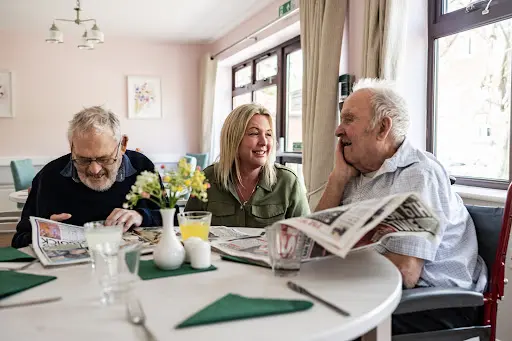
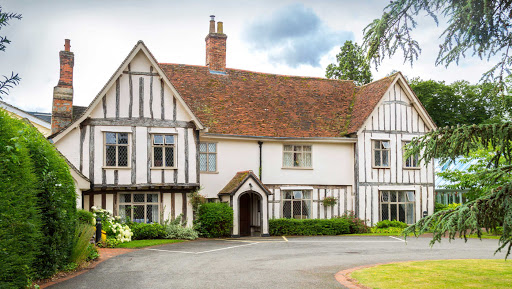
Families mention the homely feel that comes from both the building's character and how staff conduct themselves. People describe finding peace in the environment here, with care that feels consistently kind and responsive to individual needs.
The eight family priority themes
- Staff warmth75
- Compassion & dignity75
- Cleanliness72
- Activities & engagement68
- Food quality68
- Healthcare70
- Management & leadership55
- Resident happiness70
What inspectors found
Inspected 2023-03-08
Is this home safe?
Is the care effective?
Effective was rated Good at this inspection. The published findings do not describe the specific content of care plans, the frequency of GP access, the dementia training staff have received, or how food quality and dietary needs are managed. The Good rating indicates inspectors were satisfied with the overall standard of practice, but the detail behind that judgement is not available in the published report.Is this home caring?
Caring was rated Good at this inspection. No specific observations about staff interactions, use of preferred names, response to distress, or the pace of care are included in the published findings. A Good rating in this domain means inspectors were satisfied that residents were treated with dignity and respect, but the evidence behind that judgement is not described in the published report.Is the home responsive?
Responsive was rated Good at this inspection. The published findings do not describe the activity programme, how individual preferences are recorded and acted upon, what provision exists for residents with advanced dementia who cannot join group activities, or how end-of-life care is planned. The Good rating indicates inspectors were satisfied with the home's approach to meeting individual needs.Is the home well-led?
Well-led Requires Improvement at this inspection. This is the one domain that has not yet reached a Good standard. The published findings do not explain specifically what inspectors found wanting in the home's leadership, governance, or management culture. The registered manager is named as Mrs Kerry Elizabeth Healy, and the nominated individual is Mr Daniel Ryan. Devonshire House is operated by Anchor Hanover Group.
Source: CQC inspection report →
What the evidence base says
Devonshire House cares for adults both under and over 65, including those living with dementia. This means they support people at different life stages, from younger adults needing specialist care to older residents. While dementia care is listed as a specialism here, families haven't shared specific details about memory support or dementia-focused activities. You might want to ask about their approach to dementia care when you visit. All areas worth probing directly during a visit.
The DCC Verdict
Our editorial view, built from the three lenses: what families tell us, what inspectors record, and how the home sits against good dementia-care practice.
DCC Family Score
Devonshire House scores 72 out of 100. Four of the five inspection domains were rated Good, which is a meaningful improvement from the previous Requires Improvement rating, but the Well-led domain still Requires Improvement, which pulls the overall score down and raises questions about leadership stability that are worth exploring on a visit.
Homes in East typically score 68–82.The three-lens summary
What families tell us
Families mention the homely feel that comes from both the building's character and how staff conduct themselves. People describe finding peace in the environment here, with care that feels consistently kind and responsive to individual needs.
What inspectors have recorded
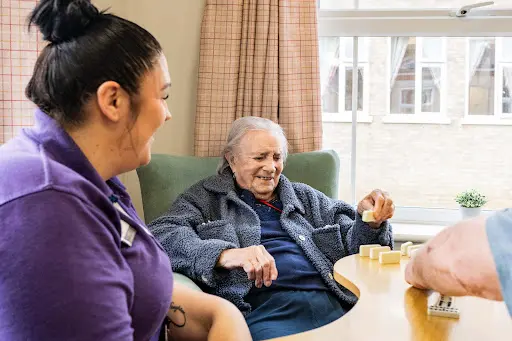
The care team at Devonshire House responds to residents with genuine attentiveness. Families particularly value how staff maintain respect and dignity, especially during challenging periods when this matters most.
How it sits against good practice
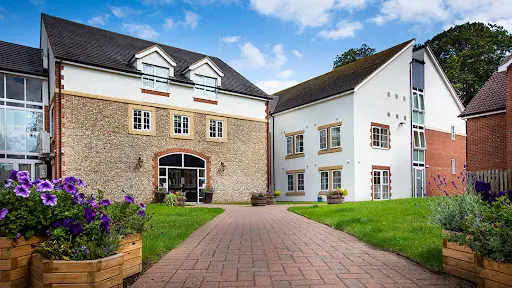
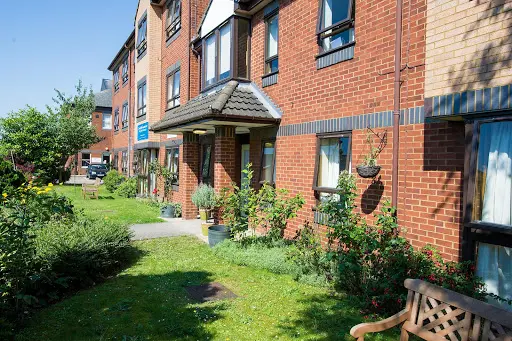
The character of this historic building seems to complement the respectful care provided within its walls.
Worth a visit
Devonshire House on the High Street in Sudbury was rated Good overall at its most recent inspection, published in September 2025. This is a genuine and meaningful improvement from its previous rating of Requires Improvement. The four domains of Safe, Effective, Caring, and Responsive all achieved Good ratings, which suggests the home has addressed the concerns that led to the earlier rating and is providing a reasonable standard of care for its 69 residents, including those living with dementia. The one area that still Requires Improvement is Well-led, which covers management, governance, and the culture of the home. The published inspection text is very brief and does not explain what specifically still needs to improve in leadership, which makes it harder to judge how serious the concern is. When you visit, ask to meet the registered manager, find out how long she has been in post, and ask what changes have been made since the previous inspection. Also ask what the home is still working on, because a good manager will be able to tell you clearly. Given the limited detail published, treat the four Good domain ratings as encouraging but use your visit to gather the specific evidence that the report does not provide.
The three questions to ask when you visitSave this home. Compare it against your shortlist.
Let our analysis show you how Devonshire House care home, Sudbury measures up against the other homes you’re considering. Free account.
In Their Own Words
How Devonshire House care home, Sudbury describes itself — collected from its own website. DCC has not edited or independently verified the content in this tab.
Historic house where dignity shapes every interaction
Compassionate Care in Sudbury at Devonshire House
When families describe Devonshire House in Sudbury, they talk about respect first. This care home occupies a listed building where staff create an atmosphere that feels both peaceful and welcoming. The team here focuses on preserving dignity through every stage of care, something that matters deeply to families navigating difficult transitions.
Who they care for
Devonshire House cares for adults both under and over 65, including those living with dementia. This means they support people at different life stages, from younger adults needing specialist care to older residents.
While dementia care is listed as a specialism here, families haven't shared specific details about memory support or dementia-focused activities. You might want to ask about their approach to dementia care when you visit.
“The character of this historic building seems to complement the respectful care provided within its walls.”
DCC does not edit or curate content in this tab. For independently curated information, see The Evidence and DCC Verdict.
The DCC Verdict
Our editorial view, built from the three lenses: what families tell us, what inspectors record, and how the home sits against good dementia-care practice.
DCC Family Score
Devonshire House scores 72 out of 100. Four of the five inspection domains were rated Good, which is a meaningful improvement from the previous Requires Improvement rating, but the Well-led domain still Requires Improvement, which pulls the overall score down and raises questions about leadership stability that are worth exploring on a visit.
Homes in East typically score 68–82.The three-lens summary
What families tell us
Families mention the homely feel that comes from both the building's character and how staff conduct themselves. People describe finding peace in the environment here, with care that feels consistently kind and responsive to individual needs.
What inspectors have recorded
The care team at Devonshire House responds to residents with genuine attentiveness. Families particularly value how staff maintain respect and dignity, especially during challenging periods when this matters most.
How it sits against good practice
The character of this historic building seems to complement the respectful care provided within its walls.
Worth a visit
Devonshire House on the High Street in Sudbury was rated Good overall at its most recent inspection, published in September 2025. This is a genuine and meaningful improvement from its previous rating of Requires Improvement. The four domains of Safe, Effective, Caring, and Responsive all achieved Good ratings, which suggests the home has addressed the concerns that led to the earlier rating and is providing a reasonable standard of care for its 69 residents, including those living with dementia. The one area that still Requires Improvement is Well-led, which covers management, governance, and the culture of the home. The published inspection text is very brief and does not explain what specifically still needs to improve in leadership, which makes it harder to judge how serious the concern is. When you visit, ask to meet the registered manager, find out how long she has been in post, and ask what changes have been made since the previous inspection. Also ask what the home is still working on, because a good manager will be able to tell you clearly. Given the limited detail published, treat the four Good domain ratings as encouraging but use your visit to gather the specific evidence that the report does not provide.
The three questions to ask when you visitSave this home. Compare it against your shortlist.
Let our analysis show you how Devonshire House care home, Sudbury measures up against the other homes you’re considering. Free account.
In Their Own Words
How Devonshire House care home, Sudbury describes itself — collected from its own website. DCC has not edited or independently verified the content in this tab.
Historic house where dignity shapes every interaction
Compassionate Care in Sudbury at Devonshire House
When families describe Devonshire House in Sudbury, they talk about respect first. This care home occupies a listed building where staff create an atmosphere that feels both peaceful and welcoming. The team here focuses on preserving dignity through every stage of care, something that matters deeply to families navigating difficult transitions.
Who they care for
Devonshire House cares for adults both under and over 65, including those living with dementia. This means they support people at different life stages, from younger adults needing specialist care to older residents.
While dementia care is listed as a specialism here, families haven't shared specific details about memory support or dementia-focused activities. You might want to ask about their approach to dementia care when you visit.
Management & ethos
The care team at Devonshire House responds to residents with genuine attentiveness. Families particularly value how staff maintain respect and dignity, especially during challenging periods when this matters most.
“The character of this historic building seems to complement the respectful care provided within its walls.”
DCC does not edit or curate content in this tab. For independently curated information, see The Evidence and DCC Verdict.