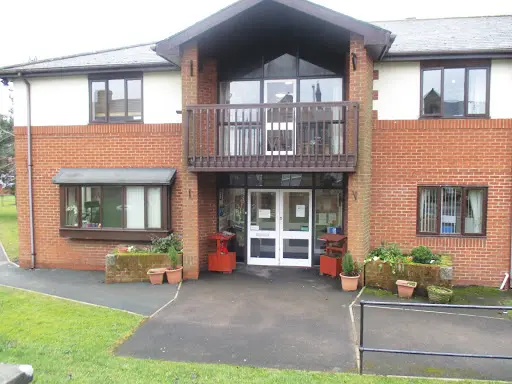
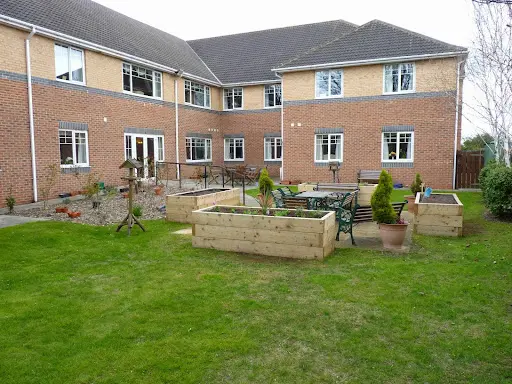
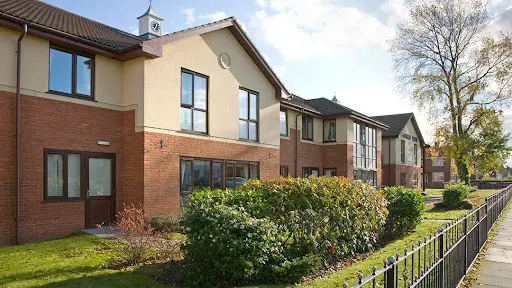
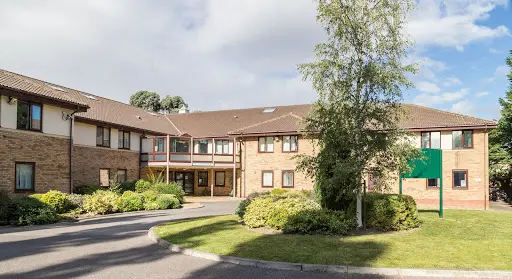
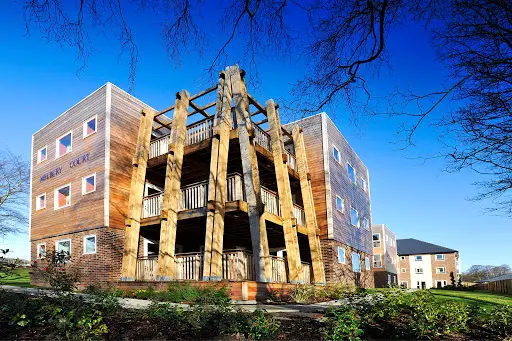
Rushyfields Residential and Nursing Home – Sanctuary Care
At a Glance
The information you need to decide whether this home warrants a closer look.
Nursing homes
Staff warmth score
of reviewers answered yes
Good to know
- Registered beds41
- SpecialismsCaring for adults over 65 yrs, Caring for adults under 65 yrs, Dementia, Mental health conditions, Substance misuse problems
- Last inspected2022-11-08
Save Rushyfields Residential and Nursing Home – Sanctuary Care to your shortlist
Keep a running list, add visit notes, and compare homes side-by-side. Free account — it takes a minute.
STAGE 4 — RESEARCHING CARE HOMES
Visit homes. Compare them side by side. Choose with confidence.
Most of us will view care homes the way we view houses, impression, atmosphere, the feeling in the corridor. We go home, try to remember what we saw, and make a permanent decision from a blurred memory.

The DCC shortlist gives every home you visit a structured record: the same twelve questions, answered the same way, every time. When you’re ready to choose, pull any two homes side by side and compare them directly. Same criteria, same evidence, your notes and your scores.
The Evidence
What the review data, the inspection reports, and the dementia-care evidence base tell us about this home.
What families say
Families talk about seeing real changes in their loved ones here. One person watched their relative gain weight and become noticeably happier after moving in, despite previous care settings finding them difficult to manage. The difference seems to come from how staff approach each resident as an individual.
The eight family priority themes
- Staff warmth70
- Compassion & dignity70
- Cleanliness68
- Activities & engagement65
- Food quality60
- Healthcare68
- Management & leadership75
- Resident happiness68
What inspectors found
Inspected 2022-11-08
Is this home safe?
Is the care effective?
Effectiveness was rated Good, covering training, care planning, healthcare access, and nutritional support. The home lists dementia as a formal specialism, which implies a commitment to dementia-specific training — though the published text does not detail what that training involves or how recently staff completed it. A Good Effective rating following a period of Inadequate suggests the home has rebuilt its foundations in care planning and clinical oversight. No specific observations about GP access, medication review, or dietary support appear in the available summary.Is this home caring?
The Caring domain was rated Good. This domain captures the warmth of staff interactions, whether people are treated with dignity, and whether independence is supported. A Good Caring rating following Inadequate is particularly meaningful — it suggests inspectors witnessed genuine improvement in how staff relate to the people they care for. However, the published text does not include direct observations of staff-resident interactions, resident testimony, or quotes that would give a more vivid picture.Is the home responsive?
Responsiveness was rated Good, covering activities, individual engagement, and how well the home adapts to each person's needs and preferences. The home's broad specialism range — dementia, mental health, nursing — means responsiveness needs to be genuinely individual rather than one-size-fits-all. A Good rating here suggests inspectors were satisfied with how the home tailors its approach. No specific activities, named programmes, or observations of resident engagement are recorded in the available inspection text.Is the home well-led?
Leadership was rated Good — a domain that had previously contributed to an Inadequate rating and has been fully recovered. Two named individuals hold formal accountability: the registered manager and the nominated individual from Sanctuary Care Limited. A Good Well-led rating after Inadequate suggests the home has rebuilt its governance structures, staff culture, and oversight systems. The improvement across all five domains simultaneously points to consistent leadership rather than patchwork fixes. No specific detail about manager tenure, staff survey results, or complaint handling is available from the published text.
Source: CQC inspection report →
What the evidence base says
The home supports people with dementia, mental health conditions, and substance misuse problems, alongside general care for adults over and under 65. Staff here have shown they know what they're doing when dementia creates difficult situations. Families have watched them manage challenging incidents calmly and professionally, always keeping the person's comfort at the centre of their response. All areas worth probing directly during a visit.
The DCC Verdict
Our editorial view, built from the three lenses: what families tell us, what inspectors record, and how the home sits against good dementia-care practice.
DCC Family Score
Rushyfields has achieved a solid Good across all five inspection domains following a significant improvement from Inadequate, which is genuinely encouraging — but the inspection report contains limited specific observations, quotes, or detail that would push individual scores higher with confidence.
Homes in North East typically score 68–82.The three-lens summary
What families tell us
Families talk about seeing real changes in their loved ones here. One person watched their relative gain weight and become noticeably happier after moving in, despite previous care settings finding them difficult to manage. The difference seems to come from how staff approach each resident as an individual.
What inspectors have recorded
When medical emergencies happen, families have seen staff handle things properly — following the right procedures while keeping residents comfortable and families informed. The team comes across as genuinely approachable, with several people mentioning how friendly and responsive they find the staff.
How it sits against good practice
If your loved one needs somewhere that won't give up when things get tough, it's worth seeing what Rushyfields offers firsthand.
Worth a visit
Rushyfields Residential and Nursing Home in Durham was rated Good across all five inspection domains at its most recent assessment in August 2022 — a significant achievement given the home had previously held an Inadequate rating. That improvement trajectory matters: it tells you the registered manager and the Sanctuary Care team identified serious problems and fixed them to the satisfaction of inspectors. The home supports up to 41 people across a broad range of needs, including dementia, mental health conditions, and nursing care, and all five domains — safety, effectiveness, caring, responsiveness, and leadership — were found to meet the standard expected. The main uncertainty here is one of detail, not direction. The published inspection summary does not provide the level of specific observations, resident quotes, or staff interaction evidence that would give a full picture of day-to-day life. That means this report cannot tell you with confidence what mealtimes feel like, how staff speak to your parent when they're distressed, or how many people are on overnight. On your visit, ask to walk the dementia unit unannounced after 4pm, watch how staff respond to a resident who seems unsettled, and ask directly: 'What was found to be wrong before, and what exactly changed?' A home that can answer that question clearly and without defensiveness has earned its Good.
The three questions to ask when you visitSave this home. Compare it against your shortlist.
Let our analysis show you how Rushyfields Residential and Nursing Home – Sanctuary Care measures up against the other homes you’re considering. Free account.
In Their Own Words
How Rushyfields Residential and Nursing Home – Sanctuary Care describes itself — collected from its own website. DCC has not edited or independently verified the content in this tab.
Where challenging behaviour meets patient understanding
Dedicated nursing home Support in Durham
Some residents need more than just good intentions — they need staff who truly understand complex behaviour. Rushyfields Residential and Nursing Home in Durham brings together experienced teams who know how to respond when dementia or mental health conditions make care more complicated. For families who've struggled to find the right place, this could be worth exploring.
Who they care for
The home supports people with dementia, mental health conditions, and substance misuse problems, alongside general care for adults over and under 65.
Staff here have shown they know what they're doing when dementia creates difficult situations. Families have watched them manage challenging incidents calmly and professionally, always keeping the person's comfort at the centre of their response.
“If your loved one needs somewhere that won't give up when things get tough, it's worth seeing what Rushyfields offers firsthand.”
DCC does not edit or curate content in this tab. For independently curated information, see The Evidence and DCC Verdict.
The DCC Verdict
Our editorial view, built from the three lenses: what families tell us, what inspectors record, and how the home sits against good dementia-care practice.
DCC Family Score
Rushyfields has achieved a solid Good across all five inspection domains following a significant improvement from Inadequate, which is genuinely encouraging — but the inspection report contains limited specific observations, quotes, or detail that would push individual scores higher with confidence.
Homes in North East typically score 68–82.The three-lens summary
What families tell us
Families talk about seeing real changes in their loved ones here. One person watched their relative gain weight and become noticeably happier after moving in, despite previous care settings finding them difficult to manage. The difference seems to come from how staff approach each resident as an individual.
What inspectors have recorded
When medical emergencies happen, families have seen staff handle things properly — following the right procedures while keeping residents comfortable and families informed. The team comes across as genuinely approachable, with several people mentioning how friendly and responsive they find the staff.
How it sits against good practice
If your loved one needs somewhere that won't give up when things get tough, it's worth seeing what Rushyfields offers firsthand.
Worth a visit
Rushyfields Residential and Nursing Home in Durham was rated Good across all five inspection domains at its most recent assessment in August 2022 — a significant achievement given the home had previously held an Inadequate rating. That improvement trajectory matters: it tells you the registered manager and the Sanctuary Care team identified serious problems and fixed them to the satisfaction of inspectors. The home supports up to 41 people across a broad range of needs, including dementia, mental health conditions, and nursing care, and all five domains — safety, effectiveness, caring, responsiveness, and leadership — were found to meet the standard expected. The main uncertainty here is one of detail, not direction. The published inspection summary does not provide the level of specific observations, resident quotes, or staff interaction evidence that would give a full picture of day-to-day life. That means this report cannot tell you with confidence what mealtimes feel like, how staff speak to your parent when they're distressed, or how many people are on overnight. On your visit, ask to walk the dementia unit unannounced after 4pm, watch how staff respond to a resident who seems unsettled, and ask directly: 'What was found to be wrong before, and what exactly changed?' A home that can answer that question clearly and without defensiveness has earned its Good.
The three questions to ask when you visitSave this home. Compare it against your shortlist.
Let our analysis show you how Rushyfields Residential and Nursing Home – Sanctuary Care measures up against the other homes you’re considering. Free account.
In Their Own Words
How Rushyfields Residential and Nursing Home – Sanctuary Care describes itself — collected from its own website. DCC has not edited or independently verified the content in this tab.
Where challenging behaviour meets patient understanding
Dedicated nursing home Support in Durham
Some residents need more than just good intentions — they need staff who truly understand complex behaviour. Rushyfields Residential and Nursing Home in Durham brings together experienced teams who know how to respond when dementia or mental health conditions make care more complicated. For families who've struggled to find the right place, this could be worth exploring.
Who they care for
The home supports people with dementia, mental health conditions, and substance misuse problems, alongside general care for adults over and under 65.
Staff here have shown they know what they're doing when dementia creates difficult situations. Families have watched them manage challenging incidents calmly and professionally, always keeping the person's comfort at the centre of their response.
Management & ethos
When medical emergencies happen, families have seen staff handle things properly — following the right procedures while keeping residents comfortable and families informed. The team comes across as genuinely approachable, with several people mentioning how friendly and responsive they find the staff.
“If your loved one needs somewhere that won't give up when things get tough, it's worth seeing what Rushyfields offers firsthand.”
DCC does not edit or curate content in this tab. For independently curated information, see The Evidence and DCC Verdict.