
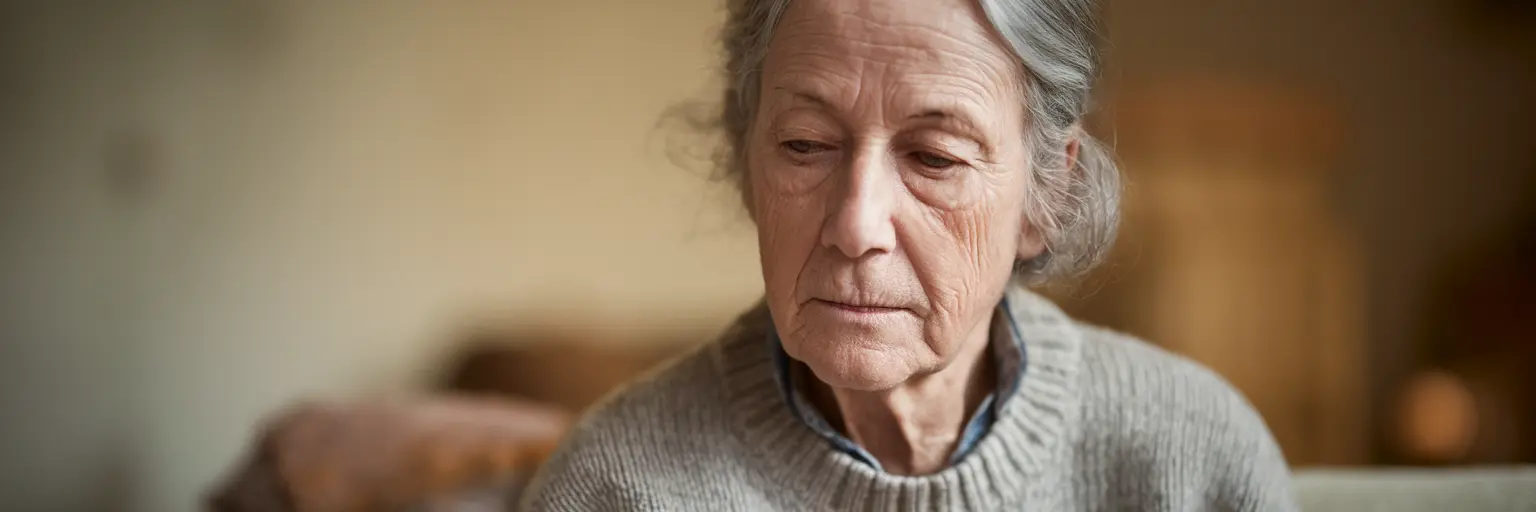
Elderly woman looking down indoors

What does the final stage dementia look like?

At the final and most severe stage of dementia the person has lost almost all ability to communicate verbally, often being limited to occasional words, sounds, or expressions. They require full assistance with all aspects of personal care including washing, dressing, eating, and using the toilet. Many people are no longer able to walk or sit upright without support, and muscle stiffness and contractures are common. Swallowing becomes increasingly difficult, raising the risk of aspiration pneumonia. The person is typically awake for only short periods and may show little or no recognition of you or other family. Despite the severity of physical and cognitive decline, the person can still experience pain, discomfort, and emotional responses, so maintaining comfort, dignity, and human connection remains the central goal of care.

Frequently Asked Questions Related to end of life

Grieving someone you lost in stages — the particular weight of dementia bereavement

read this FAQ

Support for bereaved dementia carers — the help available for a grief that doesn't fit the usual shape

read this FAQ

Registering the death of someone with dementia — the practical steps, plainly explained

read this FAQ

When your parent with dementia dies in a care home — what happens next and what can wait

read this FAQ

Grieving someone who is still alive — the loss that begins long before dementia ends

read this FAQ

What a good death looks like for someone with dementia — and how to make it possible

read this FAQ

How to talk to a care home about end of life — the conversation to have before it's urgent

read this FAQ

Where someone with dementia should die — why the care home is usually the right answer

read this FAQ
We use cookies in order to give you the best possible experience on our website. By continuing to use this site, you agree to our use of cookies.
Accept