
The Dementia Care Companion
A Clear Path Through Every Stage of Dementia Care
Get practical guidance, personalised checklists, and expert tools that help you make confident decisions for your parent and your family.
Get your Dementia Care Companion →There is a gap between the moment you realise something is wrong and the moment you know what to do about it.
For most adult children, that gap lasts months. Sometimes years. You fill it with late-night searching, contradictory advice, anxious phone calls with siblings, and the persistent, exhausting sense that everyone else seems to know something you don't.
You don't lack intelligence or commitment. You lack a map.
Everything You Need, Exactly When You Need It
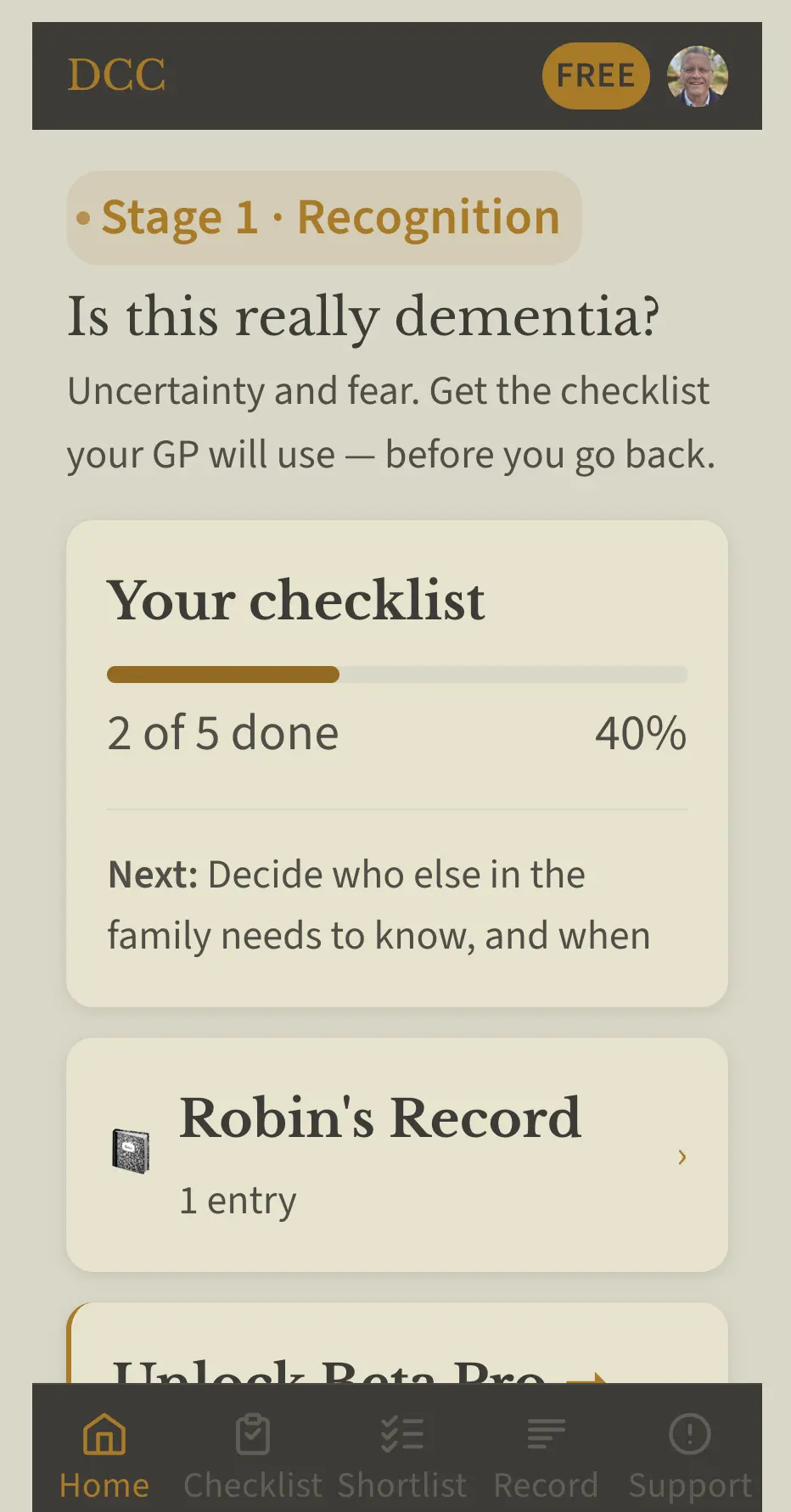
Instead of searching endlessly for answers, follow a structured pathway designed specifically for families supporting a loved one with dementia.
When a parent is diagnosed with dementia, nobody hands you a guide. The GP is kind and limited. The consultant speaks in clinical terms that don't translate into Tuesday morning decisions. The internet gives you everything and nothing simultaneously – 40,000 results, each one more alarming or more generic than the last.
What actually happens is this: you work it out as you go. You find out about Lasting Power of Attorney three months after the window started closing. You realise care homes have a visit checklist only after you've already visited two of them unprepared. You discover that your parents' GP needs a written record of changes observed over time – when you're sitting in the surgery, empty-handed, trying to remember what happened when.
The information existed. The timing was wrong. The structure was missing.
A Personalised Roadmap for Every Stage of Care
Know what to expect, what decisions matter most, and what actions to take next—whether you're just noticing changes or managing long-term care.
Dementia Care Choices (DCC) is built around six stages – not medical stages, not clinical classifications, but the six stages that adult children actually move through. From first suspicion to the end of life. Each stage has its own checklist, its own set of decisions, its own set of things you need to do before the window closes.
The app knows which stage you're at. It tells you what to do next.
That sounds simple. It isn't obvious that anything like this exists because until now, nothing like this existed. The sites built around dementia care were built around transactions – care home placement, insurance referral, and legal lead generation. They serve you at the moment of the transaction and nowhere else. They cannot help you at Stage 1, when you don't yet know you'll need a care home. They cannot help you at Stage 3, when you're trying to avoid one. They cannot help you at Stage 6, when the care home is the last place your parent will ever live.
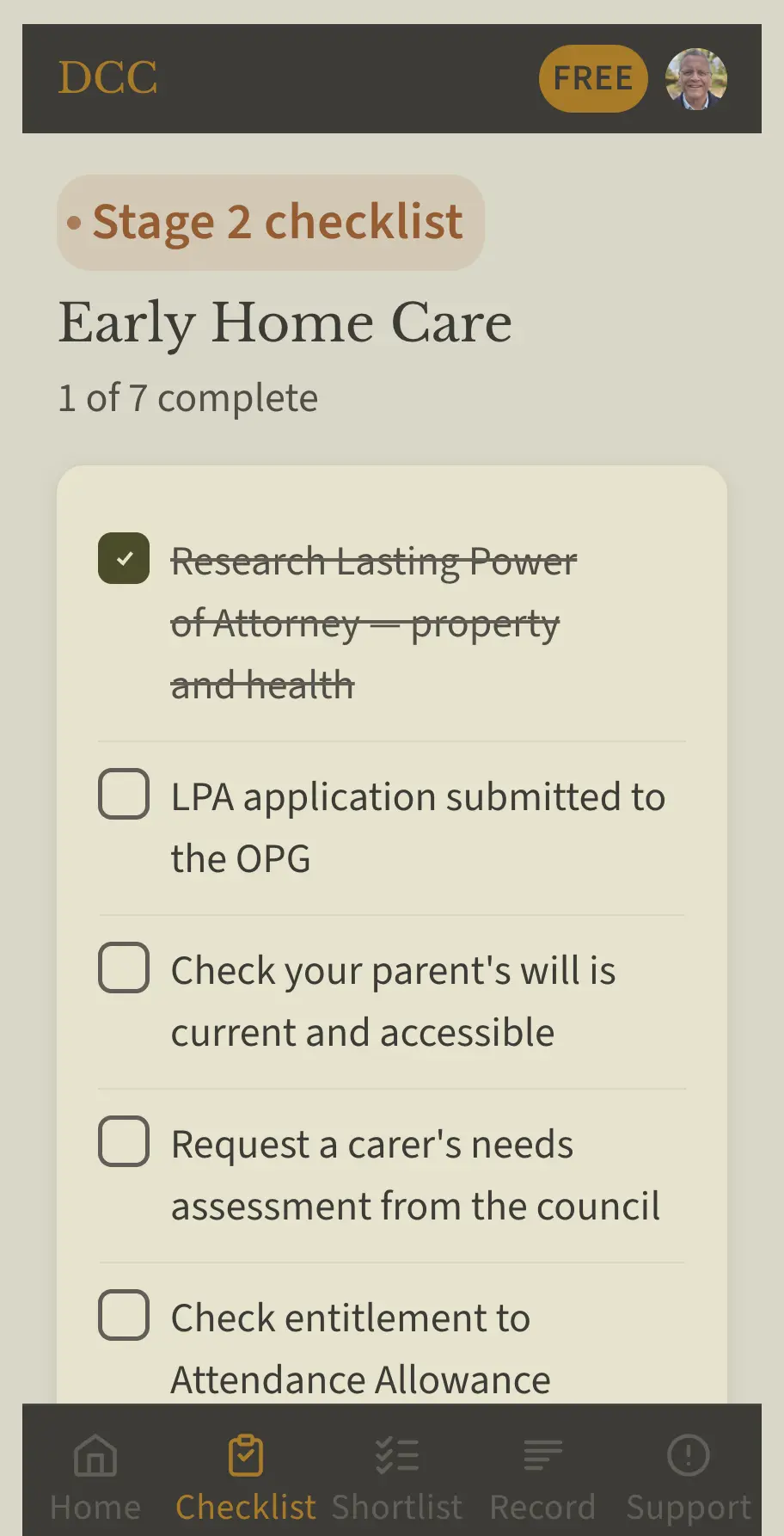
DCC can help you at all of them. That is not a marginal difference. It is a different thing entirely.
Keep Every Important Detail in One Place
Create a clear timeline of observations, decisions, and care updates that helps you communicate confidently with doctors, specialists, and care providers.
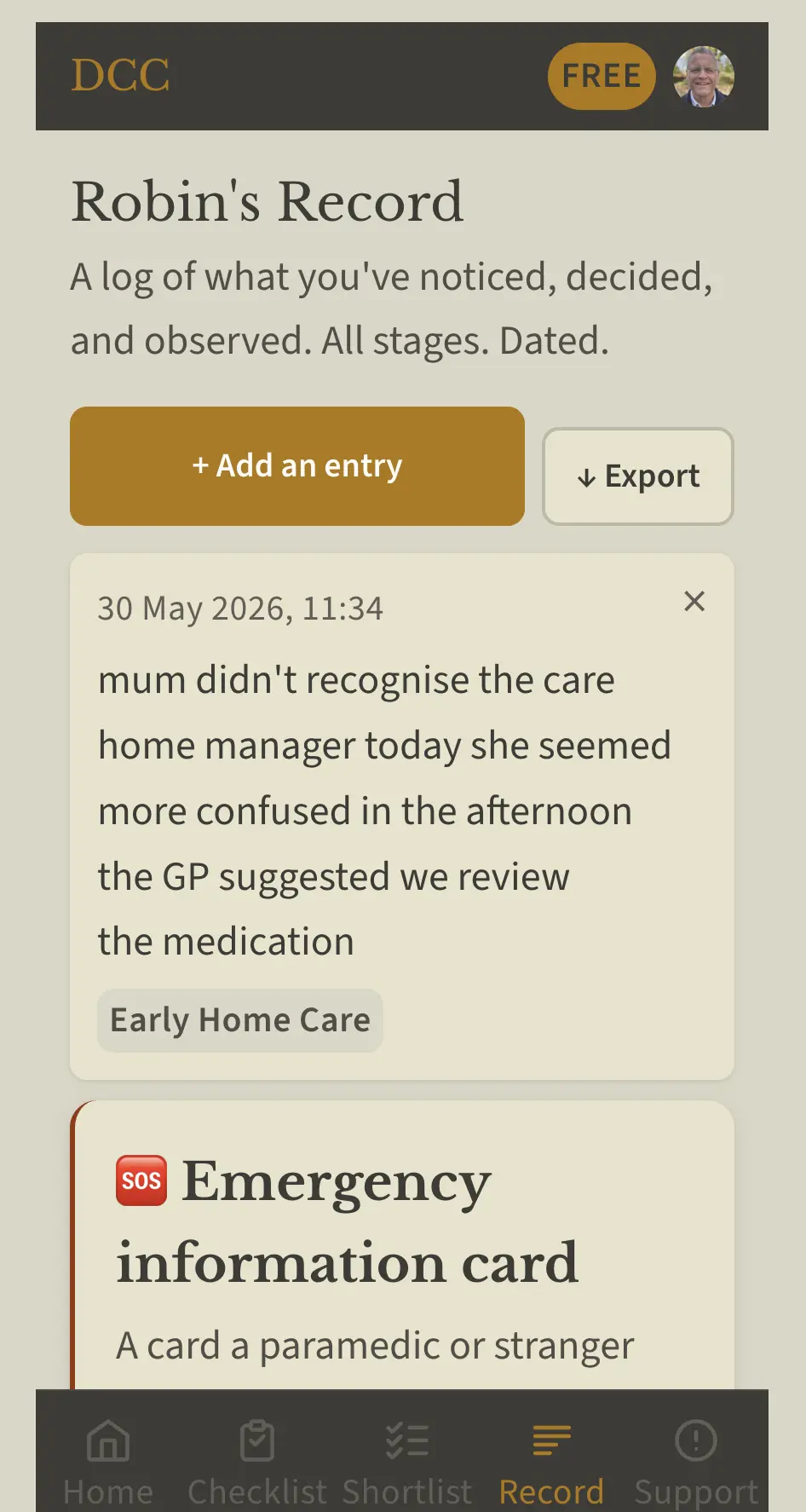
There is a moment in every dementia care journey when someone asks you: how long has this been going on.
The GP asks it. The consultant asks it. The care home asks it. The social worker asks it. If you haven't been keeping a record, you will answer from memory – imprecise, incomplete, and coloured by the most recent difficult week rather than the full picture.
Robin's Record is a dated log of everything you've noticed, decided, and observed. It takes thirty seconds to add an entry. You can speak it rather than type it. Over time it becomes the document that answers every question with precision – and the handover record when the time comes to share care with professionals.
Families who have kept records like this describe two things. The first is practical: they had answers when they needed them. The second is less expected: reading back through the entries showed them how much had changed, slowly, in ways they hadn't consciously registered. The record made the pattern visible. That visibility changed decisions.
Choose Care Homes With Confidence
Use a proven assessment checklist to compare care options objectively and make decisions based on evidence rather than guesswork.
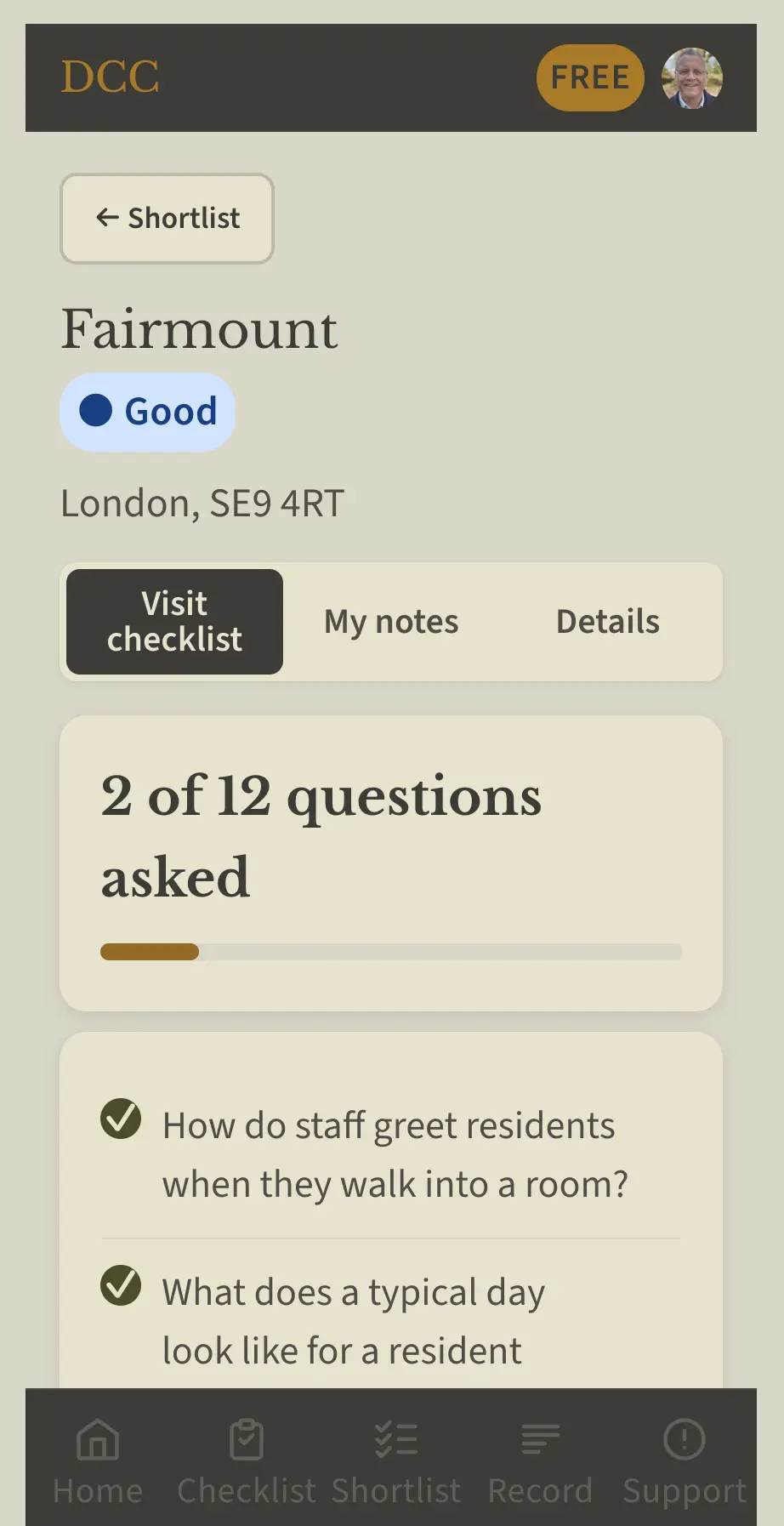
The twelve-question visit checklist was built from what 3,602 families said actually mattered – not what care home managers wanted to be asked, not what looked good on an inspection form, but what separated the homes where people thrived from the homes where they didn't.
Most families visit a care home the same way they view a house: they look at the surfaces, they listen to the sales pitch, and they leave with a feeling rather than a verdict. The feeling is unreliable. The checklist gives you evidence.
The difference between choosing a care home with the checklist and without it is the difference between a decision you can defend and a decision you can only hope was right. Those are not the same thing. The first costs nothing extra. The second costs years of doubt.
Save Time, Reduce Stress and Avoid Costly Mistakes
Stay ahead of important decisions, avoid common pitfalls and make the most of opportunities before they become urgent.
The costs of getting dementia care decisions wrong are not abstract.
A care home chosen without proper assessment may need to be changed – and moving a person with advanced dementia is one of the most distressing things a family can do, with measurable impact on decline. A Lasting Power of Attorney not obtained in time requires court of protection proceedings – a process that costs thousands of pounds and months of delay. A medication history not maintained means new consultants starting from scratch rather than building on what's known.
The app does not eliminate difficult decisions. It eliminates the decisions that are only difficult because you didn't have the right information at the right time. The ones where, in retrospect, you would have known what to do – if someone had told you what to look for.
That is most of them.
Support for You, As Well As Your Parent
Monitor your own wellbeing, recognise signs of caregiver strain and make sure you have the support you need throughout the journey.
Every screen in a dementia care app is about the person with dementia. The carer's own experience – the exhaustion, the guilt, the grief that starts long before the death – is structurally invisible in most of the support that exists.
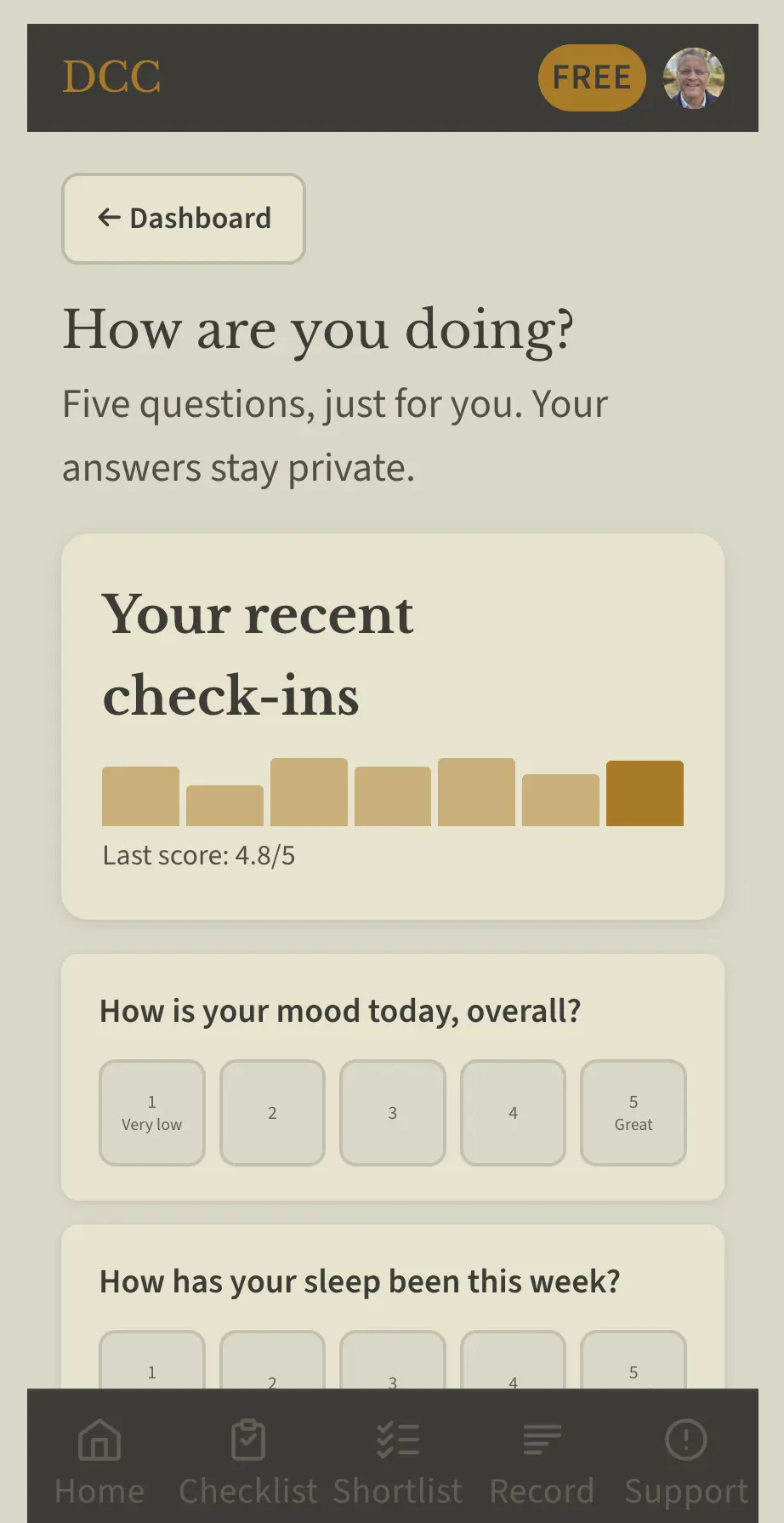
DCC has a weekly check-in. Five questions. Two minutes. It tracks how you're doing over time, reflects it back to you, and occasionally says, "This has been a hard few weeks." That's visible in the numbers. Is there anything you need?"
That is not a clinical tool. It is an acknowledgement that the carer is a person, not just a delivery mechanism for someone else's care. The families who describe dementia care as something they came through rather than something that broke them are, more often than not, the ones who found a way to look after themselves alongside looking after their parent.
Your Trusted Companion Throughout the Dementia Journey
A simple, structured system that helps families stay informed, prepared and confident from the first signs of dementia through every stage of care.
A structured pathway through one of the hardest things you will ever manage – with the right tool at the right moment, matched to where you actually are.
The adult children who find DCC tend to say one of two things. The first is: I wish I'd found this sooner. The second is: I'm going to send this to my brother.
Both are right.
Find my stage — it takes two minutes →