
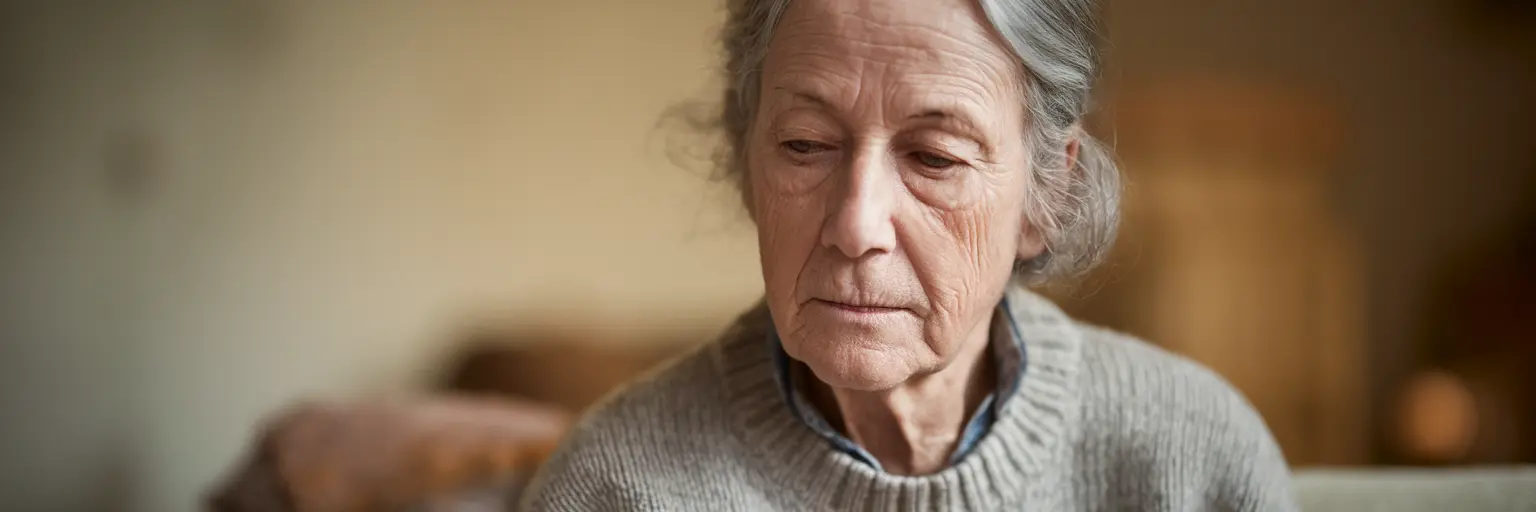
Grieving someone you lost in stages — the particular weight of dementia bereavement
Grieving for someone with dementia is rarely a single event at the point of death. Most people who have cared for a parent with dementia describe a series of losses over years — the loss of conversation, of recognition, of shared history, of the person they knew. By the time death comes, some of that grief has already been lived through. This does not mean the death itself is easy. It often unlocks a different layer of grief, for the person who was there in the final years, for the relationship that existed in that form, and sometimes for the earlier version of the person who has been gone for much longer. There is no correct way to grieve this. Some people feel relief first and guilt about the relief second. Some feel surprisingly little at the time and find it arrives later. Professional bereavement counselling can help, particularly if the grief feels stuck or complicated by the length and difficulty of the caring period.
Bereavement after caring for a parent with dementia often has a particular quality that standard grief support does not always address. The grief may be complicated by ambivalence — relief alongside loss — and by the fact that much of the grieving may already have happened during the illness. Organisations that offer specific support include Cruse Bereavement Support, which offers one-to-one counselling and helpline support, and Dementia UK, which provides Admiral Nurse support to families affected by dementia including after bereavement. Many hospices also offer bereavement support to families of people who were under their care. GP surgeries can refer to counselling services. Peer support from others who have been through the same experience is often described as the most helpful of all. Give yourself permission to seek support before you feel you have earned it.
Registering the death of someone with dementia — the practical steps, plainly explained
To register the death of someone with dementia in England and Wales, you need to attend the local register office within five days of the death. You will need the medical certificate of cause of death, which is issued by the doctor who certified the death. You will also need to provide the deceased person's full name, date of birth, address, and occupation. The register office will issue death certificates, and you should request several certified copies as these will be needed by the solicitor, banks, pension providers, and other organisations. The Tell Us Once service in England and Wales allows you to notify multiple government departments in a single step. The care home, funeral director, or GP surgery can advise on local procedures if you are uncertain about the process.
When your parent with dementia dies in a care home — what happens next and what can wait
When a parent with dementia dies in a care home, the care home staff will usually be the first to contact you. If you are not present when the death occurs, take time before you arrive rather than rushing — there is rarely urgency. When you arrive you will have time to sit with your parent before anything else happens. A doctor or nurse will need to certify the death. The care home will guide you through the immediate practicalities, including what needs to happen before the body can be moved. You will need to register the death at the local register office within five days in England and Wales. The care home will typically hold your parent's belongings until you are ready to collect them — there is no pressure to take everything immediately. Allow yourself time before making further decisions.
Grieving someone who is still alive — the loss that begins long before dementia ends
Anticipatory grief — grieving someone who is still alive — is one of the least talked about and most common experiences for adult children of parents with dementia. It begins long before death, often at diagnosis, and intensifies as the person becomes less recognisable. It is not a sign of giving up or of loving the person less. It is a natural response to a series of losses: the loss of the relationship as it was, of shared memories, of the person's personality and recognition of you. Allowing yourself to grieve these losses while your parent is still alive is not disloyal. It is honest. Practical things that help include talking to someone who understands — a counsellor, a support group, or another adult child who has been through it. Writing things down, however briefly, can help process what is happening. Give yourself permission to feel relief, anger, sadness, and love, sometimes all in the same visit, without judging any of it.
What a good death looks like for someone with dementia — and how to make it possible
A good death for someone with dementia is one where the person is free from pain, in a familiar and calm environment, surrounded by people who know and care for them, and treated with complete dignity until the end. It does not require the person to be conscious or able to communicate. The presence of familiar voices, gentle touch, and the absence of clinical urgency all contribute. It means that the decisions made in the final weeks — about resuscitation, hospital admission, artificial nutrition, medication — have been made in advance and reflect the person's values, so that no one is scrambling for answers in a moment of crisis. For families, a good death is one they can look back on and feel that their parent was not alone, not in pain, and was cared for as a person rather than managed as a patient. Getting there requires planning, honest conversations, and a care team that understands palliative care.
How to talk to a care home about end of life — the conversation to have before it's urgent
Ask to arrange a care planning meeting specifically to discuss end of life. Most care homes will initiate this conversation as a resident's condition advances, but families do not need to wait to be asked. Come prepared with any documents already in place — an advance care plan, a DNACPR, a Lasting Power of Attorney. The questions to cover include: what the person's known wishes are, how the home will manage pain and discomfort, whether there is a palliative care team the home works with, what the process will be when the person's condition deteriorates rapidly, who will be contacted and when, and what the home's approach is to having family present in the final hours. A good care home will welcome these conversations. If a home is reluctant to engage with end of life planning, that is itself a signal worth noting.
Where someone with dementia should die — why the care home is usually the right answer
A preferred place of death is a statement of where a person would like to be when they die. For people with dementia the options are typically the care home they live in, a hospice, or hospital. Most people, when asked before their condition advances significantly, express a preference to die in a familiar setting rather than in hospital. For many with dementia, the care home they have lived in for months or years effectively becomes their home, and dying there, in familiar surroundings with known staff, is often the most peaceful option. Hospices can provide specialist palliative care and are appropriate when symptom management needs are complex. Recording a preferred place of death as part of an advance care plan gives family and medical teams clear guidance. It is a preference, not a binding instruction, but it carries significant weight in decision-making.
Resuscitation and dementia — the medical reality that makes this easier to decide than it feels
For most people in the advanced stages of dementia, attempting resuscitation is not in their best interests and is unlikely to succeed. Even if CPR briefly restarts the heart, it frequently causes broken ribs, internal injury, and brain damage from oxygen deprivation, and the person is likely to return to the same or a worse condition. The question of resuscitation should be addressed as part of advance care planning before a crisis, ideally with the person, their family, and their GP. A DNACPR notice should be in place and held with the person's records in any care setting. If no advance decision has been made and a family member is asked in a moment of crisis, it helps to know that most medical teams caring for people with advanced dementia will advise against resuscitation on clinical grounds. The most important thing is that the decision is documented clearly so that no one is put in the position of making it in an emergency.
When someone with dementia stops eating and drinking — what it means and what comfort looks like
Reduced eating and drinking is a natural and expected part of the end stage of dementia. As the brain loses the ability to coordinate swallowing and the body begins to shut down, appetite and thirst diminish. This is not the same as starvation and does not cause the suffering it would in a healthy person — the body's reduced metabolism at this stage means it needs very little. Artificial nutrition through a feeding tube is not recommended for people in the final stage of dementia and does not prolong life or improve comfort. The focus should be on small amounts of food and fluid by mouth if the person can manage safely, careful mouth care to keep lips and gums moist, and ensuring the person is comfortable and not distressed. A palliative care nurse can explain what to expect and help families understand that this process, while hard to witness, is not painful for the person.
Keeping someone with dementia comfortable at the end — the four things that matter most
Keeping someone with dementia comfortable at the end of life focuses on four areas: pain management, mouth care, positioning, and a calm environment. Pain is common in the final stages and may not be communicated verbally. Signs of discomfort include facial grimacing, restlessness, guarding of a part of the body, or changes in breathing. Medication given regularly, rather than only when distress is obvious, keeps pain consistently controlled. Mouth care matters because the person is likely to be taking very little fluid, and a dry mouth causes distress. Turning and repositioning prevents pressure sores and maintains dignity. The environment should be quiet, warm, and familiar — familiar voices, familiar music if the person responds to it, and the presence of people who knew and loved them. Touch and calm talking remain meaningful even when the person can no longer respond.
Hospital at the end of dementia — why the answer is usually no, and how to prepare for it
For most people with advanced dementia, a hospital admission at the end of life is unlikely to improve comfort or extend life meaningfully and may cause significant distress. The unfamiliar environment, noise, clinical procedures, and separation from known carers can be deeply disorienting. Most deaths in advanced dementia are from infections such as pneumonia or urinary sepsis, which can often be managed palliatively in a care home with appropriate medication and comfort care. Hospital is appropriate when a specific treatable condition arises that cannot be managed in the care home setting and where treatment is consistent with the person's wishes and best interests. Having a clear advance care plan that includes a preferred place of care and death makes this decision easier for families and for medical teams when the moment comes.
DNACPR and dementia — the decision most families find hard to make and harder to avoid
DNACPR stands for Do Not Attempt Cardiopulmonary Resuscitation. It is a medical instruction that means if the person's heart stops or they stop breathing, the clinical team will not attempt resuscitation. For people with advanced dementia, resuscitation is unlikely to be successful and, if it were, would typically result in the person returning to the same severely diminished state, often with additional injury. A DNACPR is not a decision to withdraw all care — it simply means that CPR will not be attempted. The decision should be made in consultation with the person where possible, their family, and the medical team, and should reflect the person's known wishes and best interests. Many families find the conversation distressing but report afterwards that having a clear decision in place gave them peace of mind. A DNACPR should be reviewed regularly and must be documented and held with the person's records wherever they are being cared for.
An advance care plan for dementia — why it matters and why most families leave it too late
An advance care plan is a written record of a person's wishes, values, and preferences for their future care, made while they still have the capacity to express them. For someone with dementia it is most useful when put in place early, before capacity deteriorates significantly. It can cover preferences about where the person would like to be cared for and to die, which medical treatments they would or would not want, how they want to be treated during personal care, who should be involved in decisions, and what matters most to them about their daily life. An advance care plan is not legally binding in the same way as an advance decision to refuse treatment, but it is a powerful guide for families and professionals making decisions on someone's behalf. Completing one with the person, a GP, and a specialist nurse gives it the most weight.
Palliative care and dementia — when it starts, what it involves, and how to access it
Palliative care for dementia patients is an approach to care that focuses on comfort, dignity, and quality of life rather than on treating or curing the underlying disease. It becomes the appropriate framework from the point when dementia has progressed to the stage where life-prolonging interventions are no longer in the person's best interests. In practice it means managing pain and physical symptoms effectively, ensuring the person is comfortable, maintaining their dignity in personal care, supporting emotional and psychological wellbeing, and providing practical and emotional support to family. Palliative care for dementia is not the same as end-of-life care, which refers specifically to the final weeks and days. It can and should be introduced earlier, when the person reaches the advanced stages, to allow decisions to be made calmly rather than under crisis pressure. A GP or specialist nurse can initiate a palliative care referral.
Average age of death in dementia — why the number matters less than you think
The average age of death for someone with dementia in the UK is approximately 83 to 85 years, though individual variation is wide. People diagnosed in their 60s can expect a longer survival period than those diagnosed in later life, partly because they are generally in better overall health at diagnosis. Alzheimer's disease typically allows 8 to 10 years from symptom onset, while vascular dementia is often associated with shorter survival due to underlying cardiovascular disease. Dementia is now one of the leading recorded causes of death in England and Wales.
How people with dementia die — the medical reality behind the statistics
Pneumonia is the most common immediate cause of death in people with advanced dementia. As the disease progresses to its final stages, the brain loses the ability to coordinate swallowing properly, leading to a condition called dysphagia. This makes it likely that small amounts of food, liquid, or saliva will enter the lungs rather than the stomach, causing aspiration pneumonia. The immune system also becomes less effective in the late stages, reducing the ability to fight off infection. Urinary tract infections that spread to the kidneys and sepsis are also common. Dementia is increasingly being recorded as the primary cause of death on death certificates in the UK.
The signs that death is approaching in dementia — what to look for and what to expect
In the final stage of dementia, sometimes called stage 6, there are recognisable signs that death may be approaching. The person typically becomes largely or entirely non-verbal, spending most of their time asleep. They lose the ability to walk, sit upright, or hold their head up, and muscle contractures can develop. Swallowing becomes very difficult, leading to reduced food and fluid intake. The skin may become mottled, particularly on the hands, feet, and knees. Breathing often becomes irregular, with longer gaps between breaths. Hands and feet may feel cold to the touch while the core remains warm. These changes can occur over days or weeks. Specialist palliative care teams and hospice nurses can support both the person and their family through this final stage.
The last stage of dementia — what it involves and how long it lasts
At the final stage of dementia the person has severely limited or no verbal communication, is fully dependent for all activities of daily living, and is often largely immobile. Muscle stiffness and contractures are common. Swallowing becomes very difficult, raising the risk of aspiration pneumonia. The person is typically awake for only brief periods and may show little recognition of you or other family, though emotional responses such as comfort or distress can still be present. Palliative and end-of-life care at this stage focuses entirely on comfort, dignity, and freedom from pain rather than medical intervention aimed at prolonging life.
What does the final stage dementia look like?
At the final and most severe stage of dementia the person has lost almost all ability to communicate verbally, often being limited to occasional words, sounds, or expressions. They require full assistance with all aspects of personal care including washing, dressing, eating, and using the toilet. Many people are no longer able to walk or sit upright without support, and muscle stiffness and contractures are common. Swallowing becomes increasingly difficult, raising the risk of aspiration pneumonia. The person is typically awake for only short periods and may show little or no recognition of you or other family. Despite the severity of physical and cognitive decline, the person can still experience pain, discomfort, and emotional responses, so maintaining comfort, dignity, and human connection remains the central goal of care.
How to recognise the final weeks of dementia — before the phone call comes
Signs that the end is near with dementia include extreme weakness, little or no eating or drinking, much more sleeping, trouble swallowing, shallow breathing, and skin changes like cold hands or bluish colour. The person may not respond much or seem restless at times. Infections become harder to fight, and the body slows down overall. These changes often happen in the final weeks or months. Comfort care is the main focus, with pain relief, mouth care, and a calm environment. Families should talk to hospice or doctors about what to expect.