
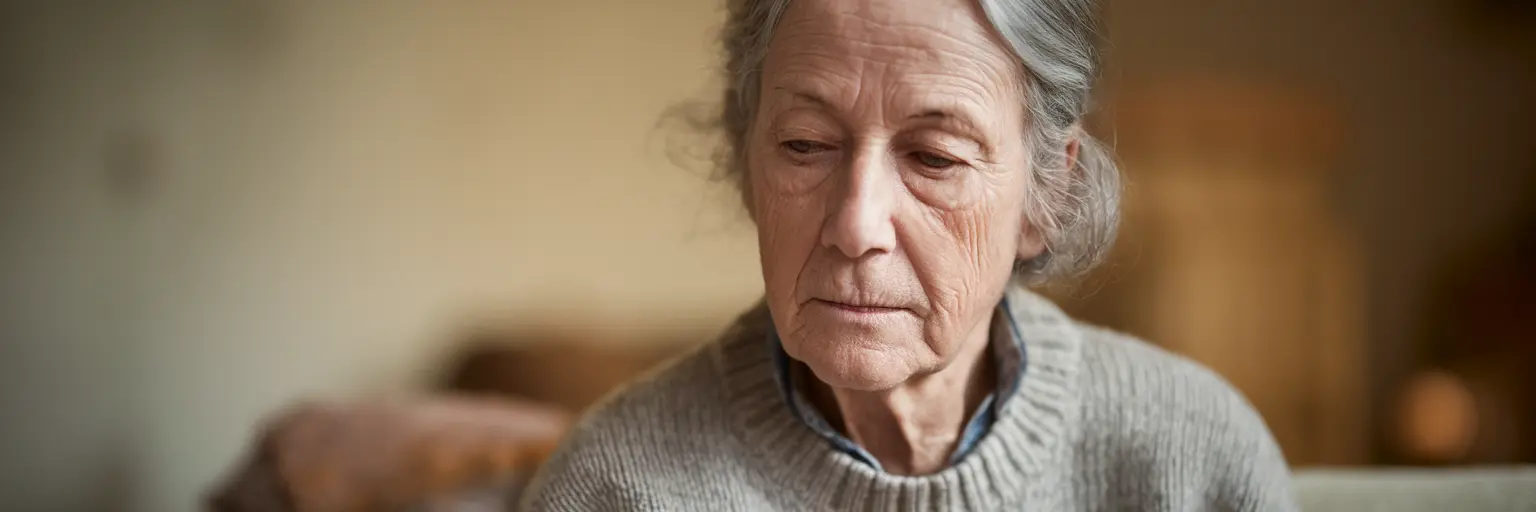
Elderly woman looking down indoors

How to recognise the final weeks of dementia — before the phone call comes

Signs that the end is near with dementia include extreme weakness, little or no eating or drinking, much more sleeping, trouble swallowing, shallow breathing, and skin changes like cold hands or bluish colour. The person may not respond much or seem restless at times. Infections become harder to fight, and the body slows down overall. These changes often happen in the final weeks or months. Comfort care is the main focus, with pain relief, mouth care, and a calm environment. Families should talk to hospice or doctors about what to expect.

Frequently Asked Questions Related to end of life

Grieving someone you lost in stages — the particular weight of dementia bereavement

read this FAQ

Support for bereaved dementia carers — the help available for a grief that doesn't fit the usual shape

read this FAQ

Registering the death of someone with dementia — the practical steps, plainly explained

read this FAQ

When your parent with dementia dies in a care home — what happens next and what can wait

read this FAQ

Grieving someone who is still alive — the loss that begins long before dementia ends

read this FAQ

What a good death looks like for someone with dementia — and how to make it possible

read this FAQ

How to talk to a care home about end of life — the conversation to have before it's urgent

read this FAQ

Where someone with dementia should die — why the care home is usually the right answer

read this FAQ
We use cookies in order to give you the best possible experience on our website. By continuing to use this site, you agree to our use of cookies.
Accept