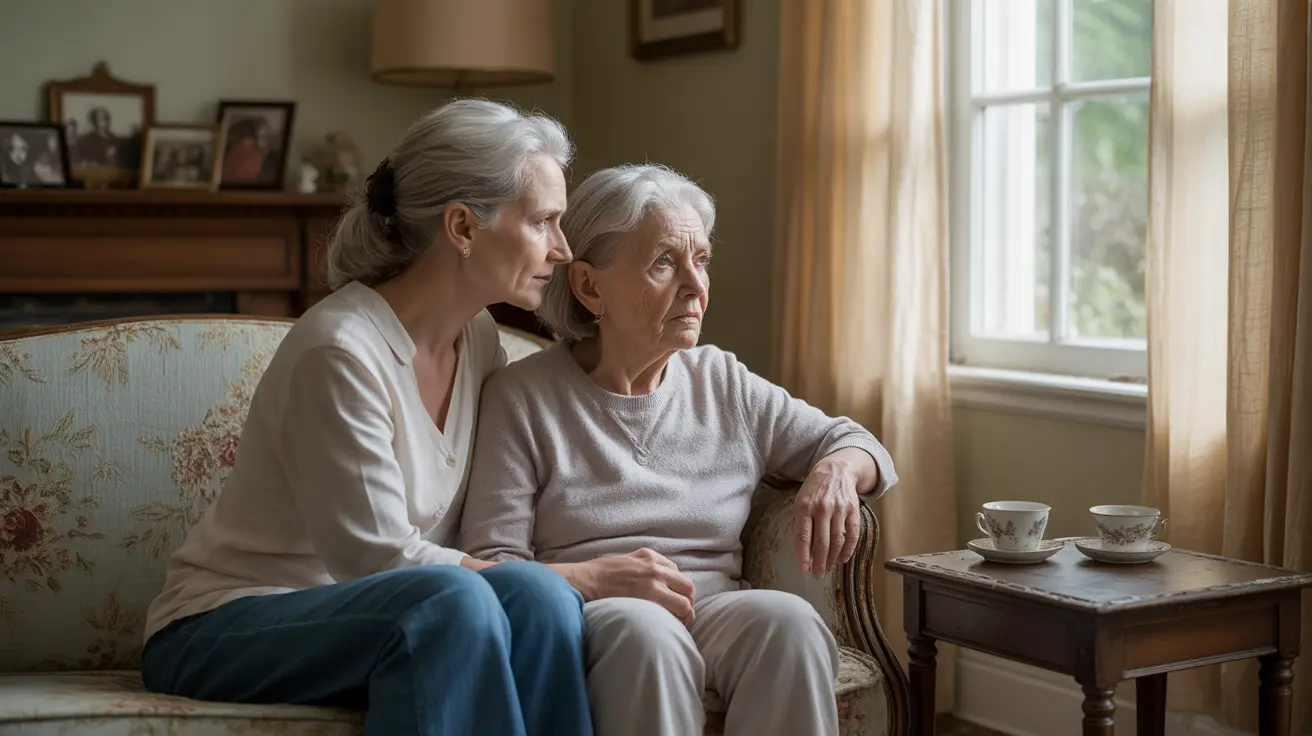
Early signs dementia: what to look for in your parent

Spotting early signs dementia in your parent can feel overwhelming when you're not sure what's normal ageing and what isn't. You might be questioning whether their forgetfulness is something more serious, or wondering if you're overreacting to changes you've noticed. Early signs of dementia are the first noticeable symptoms that suggest cognitive decline beyond normal ageing, typically involving memory, thinking, or behaviour changes that affect daily life. This guide explains what to look for and when to seek help.
How do I know if these early signs dementia or just getting older
Normal ageing involves occasional forgetfulness, but dementia signs disrupt daily routines
Memory loss that affects work or home life is different from occasionally misplacing keys. Your parent might forget recent conversations entirely, repeat questions within minutes, or struggle with familiar tasks they’ve done for years.
The key difference is whether the changes interfere with independence and safety.
They might get lost in familiar places, have trouble managing money, or show poor judgement in situations they’d normally handle well.
Trusting your instincts about these changes is important, even when others dismiss them as normal ageing
What specific changes should I watch for beyond memory problems
Dementia affects thinking, communication, and behaviour in ways that go far beyond simple forgetfulness
Language problems emerge early, such as struggling to find common words or following conversations. Your parent might withdraw from social activities they once enjoyed, show personality changes, or have difficulty with planning and organising. Visual and spatial problems can appear as trouble judging distances, reading, or recognising familiar faces.
Changes in mood, including increased anxiety, depression, or agitation, often accompany cognitive symptoms.
They might become suspicious of others, lose things and accuse people of stealing, or show poor personal hygiene and grooming habits.
These changes typically develop gradually over months rather than appearing suddenly
What this means for you
Start keeping a brief record of specific incidents and dates. Write down what you've noticed and when it happened. Book a GP appointment for your parent and share your written observations. The GP can arrange memory tests and rule out other causes like infections or medication side effects. Don't wait for symptoms to worsen before seeking help, as early intervention can make a significant difference.
Frequently asked questions
- What are the earliest warning signs of dementia
- The earliest signs include forgetting recent events while remembering distant ones clearly, difficulty following conversations, problems with familiar tasks, and changes in judgement or decision-making. These symptoms gradually worsen over time and begin to affect daily life.
- When should memory loss be a concern
- Memory loss becomes concerning when it disrupts daily activities, affects safety, or involves forgetting important recent events completely. Occasional forgetfulness is normal, but consistently forgetting conversations, appointments, or how to do familiar tasks warrants medical attention.
- How quickly do early dementia symptoms progress
- Early dementia symptoms typically develop gradually over months or years. The progression varies significantly between individuals and depends on the type of dementia. Some people decline slowly over several years, while others experience more rapid changes.
- Can early dementia symptoms be reversed
- True dementia symptoms cannot be reversed, but some conditions that mimic dementia can be treated. Depression, vitamin deficiencies, thyroid problems, and medication side effects can all cause memory problems that improve with proper treatment. This is why early medical assessment is crucial.