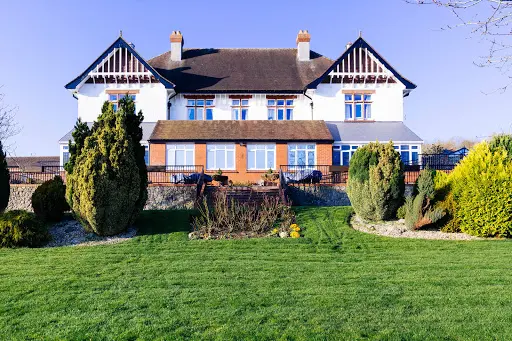
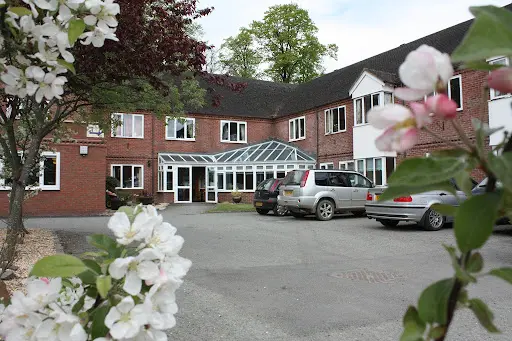
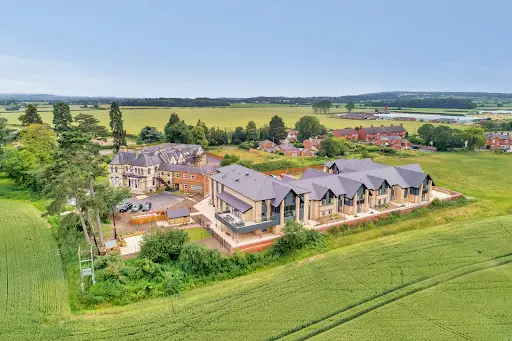
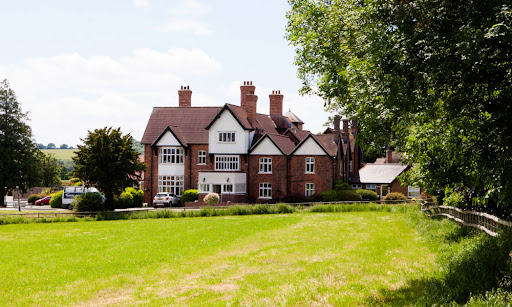
Danesford Grange Care Home
At a Glance
The information you need to decide whether this home warrants a closer look.
Nursing homes
Staff warmth score
of reviewers answered yes
Good to know
- Registered beds41
- SpecialismsCaring for adults over 65 yrs, Dementia, Mental health conditions, Physical disabilities, Sensory impairment
- Last inspected2019-01-09
Save Danesford Grange Care Home to your shortlist
Keep a running list, add visit notes, and compare homes side-by-side. Free account — it takes a minute.
STAGE 4 — RESEARCHING CARE HOMES
Visit homes. Compare them side by side. Choose with confidence.
Most of us will view care homes the way we view houses, impression, atmosphere, the feeling in the corridor. We go home, try to remember what we saw, and make a permanent decision from a blurred memory.

The DCC shortlist gives every home you visit a structured record: the same twelve questions, answered the same way, every time. When you’re ready to choose, pull any two homes side by side and compare them directly. Same criteria, same evidence, your notes and your scores.
The Evidence
What the review data, the inspection reports, and the dementia-care evidence base tell us about this home.
What families say
The eight family priority themes
- Staff warmth65
- Compassion & dignity65
- Cleanliness60
- Activities & engagement55
- Food quality55
- Healthcare60
- Management & leadership42
- Resident happiness60
What inspectors found
Inspected 2019-01-09
Is this home safe?
Is the care effective?
Effective was rated Good, suggesting inspectors found satisfactory care planning, training, and healthcare access at the time of the December 2018 inspection. The home's specialisms include dementia, mental health, physical disabilities, and sensory impairment, implying a need for staff with a range of clinical competencies. No specific detail is available in the published summary about dementia training content, GP visit frequency, medication management, or how care plans are reviewed. The improvement from a previous Requires Improvement rating suggests that whatever was lacking before has been addressed to inspection standard.Is this home caring?
Caring was rated Good, which is the domain most directly relevant to how your parent would be treated day to day. This rating typically reflects inspector observations of staff interactions, responses to residents, and whether people are treated with dignity and respect. No direct quotes from residents or relatives are available in the published summary, and no specific observations of named interactions are cited. The home has consistently maintained or achieved Good in this area, which is a positive signal. However, without verbatim testimony or direct observation notes, it is difficult to assess the depth of warmth and individual attention.Is the home responsive?
Responsive was rated Good, suggesting the home was broadly meeting individual needs and providing an acceptable range of activities and engagement at the time of inspection. The home supports people with dementia, mental health conditions, physical disabilities, and sensory impairment — a mix that demands a genuinely varied and adaptable approach to activities. No specific detail is available in the published summary about what activities are offered, how they are tailored to individuals, or what provision exists for residents who cannot join group sessions. The Good rating implies inspectors were satisfied at a general level.Is the home well-led?
Well-led remains rated Requires Improvement — the only domain not to reach Good. This is notable because all other domains improved to Good in this inspection, suggesting that care practice on the ground was better than the governance and leadership systems overseeing it. The registered manager at the time of inspection was Mr Priyantha Uluwita, with Mr Christopher Giles Andrew Rands as nominated individual. No specific detail is available about what governance shortfalls were identified, what action plan was in place, or what progress had been made by the time of the 2023 monitoring review. The 2023 review found no evidence requiring reassessment, but this was a desk-based exercise, not a re-inspection.
Source: CQC inspection report →
What the evidence base says
The team supports residents with dementia, mental health conditions, physical disabilities, and sensory impairments. They're equipped to care for adults over 65 who need specialized attention for multiple or complex conditions. For residents living with dementia, the care team provides specialized support tailored to each person's needs. The home accepts residents at different stages of their dementia journey. All areas worth probing directly during a visit.
The DCC Verdict
Our editorial view, built from the three lenses: what families tell us, what inspectors record, and how the home sits against good dementia-care practice.
DCC Family Score
Danesford Grange scores in the mid-range, reflecting a genuinely improved service across most areas — but the Requires Improvement in leadership means there are questions about sustainability and oversight that families should probe before committing.
Homes in West Midlands typically score 68–82.Worth a visit
Danesford Grange Care Home in Bridgnorth was inspected in December 2018 and published its report in January 2019. The home was rated Good overall — an improvement from its previous Requires Improvement rating — with Good across Safe, Effective, Caring, and Responsive. This upward trajectory is meaningful: homes that have genuinely addressed previous concerns tend to have more engaged and reflective leadership than those coasting on a long-standing Good. The home cares for people with dementia, mental health conditions, physical disabilities, and sensory impairment across 41 nursing beds. The significant caveat is that Well-led remains rated Requires Improvement, and the inspection is now over six years old. A lot can change in a care home in that time — including management, staffing levels, and culture. The 2023 monitoring review found no reason to reassess the rating, but that is not the same as a full re-inspection. Before you decide, visit in person at different times of day, ask how long the current registered manager has been in post, and find out specifically what governance improvements have been made since 2018. The fact that leadership was still falling short even as care practice was rated Good suggests the home's quality may depend more on individual staff than on robust systems — worth understanding before your parent moves in.
The three questions to ask when you visitSave this home. Compare it against your shortlist.
Let our analysis show you how Danesford Grange Care Home measures up against the other homes you’re considering. Free account.
In Their Own Words
How Danesford Grange Care Home describes itself — collected from its own website. DCC has not edited or independently verified the content in this tab.
Specialist care for complex needs in Bridgnorth's quiet countryside
Dedicated nursing home Support in Bridgnorth
When someone you love needs support with dementia, mental health conditions, or physical disabilities, finding the right place feels overwhelming. Danesford Grange Care Home in Bridgnorth provides specialized care for older adults with complex needs, including those with sensory impairments. The West Midlands location offers a peaceful setting while keeping families connected.
Who they care for
The team supports residents with dementia, mental health conditions, physical disabilities, and sensory impairments. They're equipped to care for adults over 65 who need specialized attention for multiple or complex conditions.
For residents living with dementia, the care team provides specialized support tailored to each person's needs. The home accepts residents at different stages of their dementia journey.
“Getting to know Danesford Grange in person helps families understand if it's the right fit for their loved one's specific needs.”
DCC does not edit or curate content in this tab. For independently curated information, see The Evidence and DCC Verdict.
The DCC Verdict
Our editorial view, built from the three lenses: what families tell us, what inspectors record, and how the home sits against good dementia-care practice.
DCC Family Score
Danesford Grange scores in the mid-range, reflecting a genuinely improved service across most areas — but the Requires Improvement in leadership means there are questions about sustainability and oversight that families should probe before committing.
Homes in West Midlands typically score 68–82.Worth a visit
Danesford Grange Care Home in Bridgnorth was inspected in December 2018 and published its report in January 2019. The home was rated Good overall — an improvement from its previous Requires Improvement rating — with Good across Safe, Effective, Caring, and Responsive. This upward trajectory is meaningful: homes that have genuinely addressed previous concerns tend to have more engaged and reflective leadership than those coasting on a long-standing Good. The home cares for people with dementia, mental health conditions, physical disabilities, and sensory impairment across 41 nursing beds. The significant caveat is that Well-led remains rated Requires Improvement, and the inspection is now over six years old. A lot can change in a care home in that time — including management, staffing levels, and culture. The 2023 monitoring review found no reason to reassess the rating, but that is not the same as a full re-inspection. Before you decide, visit in person at different times of day, ask how long the current registered manager has been in post, and find out specifically what governance improvements have been made since 2018. The fact that leadership was still falling short even as care practice was rated Good suggests the home's quality may depend more on individual staff than on robust systems — worth understanding before your parent moves in.
The three questions to ask when you visitSave this home. Compare it against your shortlist.
Let our analysis show you how Danesford Grange Care Home measures up against the other homes you’re considering. Free account.
In Their Own Words
How Danesford Grange Care Home describes itself — collected from its own website. DCC has not edited or independently verified the content in this tab.
Specialist care for complex needs in Bridgnorth's quiet countryside
Dedicated nursing home Support in Bridgnorth
When someone you love needs support with dementia, mental health conditions, or physical disabilities, finding the right place feels overwhelming. Danesford Grange Care Home in Bridgnorth provides specialized care for older adults with complex needs, including those with sensory impairments. The West Midlands location offers a peaceful setting while keeping families connected.
Who they care for
The team supports residents with dementia, mental health conditions, physical disabilities, and sensory impairments. They're equipped to care for adults over 65 who need specialized attention for multiple or complex conditions.
For residents living with dementia, the care team provides specialized support tailored to each person's needs. The home accepts residents at different stages of their dementia journey.
“Getting to know Danesford Grange in person helps families understand if it's the right fit for their loved one's specific needs.”
DCC does not edit or curate content in this tab. For independently curated information, see The Evidence and DCC Verdict.