Stage 5: Settling Into Residential Care
Supporting the transition and building a new relationship with care
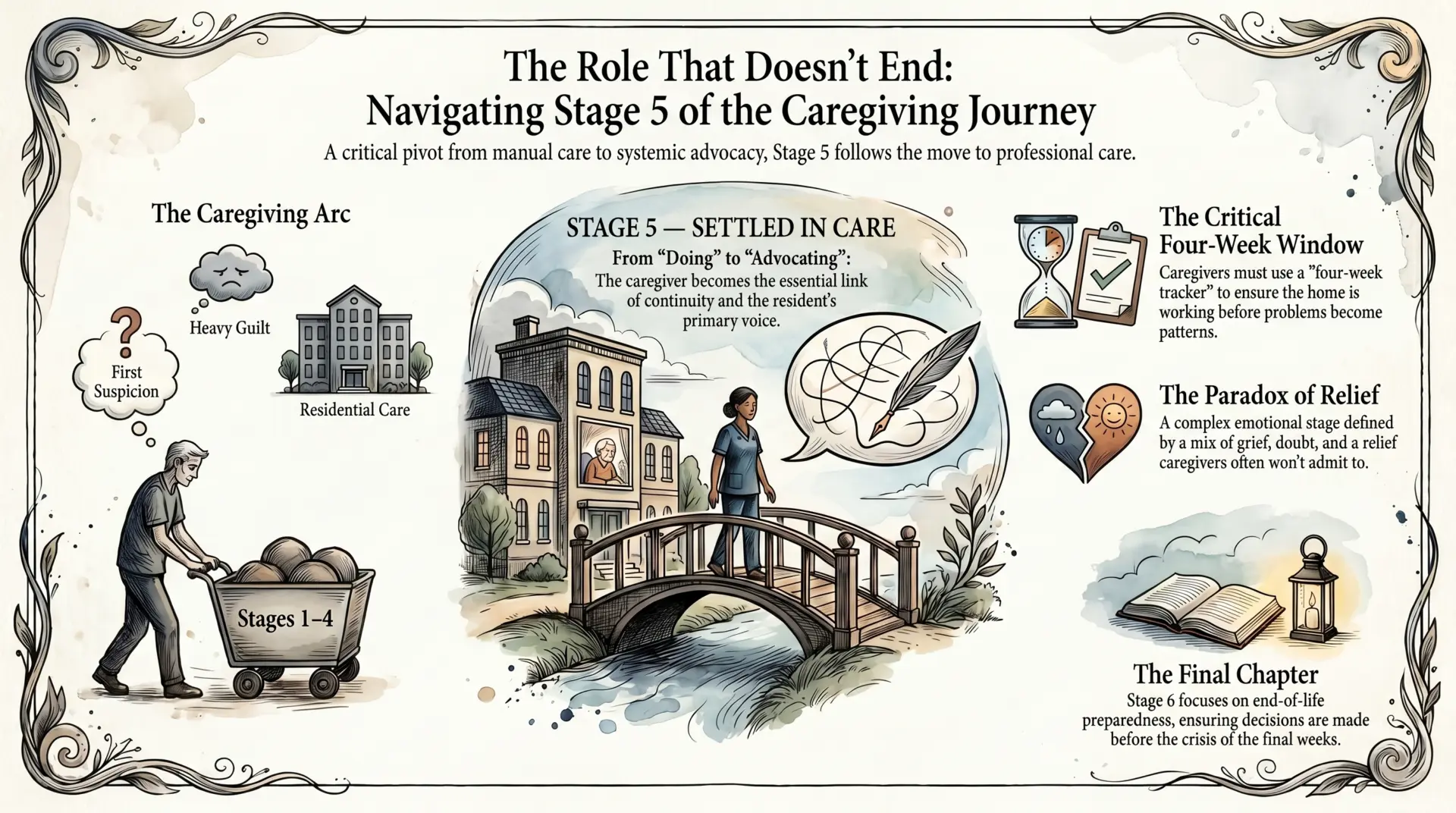
Where You Are Now
Your loved one has moved into residential care. After months or years of intensive caregiving, you're experiencing a complex mix of emotions—relief, exhaustion, guilt, grief, worry. You're wondering if you made the right choice, whether they're settling in, and what your role is now.
Stage 5 is about transition and adjustment for everyone involved. It's characterized by learning a new normal, building relationships with care staff, monitoring quality of care, and redefining your role from primary caregiver to engaged family member and advocate.
The settling-in period typically lasts 4-12 weeks, though adjustment continues for months. Some people adapt quickly; others take longer. Your support during this transition significantly impacts how well your loved one adjusts to their new home.
The Emotional Reality of Placement
Residential care placement is emotionally complex for families. Understanding that these feelings are normal helps you navigate this transition.
Common Family Emotions
Relief
After months or years of exhausting caregiving, professional care provides relief. This relief often triggers guilt—but it shouldn't. Feeling relieved that you're no longer providing intensive 24/7 care is perfectly normal and doesn't mean you love them less.
Grief and Loss
Residential placement marks a significant transition point. You're grieving:
- Loss of the person as they were
- End of home-based care and family routines
- Loss of control over daily care decisions
- Symbolic acknowledgment of disease progression
Guilt
The most universal emotion families report. Guilt about:
- "Breaking promises" to never use residential care
- Not being able to continue home care
- Feeling relief when they're in care
- Getting back to normal life
- Not visiting "enough"
Remember: Making the decision that ensures appropriate professional care is loving, not abandoning.
Anxiety and Worry
- Are they being well cared for?
- Are they lonely or frightened?
- Did we choose the right home?
- Should I be there more?
Second-Guessing
Especially if adjustment is difficult initially, you may question the decision. Give the situation time—most people adjust with support.
[SUGGESTED NEW ARTICLE: "The Emotional Journey of Residential Placement: Processing Grief, Guilt, and Relief" – Psychological support for families after placement]
Preparing for the Move
Thoughtful preparation helps make the transition smoother for your loved one.
Communication About the Move
How you approach this conversation depends on your loved one's cognitive level and insight.
If They Have Some Understanding
- Be honest but gentle about the move
- Frame it positively: "You'll have company, activities, help when you need it"
- Involve them in choices where possible (which photos, favorite chair)
- Acknowledge their feelings—fear and sadness are normal
- Reassure about family involvement—you're not abandoning them
If Cognitive Impairment Is Advanced
- Minimize long explanations that create anxiety
- Focus on immediate, concrete information
- Consistent reassurance rather than detailed reasoning
- Familiar items and routines provide comfort
What to Bring
- Personal items: Photos, favorite chair (if permitted), bedding, ornaments
- Clothing: Comfortable, easy-care clothes, clearly labeled
- Familiar objects: Clock, radio, books, religious items
- Life story information: Photo album, details about career, interests, family
- Important documents: Medical records, medication list, Power of Attorney
Check care home policies on: Electrical items, valuables, furniture size limits
[SUGGESTED NEW ARTICLE: "Moving Day: The Complete Transition Checklist for Care Home Placement" – Practical preparation guide from packing to first day]
The First Weeks: What to Expect
Initial adjustment varies widely. Some people settle quickly; others take weeks or months. Common patterns include:
Initial Reactions
Confusion and Distress
Your loved one may be confused about where they are, why they're there, and repeatedly ask to go home. This is normal and usually decreases as they become familiar with environment and routines.
Withdrawal
Some people withdraw initially—staying in their room, refusing to participate in activities, appearing sad or subdued. With encouragement and time, most begin engaging.
Anger or Resistance
Anger at family "for doing this to them" or resistance to care are common initial reactions. This doesn't mean the placement was wrong—it reflects difficulty adjusting to change.
Surprisingly Quick Adjustment
Some people adapt quickly, enjoying company, activities, and routine care. This doesn't mean they didn't care about home—it means the care home meets needs well.
Supporting Adjustment
- Visit frequently initially: Daily or every other day for first 2-3 weeks
- Stay for meals: Familiar face during potentially stressful times
- Bring familiar items: Favorite snacks, magazines, photos to add to room
- Encourage participation: Gently support involvement in activities
- Communicate with staff: Share information about preferences, routines, triggers
- Be patient: Adjustment takes time; setbacks are normal
When to Worry vs. Normal Adjustment
Normal:
- Initial confusion and repeated questions about going home
- First week or two of withdrawal or sadness
- Some resistance to new routines
- Temporary sleep or appetite changes
Concerning (discuss with care home):
- Prolonged refusal to eat or drink (more than 48 hours)
- Complete withdrawal lasting more than 2 weeks
- Sudden significant behavioral changes
- Physical decline not explained by existing conditions
- Signs of depression beyond normal adjustment
[SUGGESTED NEW ARTICLE: "The First Month in Residential Care: Week-by-Week Guide to Settling In" – Timeline expectations and troubleshooting common issues]
Building Relationships with Care Staff
The care team becomes central to your loved one's daily life. Building good working relationships with staff benefits everyone.
Key Staff to Know
- Care Home Manager: Overall responsibility for home
- Deputy Manager: Often handles day-to-day operations
- Key Worker/Named Nurse: Primary contact for your loved one's care
- Care Team: Daily care staff on each shift
- Activities Coordinator: Plans and facilitates engagement programs
- Admin Staff: Handle inquiries, billing, appointments
Communication Strategies
Share Information
Help staff understand your loved one as an individual:
- Life history and career
- Interests and hobbies
- Personality and communication style
- Routines and preferences (morning person, tea not coffee, dislikes certain foods)
- Triggers for anxiety or behavioral symptoms
- What soothes or calms them
Regular Check-Ins
- Brief conversations with care staff during visits
- Scheduled meetings with key worker (monthly or as needed)
- Care plan reviews (typically every 3-6 months)
- Respond to updates from care home promptly
Being a Partner, Not a Critic
Approach concerns collaboratively:
- "I've noticed X, can we discuss?" not "You're not doing Y properly"
- Acknowledge staff efforts and thank them
- Recognize staffing constraints while advocating for quality care
- Build alliances with staff who clearly care
When Concerns Arise
Start with informal discussion, escalate if necessary:
- Speak with care staff or key worker
- If unresolved, speak with senior staff or manager
- If still unresolved, use formal complaints procedure
- External escalation (CQC, safeguarding) for serious concerns
[SUGGESTED NEW ARTICLE: "Working With Care Home Staff: The Family's Guide to Effective Collaboration" – Building productive relationships while advocating effectively]
Your New Role: From Caregiver to Advocate
Residential placement fundamentally changes your role. Understanding this shift helps you find balance.
What Changes
- Physical caregiving: Now provided by professional staff
- 24/7 responsibility: Care home provides continuous oversight
- Care decisions: Shared with care team
- Daily management: Meals, medications, routines handled by home
Your Ongoing Role
- Family member: Visiting, maintaining relationship, providing love and connection
- Advocate: Ensuring appropriate care, raising concerns, participating in decisions
- Monitor: Observing quality of care, noting changes
- Partner: Working with care team, sharing information
- Connector: Maintaining links to former life, community, interests
Finding Balance
Common struggles:
"I'm Not Visiting Enough"
There's no "right" amount. What matters is quality of visits and that you're living your own life too.
"I Feel Useless"
Your role is different but still vital. Your loved one needs your love, presence, and advocacy—just not your physical caregiving.
"I Need to Reclaim My Life"
This is appropriate and healthy. Returning to work, hobbies, relationships doesn't mean you don't care—it means you're maintaining your own wellbeing.
[SUGGESTED NEW ARTICLE: "Redefining Your Role After Residential Placement: From Caregiver to Family Member" – Navigating identity shift and finding new balance]
Monitoring Quality of Care
While trusting the care home, ongoing observation ensures your loved one receives appropriate care.
What to Observe During Visits
Personal Care
- Clean, appropriate clothing
- Good personal hygiene (washed, teeth cleaned, hair brushed)
- Nails trimmed and clean
- No signs of skin breakdown or pressure sores
Nutrition and Hydration
- Eating adequate amounts
- Weight stable (sudden loss concerning)
- Drinks accessible and encouraged
- Enjoying meals or receiving needed assistance
Emotional Wellbeing
- General mood and contentment
- Engagement with environment and others
- Staff interactions—respectful, warm, patient?
- Signs of distress addressed promptly
Environment
- Room kept reasonably clean and tidy
- Personal items still present and cared for
- Common areas clean and pleasant
- No persistent odors
Social Engagement
- Participating in activities or encouraged to do so
- Interactions with other residents
- Not isolated in room unless by choice
- Staff engaging beyond basic care tasks
Red Flags Requiring Immediate Action
- Unexplained bruising or injuries
- Signs of neglect (poor hygiene, dehydration, pressure sores)
- Sudden behavioral changes or withdrawal
- Significant unexplained weight loss
- Complaints from your loved one about specific staff members
- Medication errors
- Any suspicion of abuse (physical, emotional, financial)
If you suspect abuse or serious neglect:
- Document what you've observed
- Report immediately to care home manager
- Contact local authority safeguarding team
- Contact CQC if immediate safety concern
- Consider involving police if criminal matter
[SUGGESTED NEW ARTICLE: "Monitoring Care Quality: The Family Observation Guide" – Systematic approach to quality monitoring without becoming overly anxious or mistrustful]
Making Visits Meaningful
Quality matters more than frequency. Making visits enjoyable benefits both you and your loved one.
When to Visit
- Vary timing: Different times show you different aspects of care
- Mealtimes: Share a meal together
- Activity times: Participate in activities together
- Afternoon/evening: Different staff, different atmosphere
- Your loved one's "best" time: When they're most alert and engaged
What to Do During Visits
For Visitors Who Communicate
- Go for walk in garden or around home
- Look at photo albums or reminisce
- Read together (newspaper, magazines, books)
- Watch favorite TV programs
- Simple games or puzzles matched to ability
- Music—listen together or sing
For Advanced Dementia
- Physical presence and touch (holding hands, gentle massage)
- Music from their era
- Looking at photos (even if they don't remember)
- Reading aloud (poetry, favorite passages)
- Simply being present—companionship matters
When Visits Are Difficult
"They Don't Know Me Anymore"
Even without recognition, your presence provides comfort. Familiar voice, touch, and loving attention matter.
"They're Always Asking to Leave"
Redirect gently rather than arguing. "We'll talk about that later" or distraction to pleasant topic.
"I Don't Know What to Say"
You don't need conversation. Shared activities, music, or simply sitting together is enough.
"It's Too Upsetting"
If visits cause you significant distress, seek support. Counseling can help process grief and find new ways to connect.
[SUGGESTED NEW ARTICLE: "Meaningful Visits: Connecting with Someone Who Has Dementia" – Activity ideas and emotional strategies for quality visits across all disease stages]
Involving Wider Family
Coordinating family involvement prevents overwhelm for resident and ensures everyone contributes.
Visit Coordination
- Spread visits across week (daily visits from one person can be too much)
- Schedule around person's best times
- Communicate about visits (avoid 5 people arriving simultaneously)
- Consider rotating schedules for regular visits
Children and Grandchildren Visiting
- Prepare children age-appropriately about changes they'll see
- Keep visits relatively short for young children
- Bring activities (coloring, simple games)
- Focus on connection, not perfect behavior
- Process feelings after visits
[SUGGESTED NEW ARTICLE: "Helping Children Maintain Relationships with Grandparents Who Have Dementia" – Age-appropriate guidance for family visits]
Managing Changes in Care Needs
Dementia progresses. Care needs will change over time.
Transitioning Between Care Levels
If your loved one is in residential care but develops significant nursing needs:
- Some homes can accommodate by bringing in district nurses
- Others require move to nursing care section (if home has both)
- Sometimes move to different facility is necessary
Discuss with care home what level of care they can provide and at what point transfer becomes necessary.
End-of-Life Care
Many care homes provide excellent end-of-life care. As your loved one approaches Stage 6, advance care planning becomes important.
Ready to learn about Stage 6? Advanced/End-of-Life Care
Self-Care After Placement
After months or years of intense caregiving, you need to rebuild your own life.
Common Post-Placement Experiences
- Exhaustion: Physical and emotional recovery takes time
- Lost sense of purpose: Caregiving defined your days—now what?
- Relationship rebuilding: Reconnecting with spouse, children, friends
- Returning to work: Re-establishing professional identity
- Grief continuing: Placement doesn't end grief process
Rebuilding Your Life
- Give yourself time to recover physically and emotionally
- Reconnect with interests and hobbies
- Rebuild social connections
- Consider counseling for processing grief and guilt
- Allow yourself to enjoy life without caregiving burden
- Recognize that reclaiming your life honors your loved one—they wouldn't want you to suffer
[SUGGESTED NEW ARTICLE: "Life After Caregiving: Rebuilding Identity and Purpose Following Residential Placement" – Supporting former caregivers in transition]
Stage 5 Resources
From DementiaCarechoices.com
- Free Benchmark Assessment – Track your journey through Stage 5
- Six-Stage Journey Overview
Support Services
- Admiral Nurses: 0800 888 6678 – Support through transition and adjustment
- Alzheimer's Society: 0333 150 3456
- Independent Age: 0800 319 6789
- Cruse Bereavement Support: 0808 808 1677 – Grief support
Safeguarding and Advocacy
- Local Authority Safeguarding: Contact your council's adult safeguarding team
- CQC: 03000 616161 – Report concerns about care quality
- POhWER: Independent advocacy services – pohwer.net
[SUGGESTED RESOURCE: Downloadable "Settling-In Support Pack" – First month checklist, visit planning guide, quality monitoring log, communication templates]
Supporting someone through settlement? Our Stage 5 community forum connects families navigating this transition. Share experiences and find support from others in similar situations.
Last updated: February 2026