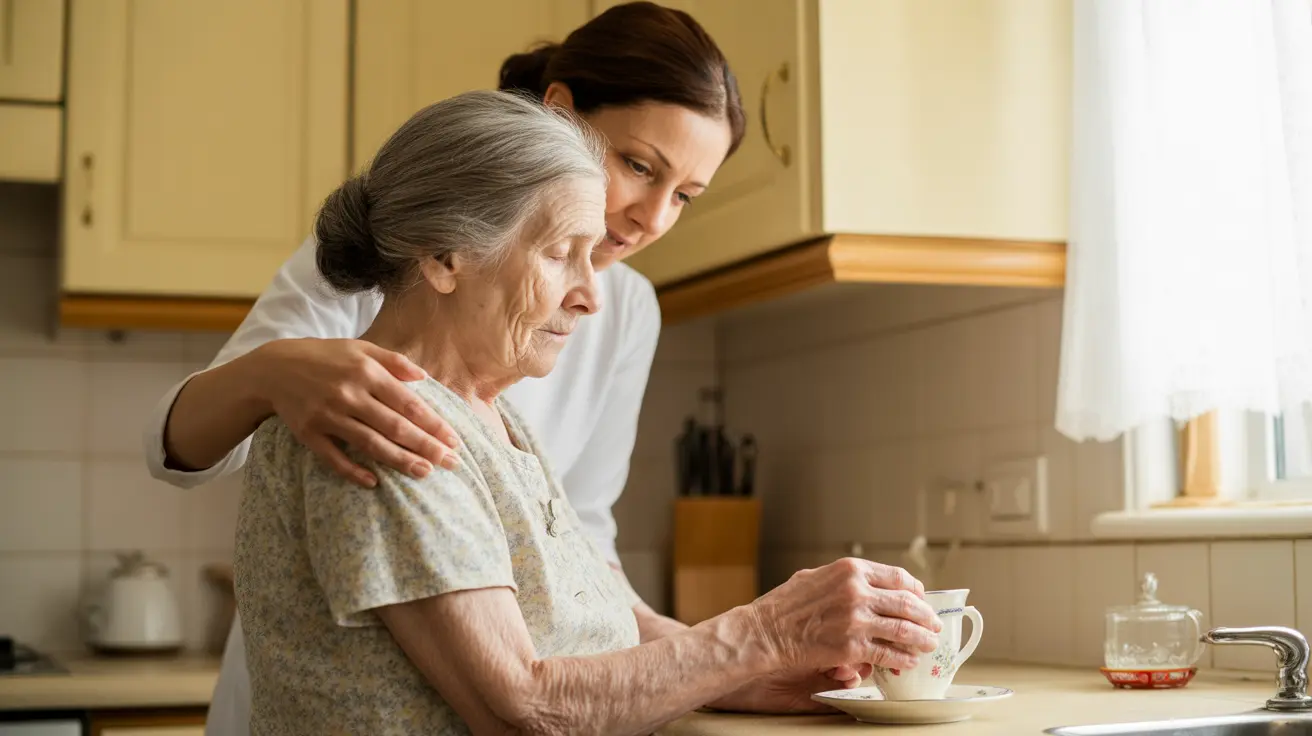
The 8 Things Real Families Say About Dementia Care Homes
What Real Families Say About Dementia Care Homes: The Eight Things That Actually Matter
Care home websites all say the same things. Compassionate care. Person-centered approach. Warm and welcoming environment.
These phrases appear on almost every brochure, every homepage, every welcome pack. They are not lies exactly, but they are not evidence either. What real families say about dementia care homes is often very different from what those homes say about themselves. We analysed 3,602 positive reviews left by adult children across 5,409 UK care homes to find out what genuinely good dementia care looks like from the outside, from the people visiting every week, watching closely, and carrying the weight of the decision they made.
Here is what they told us.
Why Family Reviews Tell You More Than Inspection Reports
A CQC inspection measures whether a home meets the required standards on the days the inspector visits. That matters. But it is not the same as knowing what daily life is like for the person living there.
Family reviews capture something different. They reflect dozens of visits across months and years. They notice the things that do not appear in inspection frameworks: whether the carer who helped Dad get dressed this morning knew his name, whether Mum looked happy when you arrived unannounced on a Tuesday, whether the manager picked up the phone when something went wrong at the weekend. These are the things that determine whether a care home is genuinely good. And they only show up in the experiences of the families who were there to see them.
The data from 3,602 reviews tells a consistent story. Across thousands of homes, the same themes recur when families describe a care home that got it right. Eight themes dominate. None of them is primarily about clinical systems or regulatory compliance. All of them are about people.
Inspection reports measure standards. Family reviews measure reality.The Eight Things Real Families Say Matter Most in Dementia Care Homes
1. Staff who are friendly and welcoming — mentioned in 57% of positive reviews
More than half of all positive reviews mention it. Not the building, not the rating, not the activities program. The first thing families notice, and the thing they come back to most often, is whether the staff are warm.
This is not about surface friendliness. Families know the difference between a carer who smiles at the door and one who is genuinely pleased to see their parent. They notice whether staff use their mum's name or call her "love." They notice whether carers crouch down to make eye contact or talk over a resident's head to the visitor. Small things, done consistently, tell a family everything they need to know about a home's culture.
What to ask: When you arrive unannounced, do staff greet your parent by name? Do they know something personal about them, a preference, a memory, something that happened last week? These are the signals that warmth is real rather than performed.
2. Staff who are caring and compassionate — mentioned in 55% of reviews
Closely linked to warmth, but families distinguish between the two. Friendliness is how staff present themselves. Compassion is what they do when things are hard. It is the carer who sits with a distressed resident at 2 am rather than logging the incident and moving on. It is the team member who notices that a resident has not eaten and finds out why, rather than recording it and leaving it for the next shift.
Compassion in dementia care means understanding that behaviour that looks difficult is usually communication. A person with dementia who is agitated, refusing personal care, or calling out is not being difficult. They are expressing something they cannot put into words. Staff who understand this respond differently from staff who do not, and families see that difference clearly.
What to ask: How does your team respond when a resident is distressed or resistant? Can you give me a specific example of how a member of staff handled a difficult moment well? Listen for whether the answer is about the person or the procedure.
3. The happiness and well-being of the resident — mentioned in 27% of reviews
This is the outcome that sits above everything else. Families can accept imperfect food, a dated building, and a less-than-perfect activity timetable if they can see that their parent is genuinely content. When Mum smiles when a particular carer walks in, when Dad is engaged in conversation at the lunch table, when you arrive and find your parent settled and calm rather than sitting alone in silence, you know something real is happening.
For families who feel guilt about the decision to move a parent into a care home, visible happiness is the thing that resolves it. It is not proof that everything is perfect. It is proof that the decision was not wrong.
What to ask: Can I visit at a time when activities are happening, not just during a formal tour? Can I sit in the dining room at lunchtime and observe? A home confident in its care will say yes without hesitation.
4. Cleanliness and hygiene — mentioned in 24% of reviews
Nearly one in four positive reviews mentions it. Not because families expected exceptional cleanliness, but because a clean environment is a signal. It tells you that the basics are being maintained consistently, that standards do not slip when no one is important is watching, and that the people living there are treated with dignity in the most fundamental sense.
A home that smells, has stained carpets, or shows evidence of poor personal care hygiene does not become a dementia specialist home by claiming to be one. Cleanliness is not a high bar. It is a minimum. And it is one that families notice immediately and never forget.
What to ask: Can I walk through the home, including the residential areas, not just the reception and showrooms? Homes that restrict tours to public-facing areas are telling you something.
5. Good management and leadership — mentioned in 23% of reviews
Families notice whether a home is well run. A manager who is visible, knows residents by name, responds to concerns quickly, and does not require chasing is mentioned repeatedly in positive reviews. The inverse is equally true: poor management is one of the most common themes in negative reviews, and its effects ripple through every aspect of care.
Good management in a dementia care home means more than administrative competence. It means creating and sustaining a culture where staff feel supported, standards are consistently upheld, and families are treated as partners in care rather than as visitors to be managed. That culture starts at the top, and it shows.
What to ask: How long has the current manager been in post? How do you handle a complaint from a family member, and what is the typical response time? A manager who answers the second question with a specific process, not a general reassurance, is worth noting.
6. Activities and engagement — mentioned in 21% of reviews
A whiteboard in the corridor listing chair exercises and bingo is not what families are praising when they mention activities. What they are praising is engagement: their parent being known well enough that the activities offered actually connect with who they are.
The evidence on meaningful activity in dementia care is consistent. Engagement built around a person's history and identity reduces distress, maintains function for longer, and improves quality of life. A home that offers the same afternoon program to every resident, regardless of their background, preferences, or cognitive stage, is not providing activities. It is filling time.
What to ask: How do you find out about a new resident's life history? Can you give me an example of an activity designed for a specific resident? If the answer is a description of the general program, the home has not understood the question.
7. Food quality — mentioned in 21% of reviews
Families associate food with care. Not because good food is proof of good care, but because the effort that goes into producing varied, fresh, home-cooked meals signals something about the home's broader attitude. A kitchen that takes food seriously is usually a home that takes daily life seriously.
For people with dementia, mealtimes carry additional weight. They are one of the most reliably social moments of the day, and the sensory experience of familiar food can reach people who are otherwise hard to connect with. Homes that understand dementia understand mealtimes. Homes that treat meals as a logistics problem to be solved efficiently usually show it in the food.
What to ask: Can I see a week's menu? Is food cooked on-site or brought in? How do you support residents who need help eating, and how long is allocated for mealtimes?
8. Medical and healthcare quality — mentioned in 20% of reviews
It appears eighth on the list, not because families do not care about clinical quality, but because they assume it as a baseline. What families praise when they mention healthcare is not competence itself but responsiveness: the home that called them immediately when something changed, that had already contacted the GP before the family arrived, that did not wait to be asked.
For dementia care specifically, medical responsiveness includes understanding that changes in behaviour are often the first sign of physical illness in a person who cannot describe their symptoms. A home that responds to agitation with restraint or sedation rather than a clinical review is not delivering good dementia care, regardless of its inspection rating.
What to ask: How do you identify when a resident's behaviour change might signal a physical health issue? Who makes the call to contact the GP, and what is the typical timeline?
The eight things families mention most are not complicated. They are human. A good dementia care home gets them right, consistently, when no one important is watching.What the Data Tells Us That Care Home Marketing Does Not
Read any care home brochure, and you will find the same claims: person-centered care, highly trained staff, warm and homely environment. These phrases have been repeated so often that they have lost meaning. The review data cuts through them because it reflects actual experience rather than intended positioning.
The data tells us that staff warmth is not a nice extra. It is the single most important factor in whether a family believes their parent is well looked after. It tells us that management quality is more visible to families than most homes realise. It tells us that food matters more than clinical systems in determining whether a home feels like a home. And it tells us, above all, that families are not measuring compliance. It is care.
The phrase that appears in 247 reviews
Across 3,602 positive reviews, one phrase appears more than any other as the final verdict on a care home: "well looked after." Not "excellent care." Not "highly recommended." Not "five stars." Well looked after. It is the phrase adult children rehearse in their heads when they are trying to decide whether they made the right choice. It is what they want to say to their sister on the phone. It is the phrase that carries everything: safety, kindness, dignity, and presence.
A care home that earns that phrase from the families of its residents is doing the eight things above, consistently and genuinely. A care home that claims it in its own marketing has only told you what it wants you to think.
You are not looking for a home that says the right things. You are looking for a home that earns them.How Dementia Care Choices Uses This Data
The eight factors above are not assumptions or editorial opinions. They are the evidence base on which Dementia Care Choices was built. Every home in the DCC directory is assessed against what real families say matters most, using verified review data, CQC inspection findings, and an independent dementia care evidence base.
The DCC Family Score reflects this. It is not an average of star ratings. It is a composite of the signals that appear most often in the reviews of genuinely good dementia care homes: staff consistency, compassion, resident wellbeing, engagement, management quality, and communication. Two homes can have identical CQC ratings yet score very differently on the DCC Family Score because the score measures what families experience, not what inspectors find.
When you use Dementia Care Choices to research a home, you are not reading a brochure. You are reading the condensed experiences of thousands of adult children who were in the same position you are now and who told us honestly what they found.
The evidence is there. The families who came before you left it. Use it.
You've noticed something different.
Twelve signs to observe before your next GP appointment. You don't need to wait for a diagnosis to start.
Free download – Dementia Stage 1
Not sure if it's dementia or just ageing? Here's the checklist your GP will use.
Twelve signs to observe. A simple scoring framework. A printable, one-page record you can take to your next GP appointment, so you go in with specifics, not anxiety.
Download Your Checklist