Stage 6: Advanced/End-of-Life Care
Ensuring comfort, dignity, and peace in the final stage of dementia
Where You Are Now
Your loved one has reached advanced dementia. They likely cannot communicate verbally, recognize family members, or perform basic self-care. They're increasingly frail, vulnerable to infections, and experiencing physical decline alongside cognitive deterioration. You're preparing for the inevitable while trying to ensure their remaining time is comfortable and dignified.
Stage 6 is the final stage of the dementia journey. It's characterized by profound physical and cognitive impairment, increasing medical needs, and the approach of death. This stage requires difficult medical decisions, focus on comfort rather than cure, and preparation for loss.
Advanced dementia can last months to several years. The pace varies—some people decline rapidly while others remain relatively stable before a sudden change. Understanding what to expect helps you advocate for appropriate care and make peace with what's coming.
Understanding Advanced Dementia
Late-stage dementia is a terminal condition. Recognizing this helps frame appropriate care goals and decisions.
Physical Changes in Stage 6
- Mobility: Usually bedbound or chair-bound, unable to walk independently
- Communication: Minimal or no verbal communication, may make sounds or use facial expressions
- Eating and swallowing: Difficulty chewing and swallowing, at risk of aspiration
- Incontinence: Complete loss of bladder and bowel control
- Muscle contractures: Limbs may become rigid or contracted
- Frequent infections: Pneumonia, urinary tract infections, skin infections
- Weight loss: Significant loss of body mass despite adequate food offerings
- Pressure sores: Increased vulnerability due to immobility
- Sleep disturbances: Irregular sleep-wake patterns
Cognitive Changes
- No recognition of family or familiar people
- No awareness of surroundings or time
- Inability to process information or follow simple instructions
- Loss of awareness of basic needs (hunger, thirst, pain)
What They Can Still Experience
Despite profound impairment, people in advanced dementia can still experience:
- Comfort and discomfort: Pain, soothing touch, pleasant sounds
- Emotional tone: Calm vs. agitated atmosphere
- Familiar presence: Even without recognition, familiar voices provide comfort
- Sensory experiences: Music, gentle touch, favorite scents
Hearing often remains even when all other senses have deteriorated. Speaking to your loved one, reading aloud, or playing music may provide comfort even if they can't respond.
[SUGGESTED NEW ARTICLE: "What Happens in Late-Stage Dementia: The Physical and Cognitive Reality" – Detailed medical explanation of end-stage changes]
Advance Care Planning
If not already done, advance care planning is essential in Stage 6. These decisions should ideally be made earlier, but if you're now facing them, understanding options helps.
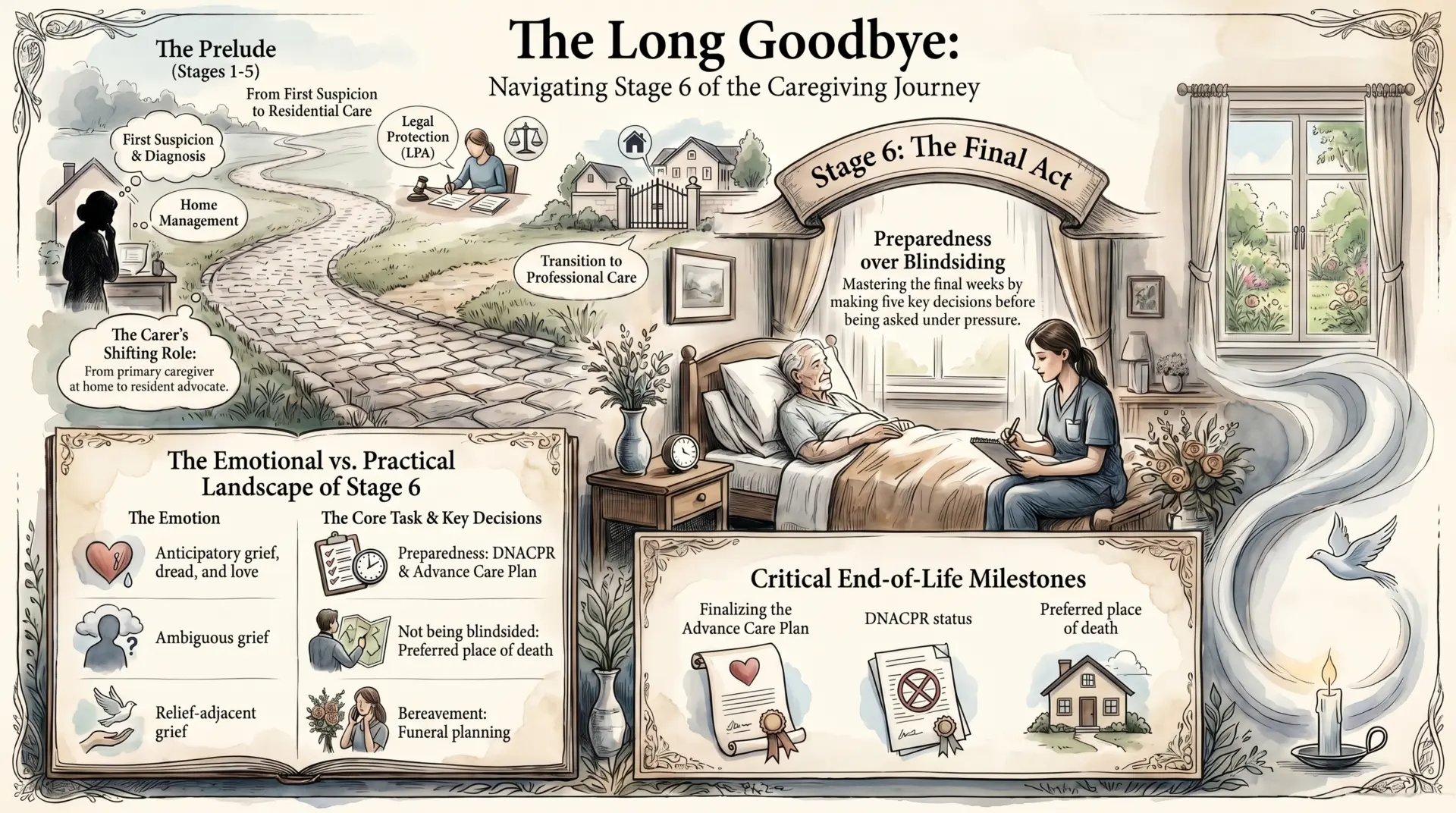
DNACPR (Do Not Attempt Cardiopulmonary Resuscitation)
A DNACPR order means that if the person's heart stops or they stop breathing, CPR will not be attempted.
Key considerations:
- In advanced dementia, CPR is almost never successful and causes suffering
- Even if heart restarts, underlying terminal condition remains
- DNACPR focuses on natural, peaceful death rather than traumatic resuscitation attempt
- Does NOT mean "do not treat"—other medical care continues
- Decision made based on best interests if person lacks capacity
Most families in Stage 6 choose DNACPR to allow natural death rather than prolonging dying process.
Treatment Escalation Plans
These document what treatments should and shouldn't be used as condition worsens:
- Antibiotics for infections: When to treat vs. when to focus on comfort
- Hospital admission: Circumstances under which transfer to hospital is appropriate
- Artificial nutrition and hydration: PEG feeding tubes, IV fluids
- Oxygen therapy: When beneficial vs. when it prolongs dying
Best Interests Decisions
When person lacks capacity to make own decisions, decisions are made in their "best interests" considering:
- Previously expressed wishes (when they had capacity)
- Current quality of life
- Likelihood of benefit from treatment
- Burden vs. benefit of intervention
- Views of family and those close to the person
- Medical professional assessment
If you hold Lasting Power of Attorney for Health and Welfare, you're the primary decision-maker (consulting with medical professionals). Without LPA, the medical team makes decisions by consulting the family.
[SUGGESTED NEW ARTICLE: "End-of-Life Medical Decisions in Dementia: DNACPR, Treatment Escalation, and Best Interests" – Comprehensive guide to difficult decisions]
Palliative and End-of-Life Care
Once dementia reaches advanced stage, care shifts from life-prolonging to comfort-focused (palliative) approach.
Palliative Care Philosophy
Palliative care focuses on:
- Comfort: Managing symptoms to maximize quality of remaining life
- Dignity: Respectful, person-centered care until death
- Quality over quantity: Comfort and peace prioritized over prolonging life
- Supporting family: Emotional and practical support for loved ones
Important: Palliative care is NOT "giving up", it's ensuring appropriate care focused on what matters most: comfort and dignity.
Where End-of-Life Care Happens
In Care Home
Many people with dementia die peacefully in their care home with support from:
- Care home staff
- GP and district nurses
- Specialist palliative care teams (if needed)
- Family presence and support
Benefits: Familiar environment, known staff, continuity of care
Hospice
Some families choose hospice transfer for final days/weeks.
Benefits: Specialist palliative care expertise, family accommodation, intensive symptom management
Considerations: Disruption of moving, may not be necessary if care home provides good end-of-life care
Hospital
Hospital admission in late-stage dementia is usually inappropriate unless:
- Acute treatable condition (e.g., broken bone requiring surgery)
- Symptom management unavailable elsewhere
- Specific medical intervention needed
Most hospital admissions for dying people with advanced dementia cause distress without benefit. Plan to avoid this where possible.
NHS Continuing Healthcare
People with advanced dementia may qualify for fully-funded NHS Continuing Healthcare due to complex health needs.
Worth pursuing because:
- Removes financial burden of care home fees
- Can be backdated if previously eligible but not assessed
- Ensures access to necessary nursing care
Application process: Request CHC assessment from GP or care home. Assessment focuses on health needs rather than financial status.
[SUGGESTED NEW ARTICLE: "NHS Continuing Healthcare for Advanced Dementia: Application Guide" – Step-by-step process for securing funding]
Managing Symptoms and Ensuring Comfort
Advanced dementia creates symptoms that require active management for comfort.
Pain Management
Challenge: Person cannot verbally report pain.
Signs of pain to watch for:
- Facial grimacing or frowning
- Vocalizations (moaning, crying out)
- Agitation or restlessness
- Resistance to care or touch
- Withdrawal
- Changes in usual behavior patterns
Pain management options:
- Regular pain relief (paracetamol, stronger medications as needed)
- Pain relief patches for continuous comfort
- Morphine or other opioids for severe pain
- Regular reassessment and adjustment
Eating and Drinking Challenges
As swallowing becomes difficult, families face heartbreaking questions about nutrition.
Hand-Feeding Approaches
- Small amounts, patient pace
- Favorite foods and flavors
- Thickened liquids to reduce choking risk
- Comfort feeding rather than nutritional adequacy
The Question of Feeding Tubes
PEG (percutaneous endoscopic gastrostomy) tubes are feeding tubes inserted through abdomen into stomach.
Evidence shows that for advanced dementia:
- PEG tubes do NOT extend life
- Do NOT improve quality of life
- Do NOT prevent aspiration pneumonia (can actually increase risk)
- Can cause distress and require restraints to prevent removal
Most dementia experts recommend against PEG tubes in advanced dementia. Careful hand-feeding focused on comfort is usually more appropriate and dignified.
Natural Decrease in Eating
As death approaches, decreased eating and drinking is natural part of dying process—not starvation or dehydration causing death, but dying causing decreased intake.
Forcing food or fluids at this stage causes discomfort without benefit. Focus shifts to mouth care and sips of favorite drinks for comfort.
Mouth Care
Even if not eating/drinking much, excellent mouth care is essential for comfort:
- Frequent mouth cleaning
- Moistening dry mouth with wet swabs
- Lip balm for dry lips
- Small ice chips or sips of water for comfort
Breathing Difficulties
- Positioning to ease breathing
- Oxygen if beneficial (not if prolonging dying)
- Medications to reduce breathlessness anxiety
- Fan creating airflow can provide comfort
Skin Care
Immobility creates pressure sore risk:
- Regular position changes (turning)
- Pressure-relieving mattresses
- Skin checks and immediate treatment of any breakdown
- Gentle cleansing and moisturizing
[SUGGESTED NEW ARTICLE: "Comfort Care in Advanced Dementia: Managing Symptoms Without Words" – Detailed symptom management guide]
Recognizing the Dying Process
Understanding signs that death is approaching helps families prepare and ensure appropriate care.
Weeks to Days Before Death
- Increased sleeping, less alert when awake
- Decreased interest in food and drink
- Withdrawal from surroundings
- Spending more time with eyes closed
- Increased physical weakness
Days to Hours Before Death
- Changes in breathing: Irregular patterns, long pauses, rapid then slow
- Skin changes: Pale, mottled, cool to touch especially extremities
- Restlessness: Picking at bedclothes, trying to get out of bed
- Congestion: Rattling or gurgling sounds (not uncomfortable for person, though distressing to hear)
- Decreased responsiveness: Less reactive to voice or touch
- Incontinence changes: Decreased urine output, darker color
The Final Hours
- Very irregular breathing with long pauses
- Minimal or no response to stimulation
- Skin increasingly mottled and cool
- Possible brief period of lucidity or seeming improvement (surge before death)
What "Comfortable" Looks Like
Good end-of-life care means the person appears:
- Peaceful rather than agitated
- Not struggling to breathe (even if breathing sounds unusual)
- Pain-free (no grimacing or signs of distress)
- Clean and cared for
- In the presence of caring people
[SUGGESTED NEW ARTICLE: "The Last Days: What to Expect as Death Approaches in Dementia" – Detailed timeline and signs of dying process]
Being Present at the End
Families often struggle with whether to be present at the moment of death and how to support their loved one.
Vigil Planning
When death appears imminent (days to hours away):
- Notify family: Care home should inform you when death is very close
- Coordinate family presence: Who wants to be there, taking turns if extended vigil
- Balance presence with self-care: Long vigils are exhausting
- Permission to leave: Many people die when family briefly steps out—this is okay
What to Do During Final Hours
- Be present: Your loved one may be aware of presence even without response
- Talk to them: Share memories, say what you need to say, give permission to let go
- Physical comfort: Hold their hand, gentle touch, sit close
- Music: Play their favorite songs
- Read: Religious texts, poetry, favorite passages
- Simply being: Quiet presence is enough
Cultural and Religious Observances
Different faiths and cultures have specific end-of-life practices:
- Inform care home staff of any specific requirements
- Arrange for religious leader or spiritual support if desired
- Specific prayers or rituals at time of death
- Body care requirements after death
If You're Not There
Many people die when family is not present. This does NOT mean you failed them or they died alone.
- Care home staff provide caring presence
- Some people seem to choose moment when family is absent (sparing them distress)
- Your love and years of care matter more than presence at final breath
[SUGGESTED NEW ARTICLE: "Being Present at Death: A Family Guide to End-of-Life Vigils" – Practical and emotional guidance for final days]
Immediately After Death
Understanding what happens immediately after death helps you navigate this difficult time.
What Happens at the Care Home
- Confirmation of death: Nurse or doctor confirms death
- Body care: Staff wash and prepare body respectfully
- Family time: You can spend time with your loved one if you wish
- Removal: Funeral director collects body (timing varies, usually within hours)
Emotional Support
Care home staff often provide immediate support:
- Private space for family
- Tea, tissues, compassionate presence
- Staff may share memories if they knew your loved one well
Practical Immediate Steps
- Notify close family: Contact those who need to know immediately
- Funeral director: If not already arranged, care home can recommend or you can choose
- Personal belongings: Collect or arrange collection
- Death certificate: Doctor will issue (may take few days)
What You Might Feel
Common immediate reactions:
- Relief: Their suffering has ended, your long vigil is over
- Numbness: Shock even when death was expected
- Unexpected grief: Even after long illness, finality hurts
- Guilt: About feeling relief, about decisions made, about not being present
- Emptiness: Sudden absence of caregiving structure
All reactions are normal. There's no "right way" to feel.
[SUGGESTED NEW ARTICLE: "The First Hours After Death: What Happens and What to Do" – Step-by-step practical guide]
Practical Matters After Death
Alongside grief, practical tasks require attention in days and weeks following death.
Registering the Death
Death must be registered within 5 days (8 days in Scotland).
Process:
- Doctor issues Medical Certificate of Cause of Death
- Register death at local Register Office
- Receive death certificate and other documents
You'll need:
- Medical certificate
- Deceased's birth certificate (if available)
- Proof of identity
Funeral Arrangements
- Contact chosen funeral director
- Decide on burial or cremation
- Plan service (religious or secular, location, readings, music)
- Write obituary if desired
- Notify extended family and friends
Financial Matters
- Final care home invoice: Fees owed up to date of death
- Funeral costs: Can be paid from estate
- Stop ongoing payments: Pensions, benefits, direct debits
- Notify relevant organizations: Banks, pension providers, utility companies, DVLA, etc.
- Apply for bereavement benefits: If applicable
Estate and Probate
- Locate will
- Identify executor
- Apply for probate (if needed)
- Distribute estate according to will
[SUGGESTED NEW ARTICLE: "Practical Checklist: Tasks to Complete in the First Month After Death" – Comprehensive administrative guide]
Grief and Bereavement
Grief after long dementia illness is complex and often misunderstood.
Anticipatory Grief
You've likely been grieving for years—grieving the person they were, the relationship you had, the future you expected. Death brings finality, but grief didn't start then.
Relief and Guilt
Feeling relief when someone dies after prolonged suffering is normal, healthy, and loving—not something to feel guilty about.
Relief that:
- Their suffering has ended
- The long illness is over
- You can reclaim your own life
- The burden of caregiving/visiting/worrying is lifted
This relief coexists with genuine grief and love.
Complicated Grief Patterns
- Delayed grief: Feeling nothing initially, grief emerging weeks or months later
- Unexpected intensity: Surprised by depth of grief when death was expected
- Minimal grief: Having grieved during illness, feeling relatively at peace
- Ambivalent grief: Mixed feelings about person or relationship complicating mourning
All grief patterns are valid.
Supporting Yourself Through Grief
- Allow yourself to grieve: No timeline, no "right way"
- Talk about them: Share memories, tell stories
- Create memorial: Photo album, charity donation, tree planting
- Join bereavement groups: Connect with others who understand
- Professional support: Counseling if grief is overwhelming
- Self-care: Physical health, sleep, nutrition, gentle exercise
- Patience: Healing takes time
When to Seek Professional Help
- Grief interfering with daily functioning for extended period
- Thoughts of self-harm
- Inability to accept the death after many months
- Severe depression or anxiety
- Relationship breakdowns
- Using alcohol or drugs to cope
[SUGGESTED NEW ARTICLE: "Grief After Dementia: Understanding Complex Bereavement" – Psychological guide to mourning after long illness]
Moving Forward
Months and years after death, life gradually returns to new normal.
Rebuilding Life After Loss
- Reconnecting with interests and hobbies
- Rebuilding social connections
- Rediscovering identity beyond caregiver role
- Making new plans and goals
- Honoring memory while moving forward
Honoring Their Memory
- Annual memorial or celebration of life
- Supporting dementia charities or research
- Volunteering to help other families
- Sharing your story to help others
- Living well as tribute to their life
Supporting Others on the Journey
Many families who've completed the dementia journey find meaning in supporting others:
- Dementia befriending or support groups
- Sharing knowledge with newly-diagnosed families
- Care home volunteering
- Advocacy for better dementia care
- Fundraising for dementia research
Stage 6 Resources
From DementiaCarechoices.com
- Six-Stage Journey Overview – Reflect on the complete journey
- Free Benchmark Assessment
End-of-Life Support
- Marie Curie: 0800 090 2309 – End-of-life care and support
- Hospice UK: Find local hospice support – hospiceuk.org
- Admiral Nurses: 0800 888 6678 – Support through end-of-life and bereavement
Bereavement Support
- Cruse Bereavement Support: 0808 808 1677
- Sue Ryder Bereavement Support: Online and telephone support
- Samaritans: 116 123 – 24/7 support if you're struggling
- Alzheimer's Society Bereavement Support: 0333 150 3456
Practical Advice
- GOV.UK Tell Us Once service: Notify government services of death in one go
- Citizens Advice: Practical guidance on estates, probate, benefits
[SUGGESTED RESOURCE: Downloadable "End-of-Life and Bereavement Support Pack" – Advanced care planning templates, symptom management guide, after-death checklist, bereavement resources]
Navigating end-of-life care? You don't have to do this alone. Our Stage 6 support community connects families through this most difficult phase. Professional bereavement support is also available; don't hesitate to reach out.
In memory: Every family's dementia journey is unique. Thank you for caring for your loved one with dignity and love through all six stages.
Last updated: February 2026