Stage 1: Dementia Recognition & Diagnosis
Understanding the early signs of dementia and navigating the diagnosis process
Where You Are Now
Has dementia been diagnosed by a GP? If it has not and you are wondering, then this is the right stage for you; otherwise, skip to stage 2: Caring for Dementia at home.
You're not alone. Over 900,000 people in the UK are living with dementia, and every family facing this journey started exactly where you are now—noticing something isn't quite right and trying to understand what's happening.
You've noticed changes. Perhaps your loved one repeats questions, forgets recent conversations, or struggles with tasks that used to be routine. Maybe they're more confused, anxious, or withdrawn than usual. You're wondering if this is normal aging or something more serious.
Stage 1 is about recognition and diagnosis. It typically lasts 3-6 months from first concerns to confirmed diagnosis, though some families move through it faster while others take longer. This stage is characterized by uncertainty, worry, and the need for answers.
What's Happening During Stage 1
For Your Loved One
- Experiencing cognitive changes they may or may not recognize
- Possibly feeling anxious, frustrated, or frightened by memory lapses
- May be hiding difficulties or making excuses for mistakes
- Often still functioning independently in most areas of daily life
- Potentially resisting the idea that something is wrong
For Family Members
- Noticing patterns of confusion, memory loss, or behavioral changes
- Debating whether concerns are justified or you're "overreacting"
- Experiencing fear about what diagnosis might mean
- Gathering evidence and documenting incidents
- Preparing for difficult conversations with your loved one and doctors
- Researching dementia and feeling overwhelmed by information
Understanding What Dementia Is
Before you can recognize the signs, you need to understand what you're looking for. Dementia isn't a single disease—it's an umbrella term for several conditions that affect the brain.
Essential Reading:
- What is Dementia – Clear explanation of dementia vs. normal aging, how it affects the brain, and what to expect
- Types of Dementia – Understanding Alzheimer's, vascular dementia, Lewy body dementia, and frontotemporal dementia
[PLANNED SOON – NEW ARTICLE: "Dementia vs. Normal Aging: How to Tell the Difference" – A practical guide with specific examples of normal memory lapses vs. concerning patterns]
Recognizing the Early Signs
Early signs of dementia are easy to dismiss as stress, tiredness, or normal aging. But patterns matter. If you're seeing multiple signs occurring regularly over several weeks or months, it's time to seek medical advice.
Essential Reading:
- Dementia Symptoms & Early Signs – Comprehensive guide to recognizing early warning signs across cognitive, behavioral, and physical domains
Common early signs include:
- Memory loss that disrupts daily life, especially forgetting recently learned information
- Difficulty planning or solving problems that used to be routine
- Confusion with time or place
- Trouble understanding visual images or spatial relationships
- Problems with words in speaking or writing
- Misplacing things and losing the ability to retrace steps
- Decreased or poor judgment
- Withdrawal from work or social activities
- Changes in mood or personality
[PLANNED SOON – NEW ARTICLE: "Documenting Dementia Symptoms: A Family Guide" – How to track incidents, what details to record, and how to present this information to doctors]
The Diagnosis Process
Getting a dementia diagnosis typically involves several steps and can take weeks to months. Understanding this process helps you know what to expect and how to prepare.
Step 1: GP Consultation
Your first step is booking a GP appointment. Many people find it helpful to contact the surgery in advance to request a longer appointment and explain your concerns.
What to bring:
- Written list of symptoms and specific examples
- Timeline of when changes began
- Any medications your loved one is taking
- Questions you want to ask
The GP will conduct initial cognitive tests, rule out other causes (such as vitamin deficiencies, thyroid problems, or depression), and typically refer to a memory clinic or specialist.
[PLANNED SOON – NEW ARTICLE: "Preparing for Your First GP Appointment About Dementia" – Complete preparation guide including how to talk to your loved one about going, what to say, and what to expect]
Step 2: Memory Clinic Assessment
Memory clinics conduct comprehensive assessments including:
- Detailed cognitive testing (memory, language, problem-solving)
- Physical examination and medical history review
- Blood tests to rule out other conditions
- Brain scans (CT or MRI) to identify brain changes
- Sometimes additional specialized tests
The assessment process can feel lengthy and exhausting, but thoroughness ensures accurate diagnosis.
[PLANNED SOON – NEW ARTICLE: "What Happens at a Memory Clinic: A Step-by-Step Guide" – Detailed walkthrough of the assessment process, what each test involves, and how to support your loved one through it]
Step 3: Receiving the Diagnosis
Once assessments are complete, you'll have a follow-up appointment to discuss results. This is typically where a formal diagnosis is given, along with information about:
- The type of dementia diagnosed
- Current stage or severity
- Expected progression (though this varies greatly between individuals)
- Treatment options available
- Support services and next steps
[PLANNED SOON – NEW ARTICLE: "Understanding Your Dementia Diagnosis: Questions to Ask Your Doctor" – Comprehensive list of questions about prognosis, treatment, progression, and support]
Understanding Dementia Stages
Dementia is progressive, meaning symptoms worsen over time. Understanding the overall trajectory helps you plan ahead and know what to expect.
Essential Reading:
- Stages of Dementia – Overview of how dementia progresses from early to late stages
- Understanding the Stages of Dementia: A Guide for Family Carers – Practical guide to navigating each stage of the journey
Most dementia progresses through early, middle, and late stages, though the pace varies significantly between individuals. Some people remain in early stages for years, while others progress more quickly.
Immediate Actions After Diagnosis
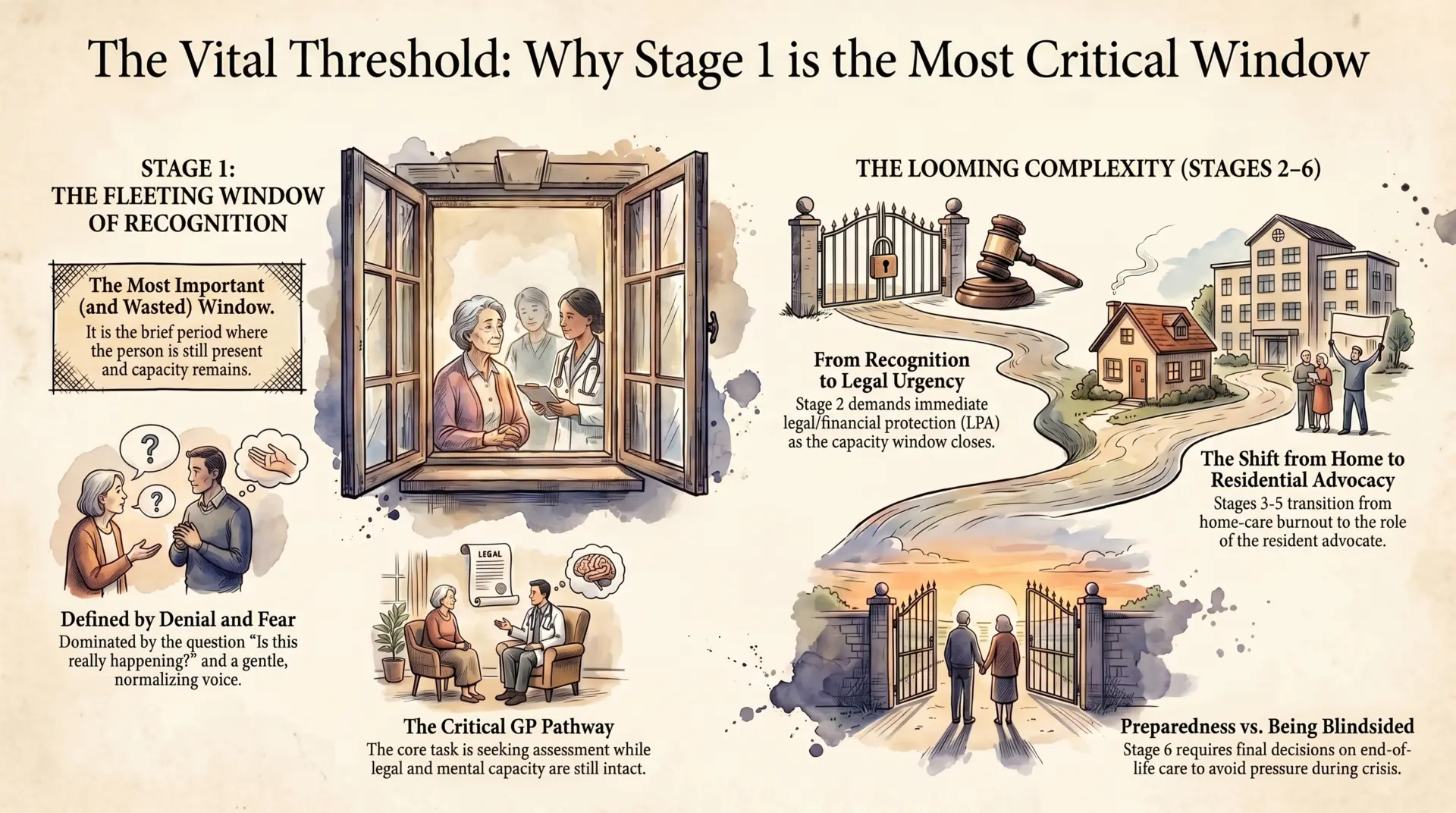
The period immediately following diagnosis is crucial for planning and legal arrangements. While your loved one still has capacity, there are important steps to take.
Legal and Financial Planning (Urgent)
These must be done while your loved one still has mental capacity:
- Lasting Power of Attorney (LPA): Absolutely essential. Allows designated people to make decisions on behalf of your loved one when they can no longer do so themselves. There are two types:
- Property and Financial Affairs LPA
- Health and Welfare LPA
- Will: If not already in place, ensure a will is created or updated
- Advance Care Directive: Document preferences for future medical care
- Financial review: Understand assets, income, pensions, and property
Why this matters: Without LPA, if your loved one loses capacity, you'll need to apply for a deputyship through the Court of Protection—a lengthy, expensive, and stressful process that can take 6-12 months.
[PLANNED SOON – NEW ARTICLE: "Legal Planning After Dementia Diagnosis: The Essential First 30 Days" – Detailed guide to LPA, wills, and financial planning with timelines and costs]
Medical Management
- Discuss medication options with your doctor (cholinesterase inhibitors may help in early Alzheimer's)
- Understand potential side effects and benefits
- Schedule regular follow-up appointments
- Inform other healthcare providers about the diagnosis
Practical Preparations
- Inform close family members (with your loved one's permission)
- Consider whether to inform employer (if still working)
- Review driving safety—DVLA must be informed of dementia diagnosis
- Begin thinking about home safety modifications for the future
- Research local support services and groups
[PLANNED SOON – NEW ARTICLE: "First 90 Days After Dementia Diagnosis: Your Complete Action Plan" – Comprehensive checklist covering legal, medical, practical, and emotional tasks]
Emotional Support for Families
Receiving a dementia diagnosis is emotionally overwhelming. Common reactions include:
- Shock and disbelief: Even when expected, diagnosis confirmation is difficult
- Grief: Mourning the future you expected to have together
- Fear: Worrying about progression and what lies ahead
- Anger: Frustration at the unfairness of the disease
- Guilt: Wishing you'd recognized signs earlier
- Relief: Having an explanation for concerning changes
All these reactions are normal and valid. Many families experience several emotions simultaneously or in waves.
Finding Support
- Dementia support groups: Connect with others facing similar challenges
- Alzheimer's Society: Dementia Connect support line (0333 150 3456) and local services
- Admiral Nurses: Specialist dementia nurses offering expert practical and emotional support
- Carers UK: Support and advice for family carers
- Counseling: Professional support for processing grief and stress
[PLANNED SOON – NEW ARTICLE: "Coping with a Dementia Diagnosis: Emotional Support for Families" – Guide to processing grief, finding support, and maintaining hope]
Talking to Your Loved One About Dementia
Having conversations about dementia is difficult but important. How you approach these discussions depends on:
- Your loved one's level of insight into their condition
- Their personality and communication preferences
- Whether they received the diagnosis directly or you're sharing it
- Cultural and family communication patterns
Key Principles
- Involve them in decisions: While they have capacity, include them in planning
- Be honest but gentle: Don't hide the diagnosis, but frame conversations with hope
- Focus on "we": Emphasize you'll face this together
- Respect their pace: Some people want all information immediately; others need time
- Maintain dignity: Avoid talking about them as if they're not present
[PLANNED SOON – NEW ARTICLE: "How to Talk to Someone About Their Dementia Diagnosis" – Communication strategies for different scenarios and personality types]
Common Mistakes Families Make in Stage 1
Learning from others' experiences can help you avoid these common pitfalls:
- Delaying GP appointment: Waiting months or years hoping things will improve. Earlier diagnosis allows for better planning and access to treatments.
- Not documenting symptoms: Relying on memory when describing concerns to doctors. Keep a written log of specific incidents.
- Postponing legal planning: Assuming there's "plenty of time" for LPA. Capacity can be lost suddenly, and LPA must be arranged while person has capacity.
- Keeping diagnosis secret: Not telling family members "to protect them." This prevents necessary planning and support mobilization.
- Ignoring financial planning: Not reviewing finances, benefits, and future care costs early enough.
- Going it alone: Trying to handle everything without seeking support from services, groups, or other family members.
- Catastrophizing: Assuming the worst-case scenario will happen immediately. Dementia progression varies greatly.
- Making dramatic life changes immediately: Selling homes, quitting jobs, or other major decisions in panic mode rather than planning thoughtfully.
What's Next: Preparing for Stage 2
Stage 1 is about understanding and planning. Stage 2—Early Home Care—is about implementing support while maintaining independence and quality of life.
As you move toward Stage 2, you'll begin to think about:
- Daily care routines and support needs
- Home safety modifications
- Whether to engage professional home care support
- Balancing independence with necessary supervision
- Managing medications and medical appointments
Most families spend 3-12 months primarily in Stage 1 (recognition and diagnosis) before transitioning to more active caregiving in Stage 2. Use this time to educate yourself, get legal matters in order, and build your support network.
Ready to learn about Stage 2? Home care support
Stage 1 Resources
From DementiaCarechoices.com
- Free Benchmark Assessment – See how your situation compares to other families in Stage 1
- The Complete Six-Stage Dementia Care Journey – Overview of all stages and what to expect
- Quality Assessment Guide – For when you reach Stage 4 and need to evaluate care homes
External Support
- Alzheimer's Society: 0333 150 3456 / alzheimers.org.uk
- Dementia UK (Admiral Nurses): 0800 888 6678 / dementiauk.org
- Age UK: 0800 678 1602 / ageuk.org.uk
- Carers UK: 0808 808 7777 / carersuk.org
[PLANNED SOON – RESOURCE: Downloadable "Stage 1 Toolkit" – PDF containing symptom tracker, GP appointment checklist, LPA information, and first 90 days action plan]
Need help determining which stage you're in? Take our free benchmark assessment to understand where you are in the journey and get personalized recommendations.
Questions about Stage 1?Join our Stage 1 support forum to connect with other families navigating recognition and diagnosis.
Last updated: March 2026